


Close-up of an the ICR logo on a research centre

Centre for In Vivo Modelling

The Centre for In Vivo Modelling is a newly established research centre within the Division of Cancer Biology at the ICR. Our scientists and clinical researchers use state-of-the-art in vivo models to address fundamental questions in cancer biology, with the ultimate aim of identifying curative treatments. We also serve as a collaborative hub across the ICR and The Royal Marsden, providing cutting-edge expertise in advanced mouse genetics and humanised in vivo models of cancer.

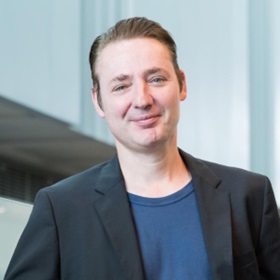
Professor Kamil R Kranc, Chair of Haemato-Oncology, serves as the Centre's Director, while Fabiana Muzzonigro is the Centre Administrator.


How we conduct research at this centre

Solid tumours and blood cancers are highly complex ecosystems, with many composed of varying cell types including rare cancer stem cells at the apex of a hierarchical organisation, more differentiated malignant progeny, and a dynamic microenvironment that nurtures tumour growth and survival. At our Centre, we seek to elucidate the fundamental principles that govern this malignant ecosystem. We employ advanced mouse genetics (including barcoding and lineage tracing) and PDX models to dissect how tumour cells function, evolve under selective pressures, evade therapy, and engage with their microenvironment to sustain disease progression. By decoding these intricate cellular and molecular interactions, we aim to identify transformative therapeutic strategies capable of eradicating cancer at its origin - achieving durable remission while preserving normal tissue integrity.

A particular strength of our Centre lies in the generation and application of in vivo models, which are essential for uncovering novel aspects of cancer biology and evaluating emerging therapies. We work in close collaboration with ICR researchers and clinicians at The Royal Marsden to develop patient-derived xenograft (PDX) models of leukaemias and solid tumours by transplanting human cancer tissue into immunocompromised mice. In parallel, we generate and utilise genetically engineered mouse models (GEMMs) to interrogate cancer biology in a physiologically relevant context. By leveraging these sophisticated in vivo systems, the Centre aims to:

  • Uncover new facets of cancer biology in a complex in vivo ecosystem
  • Discover and validate novel therapeutic targets allowing for elimination of cancer stem cells and their malignant progeny in blood cancers and solid tumours
  • Collaborate closely with drug discovery teams at the ICR to develop inhibitors of these targets
  • Evaluate new anti-cancer drugs in pre-clinical in vivo models, paving the way for clinical trials.

In addition to our academic focus, CIVM serves as a collaborative hub across the ICR and The Royal Marsden, providing the ICR community with cutting-edge expertise in advanced mouse genetics and humanised mouse models of cancer.

Join us

We are recruiting two exceptional Group Leaders to join the Division of Cancer Biology and the Centre for In Vivo Modelling (CIVM). This is a unique opportunity to shape the future of cancer biology research, lead innovative programmes, and make discoveries that transform patient outcomes.

These new Group Leaders will investigate fundamental mechanisms of tumour initiation, progression, and treatment resistance, and develop cutting-edge preclinical models to advance understanding of cancer biology. Working in close collaboration across the ICR and The Royal Marsden Hospital, the postholders will translate discovery science into new therapeutic opportunities, contributing to the ICR’s mission to make the discoveries that defeat cancer.

Find out more about the vacancies

Members of this Centre

Pipettes and well plates

In Vivo Modelling core

We provide cutting-edge expertise in advanced mouse genetics and humanized mouse models of cancer.

CIVM Service Core

Other staff:

Driving discovery through collaboration 

At CIVM, our collaborative spirit drives our mission to advance cancer cures. We actively partner with basic science, translational, and clinical research groups across the ICR and The Royal Marsden. Our collaborations also extend beyond, working closely with distinguished academic teams at the Universities of Oxford, Cambridge, Edinburgh, Cardiff, London, Glasgow, and the Francis Crick Institute.


News from the Centre

We are recruiting a Group Leader in In Vivo Cancer Modelling. We welcome applications at both the Career Development Faculty and Career Faculty levels. Competitive start up package is available. For further particulars please contact [email protected].


Current vacancies

There are currently no vacancies available in this group or area.

News from the ICR

30/03/26

Scientists have created the most comprehensive map to date of the genetic mutations that fuel cancer – opening the door to extending precision treatments to thousands more patients and offering clues as to why bowel cancer rates are rising in younger people.

The landmark study, published in Nature Genetics, was carried out by cancer genomics experts at The Institute of Cancer Research, London, and The University of Manchester. The research team analysed whole‑genome sequencing data from nearly 11,000 NHS cancer patients as part of Genomics England’s 100,000 Genomes Project – the largest cancer genomics initiative ever undertaken worldwide.

Largest analysis of its kind

By examining hundreds of millions of mutations across 16 cancer types, researchers identified 134 distinct mutational “signatures” – patterns of DNA damage that reveal the processes that drive cancer’s development. Twenty‑six of these signatures had not been described before.

In total, the team catalogued 370 million mutations spanning the entire human genome, providing an unprecedented picture of the genetic “scars” that accumulate as tumours evolve.

More patients could benefit from targeted treatment

One of the most significant discoveries was the high number of cancers showing signs of homologous recombination deficiency (HRD) – a DNA repair weakness that makes tumours particularly vulnerable to PARP inhibitors and platinum‑based chemotherapy.

HRD was identified in 16 per cent of breast cancers and 14 per cent of ovarian cancers, suggesting that more than 7,700 breast cancer patients and over 1,000 ovarian cancer patients in the UK could benefit each year from HRD‑targeted therapies. This far exceeds current estimates based solely on BRCA1/BRCA2 mutation testing.

Clues to rising rates of early‑onset bowel cancer

The findings also add weight to the emerging theory that toxins released by certain strains of bacteria in the gut could be linked to the rising incidence of bowel cancer in younger adults. The mutational signature associated with this bacterial toxin appeared markedly more frequently in younger patients, in contrast to many other signatures that accumulate with age.

“Unlocking clues to better patient care”

Professor Richard Houlston, Professor of Molecular and Population Genetics at The Institute of Cancer Research, London, said:

“The scale of this study was enormous, and the insights we’ve gained are extremely exciting. It shows how reading the full genetic history of a tumour can unlock vital clues for patient care. The future of cancer treatment lies not just in finding mutations, but in understanding the story they tell.”

He added: “For example, our analysis revealed that several mutational signatures occur significantly more frequently in younger patients with colorectal cancer. One of these signatures has been linked to toxins produced by certain gut bacteria.

“These findings suggest that early-onset colorectal cancer may be driven, at least in part, by DNA damage associated with microbial exposures. Although the precise mechanisms remain to be fully understood, this points to a potential role for the microbiome in the rising incidence of colorectal cancer among younger adults.”

Professor David Wedge, Professor of Cancer Genomics and Data Science at The University of Manchester, said:

“Every cancer develops because DNA is damaged over time, and different causes leave different patterns in the genome. By analysing whole genomes and looking beyond single‑base changes, we can make better predictions about which treatments are most likely to benefit individual patients.”

The study was supported by the NIHR Manchester Biomedical Research Centre.

Pic credit: Gerd Altmann/Pixabay