

Close-up of an the ICR logo on a research centre

Centre for In Vivo Modelling

The Centre for In Vivo Modelling is a newly established research centre within the Division of Cancer Biology at the ICR. Our scientists and clinical researchers use state-of-the-art in vivo models to address fundamental questions in cancer biology, with the ultimate aim of identifying curative treatments. We also serve as a collaborative hub across the ICR and The Royal Marsden, providing cutting-edge expertise in advanced mouse genetics and humanised in vivo models of cancer.

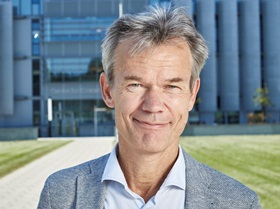
Professor Kamil R Kranc, Chair of Haemato-Oncology, serves as the Centre's Director, while Fabiana Muzzonigro is the Centre Administrator.


How we conduct research at this centre

Solid tumours and blood cancers are highly complex ecosystems, with many composed of varying cell types including rare cancer stem cells at the apex of a hierarchical organisation, more differentiated malignant progeny, and a dynamic microenvironment that nurtures tumour growth and survival. At our Centre, we seek to elucidate the fundamental principles that govern this malignant ecosystem. We employ advanced mouse genetics (including barcoding and lineage tracing) and PDX models to dissect how tumour cells function, evolve under selective pressures, evade therapy, and engage with their microenvironment to sustain disease progression. By decoding these intricate cellular and molecular interactions, we aim to identify transformative therapeutic strategies capable of eradicating cancer at its origin - achieving durable remission while preserving normal tissue integrity.

A particular strength of our Centre lies in the generation and application of in vivo models, which are essential for uncovering novel aspects of cancer biology and evaluating emerging therapies. We work in close collaboration with ICR researchers and clinicians at The Royal Marsden to develop patient-derived xenograft (PDX) models of leukaemias and solid tumours by transplanting human cancer tissue into immunocompromised mice. In parallel, we generate and utilise genetically engineered mouse models (GEMMs) to interrogate cancer biology in a physiologically relevant context. By leveraging these sophisticated in vivo systems, the Centre aims to:

  • Uncover new facets of cancer biology in a complex in vivo ecosystem
  • Discover and validate novel therapeutic targets allowing for elimination of cancer stem cells and their malignant progeny in blood cancers and solid tumours
  • Collaborate closely with drug discovery teams at the ICR to develop inhibitors of these targets
  • Evaluate new anti-cancer drugs in pre-clinical in vivo models, paving the way for clinical trials.

In addition to our academic focus, CIVM serves as a collaborative hub across the ICR and The Royal Marsden, providing the ICR community with cutting-edge expertise in advanced mouse genetics and humanised mouse models of cancer.

Join us

We are recruiting two exceptional Group Leaders to join the Division of Cancer Biology and the Centre for In Vivo Modelling (CIVM). This is a unique opportunity to shape the future of cancer biology research, lead innovative programmes, and make discoveries that transform patient outcomes.

These new Group Leaders will investigate fundamental mechanisms of tumour initiation, progression, and treatment resistance, and develop cutting-edge preclinical models to advance understanding of cancer biology. Working in close collaboration across the ICR and The Royal Marsden Hospital, the postholders will translate discovery science into new therapeutic opportunities, contributing to the ICR’s mission to make the discoveries that defeat cancer.

Find out more about the vacancies

Members of this Centre

Pipettes and well plates

In Vivo Modelling core

We provide cutting-edge expertise in advanced mouse genetics and humanized mouse models of cancer.

CIVM Service Core

Other staff:

Driving discovery through collaboration 

At CIVM, our collaborative spirit drives our mission to advance cancer cures. We actively partner with basic science, translational, and clinical research groups across the ICR and The Royal Marsden. Our collaborations also extend beyond, working closely with distinguished academic teams at the Universities of Oxford, Cambridge, Edinburgh, Cardiff, London, Glasgow, and the Francis Crick Institute.


News from the Centre

We are recruiting a Group Leader in In Vivo Cancer Modelling. We welcome applications at both the Career Development Faculty and Career Faculty levels. Competitive start up package is available. For further particulars please contact [email protected].


Current vacancies

There are currently no vacancies available in this group or area.

News from the ICR

04/02/26

The Government has today published the National Cancer Plan, setting out a 10-year strategy to improve cancer outcomes in England through new targets and measures to accelerate diagnosis and treatment. 

A headline ambition of the Plan is that, by 2035, 75 per cent of (three in four) cancer patients will be cured, or living well, five years after diagnosis.

Research to power progress against cancer

The Plan includes a renewed focus on research, highlighting that we are in the “foothills of an unprecedented revolution in science and technology” that will continue to develop our understanding of the prevention, earlier diagnosis and treatment of cancer.  

The National Cancer Plan outlines six cancer research priorities, new approaches to speed up the adoption of innovation in the NHS, and a renewed push to harness the power of clinical trials while also ensuring equitable access for all patients to join them.  

It follows a public consultation held last year, to which The Institute of Cancer Research, London, contributed. The Institute of Cancer Research (ICR), which is both a specialist research institute and a charity, highlighted the critical importance of research in advancing our understanding of cancer and shaping effective policy across prevention, early diagnosis and treatment.

Cancer research needs sustained investment

The ICR also emphasised the need for sustained long-term investment in cancer research to ensure continued progress against the disease. The ICR’s response reflected the need for a commitment to evidence-based policymaking and the requirement to ensure research remains central to the National Cancer Plan. 

Commenting on the National Cancer Plan, Professor Kristian Helin, Chief Executive of The Institute of Cancer Research, London, said: 

"We strongly welcome the publication of the National Cancer Plan and the clear ambition that the Government has set out to reduce deaths from cancer across England and improve the quality of life of cancer patients. We're pleased to see that the importance of cancer research is being acknowledged as the key driver of improved diagnosis and treatment of all cancer types in the National Cancer Plan.  

“Cancer research cannot succeed in isolation. It relies on a strong life sciences and higher education ecosystem, underpinned by world-class infrastructure, sustainable investment and access to the best skills and talent. If the UK is to deliver on the ambitions of the National Cancer Plan and retain its position as a global leader in cancer research, it is essential that this ecosystem is actively supported and strengthened. Without this, this plan will be significantly harder to deliver. We look forward to working with the Government to make their ambitions a reality." 

Read more about our work to enable cancer research to thrive on behalf of scientists and patients.