


Close-up of an the ICR logo on a research centre

Centre for In Vivo Modelling

The Centre for In Vivo Modelling is a newly established research centre within the Division of Cancer Biology at the ICR. Our scientists and clinical researchers use state-of-the-art in vivo models to address fundamental questions in cancer biology, with the ultimate aim of identifying curative treatments. We also serve as a collaborative hub across the ICR and The Royal Marsden, providing cutting-edge expertise in advanced mouse genetics and humanised in vivo models of cancer.

Professor Kamil R Kranc, Chair of Haemato-Oncology, serves as the Centre's Director, while Fabiana Muzzonigro is the Centre Administrator.


How we conduct research at this centre

Solid tumours and blood cancers are highly complex ecosystems, with many composed of varying cell types including rare cancer stem cells at the apex of a hierarchical organisation, more differentiated malignant progeny, and a dynamic microenvironment that nurtures tumour growth and survival. At our Centre, we seek to elucidate the fundamental principles that govern this malignant ecosystem. We employ advanced mouse genetics (including barcoding and lineage tracing) and PDX models to dissect how tumour cells function, evolve under selective pressures, evade therapy, and engage with their microenvironment to sustain disease progression. By decoding these intricate cellular and molecular interactions, we aim to identify transformative therapeutic strategies capable of eradicating cancer at its origin - achieving durable remission while preserving normal tissue integrity.

A particular strength of our Centre lies in the generation and application of in vivo models, which are essential for uncovering novel aspects of cancer biology and evaluating emerging therapies. We work in close collaboration with ICR researchers and clinicians at The Royal Marsden to develop patient-derived xenograft (PDX) models of leukaemias and solid tumours by transplanting human cancer tissue into immunocompromised mice. In parallel, we generate and utilise genetically engineered mouse models (GEMMs) to interrogate cancer biology in a physiologically relevant context. By leveraging these sophisticated in vivo systems, the Centre aims to:

  • Uncover new facets of cancer biology in a complex in vivo ecosystem
  • Discover and validate novel therapeutic targets allowing for elimination of cancer stem cells and their malignant progeny in blood cancers and solid tumours
  • Collaborate closely with drug discovery teams at the ICR to develop inhibitors of these targets
  • Evaluate new anti-cancer drugs in pre-clinical in vivo models, paving the way for clinical trials.

In addition to our academic focus, CIVM serves as a collaborative hub across the ICR and The Royal Marsden, providing the ICR community with cutting-edge expertise in advanced mouse genetics and humanised mouse models of cancer.

Join us

We are recruiting two exceptional Group Leaders to join the Division of Cancer Biology and the Centre for In Vivo Modelling (CIVM). This is a unique opportunity to shape the future of cancer biology research, lead innovative programmes, and make discoveries that transform patient outcomes.

These new Group Leaders will investigate fundamental mechanisms of tumour initiation, progression, and treatment resistance, and develop cutting-edge preclinical models to advance understanding of cancer biology. Working in close collaboration across the ICR and The Royal Marsden Hospital, the postholders will translate discovery science into new therapeutic opportunities, contributing to the ICR’s mission to make the discoveries that defeat cancer.

Find out more about the vacancies

Members of this Centre

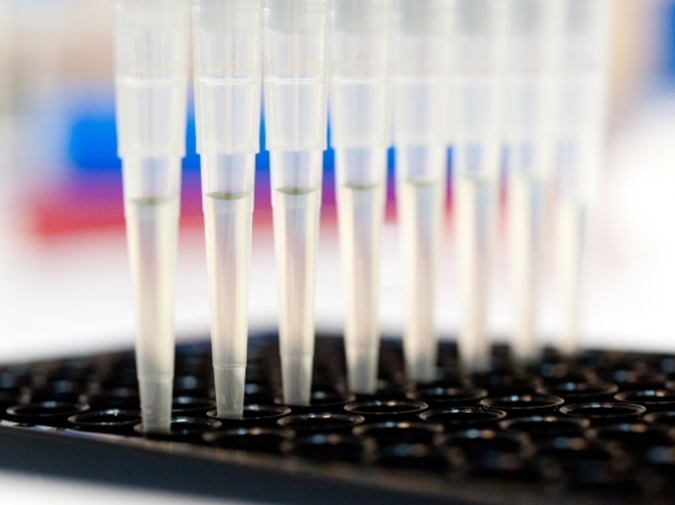
Pipettes and well plates

In Vivo Modelling core

We provide cutting-edge expertise in advanced mouse genetics and humanized mouse models of cancer.

CIVM Service Core

Other staff:

Driving discovery through collaboration 

At CIVM, our collaborative spirit drives our mission to advance cancer cures. We actively partner with basic science, translational, and clinical research groups across the ICR and The Royal Marsden. Our collaborations also extend beyond, working closely with distinguished academic teams at the Universities of Oxford, Cambridge, Edinburgh, Cardiff, London, Glasgow, and the Francis Crick Institute.


News from the Centre

We are recruiting a Group Leader in In Vivo Cancer Modelling. We welcome applications at both the Career Development Faculty and Career Faculty levels. Competitive start up package is available. For further particulars please contact [email protected].


Current vacancies

There are currently no vacancies available in this group or area.

News from the ICR

24/06/26

The Institute of Cancer Research, London, and The Royal Marsden NHS Foundation Trust have announced a new licensing agreement with MedTech company Mint Medical, a Snke Company, to improve monitoring for patients with bone disease in advanced prostate cancer and multiple myeloma.

Following a long-running collaboration, an AI algorithm created by researchers and clinicians at The Institute of Cancer Research (ICR) and The Royal Marsden has been integrated into Mint Medical’s mint Lesion software.

As a result of the agreement, Mint Medical can now offer this AI-powered software to healthcare providers globally.

Using AI to improve bone imaging 

The new software was developed to improve the visualisation of cancer growing inside bones, using a type of MRI called diffusion-weighted imaging, or DWI.

DWI is especially useful in scanning patients with prostate cancer and multiple myeloma.

In prostate cancer, secondary tumours, also known as metastases, can develop in the bone. In multiple myeloma the original, or primary, tumours develop in the bone marrow.

The software helps to pin-point areas of bone disease, as well as whether the disease is getting better or worse with treatment.

It could make bone disease assessment more standardised and accurate for patients – saving patients and healthcare providers time and money.

Translating innovation to patient benefit

The new software builds on expertise developed at the ICR and The Royal Marsden over several years, during which they have pioneered improvements to whole-body DWI with the aim of improving its speed and accuracy – including through this collaboration with Mint Medical.

Funders of this research have included the National Institute for Health and Care Research (NIHR), which supported it both via Invention for Innovation (i4i) grants and The Royal Marsden and the ICR’s joint NIHR Biomedical Research Centre (BRC), the ICR, which is itself a charity, and The Royal Marsden Cancer Charity and Cancer Research UK.

The initial results of the integration of the ICR-Royal Marsden-developed algorithm into mint Lesion have already been announced at major medical conferences and published in scientific journals.

'This software will improve the lives of patients with advanced disease'

Dr Matthew Blackledge, Group Leader in Computational Imaging at The Institute of Cancer Research, London, said:

“Our innovations in AI have provided us with an opportunity to detect the presence of disease within DWI with unprecedented speed and accuracy.

“A core motivation for all our group’s research is to translate our findings into patient benefit. By working closely with Mint Medical, we have been able to deliver clinical software that will improve the lives of patients with advanced disease.”

'Our goal is to help patients stay well for longer'

Professor Dow-Mu Koh, Consultant Radiologist in Functional Imaging at The Royal Marsden NHS Foundation Trust and Professor in Functional Cancer Imaging at The Institute of Cancer Research, London, said: 

“Assessment of cancer-related bone disease remains an unmet clinical need. Our software, designed for use alongside whole-body MRI, can help determine whether a patient is responding to treatment.

“By improving the sensitivity of treatment assessment, we may also be able to identify earlier when a treatment is not effective and switch patients to alternative therapies more quickly. Ultimately, the goal is to help patients stay well for longer.”

Dr Matthias Baumhauer, Managing Director at Mint Medical, said:

“This collaboration with The Institute of Cancer Research and The Royal Marsden is more than a development project for us – it is the connection of high-quality clinical research with our technology. I am proud of what we have achieved together: a solution that provides radiology with an objective, reproducible tool where previously it was difficult to achieve anything beyond a rough, subjective estimate.”

Dr Jon Wilkinson, Director of Business and Innovation at The Institute of Cancer Research, London, said:

“This collaboration is a powerful demonstration of what’s possible when world-class researchers and clinicians at the ICR and The Royal Marsden join forces with innovative partners like Mint Medical. It reflects our mission in action – turning cutting-edge discovery into real patient benefit, through purposeful collaboration.”