
Centre for In Vivo Modelling Service Core

At the Centre for In Vivo Modelling (CIVM), we combine advanced animal genetics and cutting-edge technologies to drive cancer research. Our multidisciplinary team specialises in the generation and maintenance of genetically engineered mouse models (GEMMs), humanised mouse strains, and patient-derived models (xenografts and organoids), using innovations such as CRISPR gene editing, embryo manipulation, and in vivo genetic screening. We develop and cryopreserve new cancer models that closely replicate human disease, supporting translational studies that inform effective therapies. Our approach integrates rigorous scientific standards, ethical oversight, and collaborative expertise, aiming to accelerate progress in understanding cancer biology and developing better treatments for patients.

Our Centre is dedicated to driving innovation and excellence in cancer research through advanced in vivo modelling. We work in close collaboration with the ICR researchers and clinicians at The Royal Marsden to generate genetically engineered mouse models (GEMMs) and patient-derived models, such as patient-derived xenografts (PDXs) and patient-derived organoids (PDOs) to interrogate cancer biology in its own ecosystem. By leveraging these sophisticated in vivo systems, the Centre aims to:

  • Develop innovative cancer models in collaboration with ICR researchers to advance cancer research and drug discovery.
  • Work in partnership with The Royal Marsden Hospital to obtain patient samples and generate new patient-derived cancer models for translational studies.
  • Foster close interdisciplinary collaboration with drug discovery teams to leverage these in vivo models in the creation and testing of next-generation anti-cancer therapies.
  • Continuously improve the sophistication and relevance of our cancer models, ensuring they more faithfully recapitulate the complexity of human disease and enhance the translational impact of our research.


Our services

Advantages of cryopreserving your strains:

  • Allows you to save space, by getting the mice you need, when you need;
  • Reduces your animal costs;
  • Reduces animal use;
  • Reduces risk from disasters (e.g. disease outbreaks, breeding cessation, equipment failures, genetic contamination, natural disasters, etc…).

 What can be cryopreserved?

  • Mouse Sperm
  • Mouse Embryos
  • Mouse Embryonic Stem Cells
  • Mouse Oocytes

 Sperm Cryopreservation:

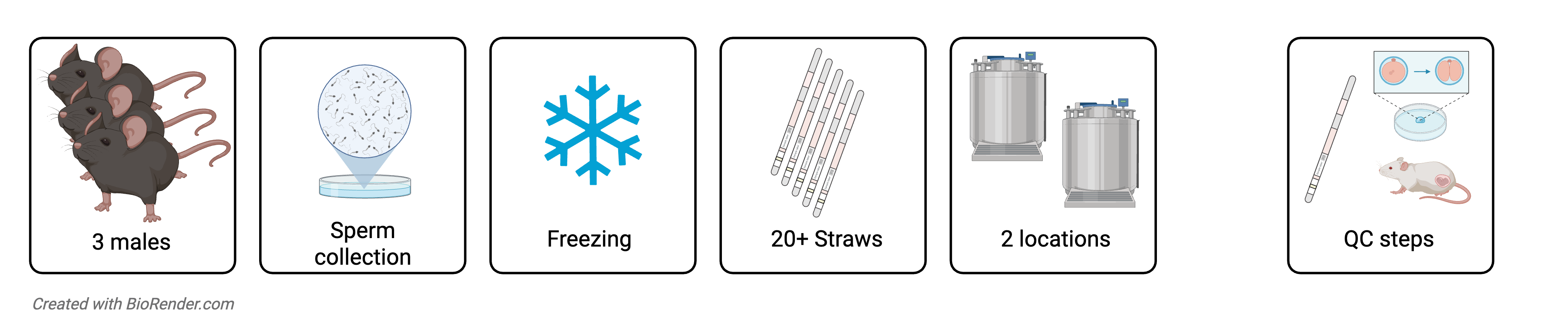
Description: Sperm is retrieved from the epididymal tissues of 3 male mice and is cryopreserved in 20 to 30 straws that are stored in liquid-phase, liquid nitrogen across two tanks in two separate locations (SRD and CCDD), to ensure sample safety and mitigate risks associated to unexpected or uncontrollable events.

Material needed: 3 males, reproductively active, 12-25 weeks old

Timeline: 2-6 weeks (dependant on QC method of choice)

Considerations: this method of cryopreservation is rapid and cheap; however, it only preserves half of the genome. This method is only recommended for single mutations on a common inbred background.

Quality Control: we provide different levels of Quality Control (QC) for different price ranges.

  1. Test thaw QC: we will thaw 1 straw the day after cryopreservation and visually assess motility and viability of the recovered sperm
  2. IVF and culture to blastocyst QC: we highly recommend this QC step. In addition to test thaw, we will also perform IVF and culture embryos up to blastocyst stage. We will provide the investigator with a fertility rate (%) for the recovered sperm. We will charge an extra cost to cover the IVF procedure.
  3. IVF and embryo transfer QC: In addition to test thaw, we will perform IVF and transfer 2-cell embryos into up to 3 pseudopregnant females to generate viable embryos/live pups. We will charge an extra cost to cover the IVF and embryo transfer procedures.

    Please note that we require you to provide your genotyping protocol, as well as full detail of the genetic content of each strain that you submit for cryopreservation.

Diagram of Sperm Cryopreservation

Embryo Cryopreservation:

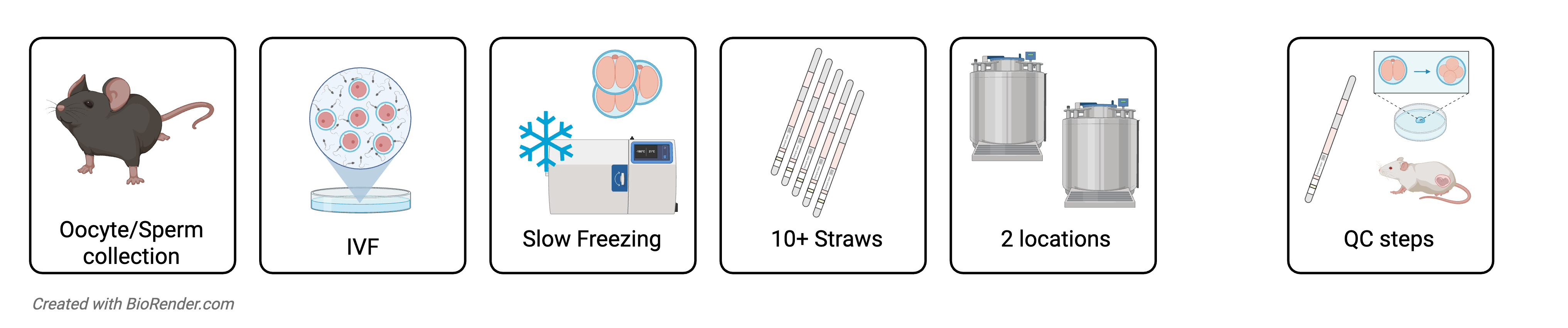
Description: Female mice are hormonally superovulated and oocytes are retrieved for in vitro fertilisation (IVF) with sperm from donor male. Resulting embryos are placed in cryoprotectant and loaded into multiple straws, which are gradually cooled and stored in liquid-phase liquid nitrogen in two separate tanks.

Material needed: Donor male and 8-10 donor females

Timeline: 12-15 weeks

Diagram of Embryo Cryopreservation

Embryonic Stem Cells Cryopreservation:

Not available, yet.

Oocyte Cryopreservation:

Not available, yet.

Cryostorage:

If you have cryopreserved mouse sperm/embryo/oocytes at another institution, we can cryostorage your samples for an annual fee. We do require that the investigator takes charge of shipping costs into our facility, and that thawing and genotyping protocols are submitted to the CIVM.

The CIVM stores all samples in liquid-phase liquid nitrogen tanks (CryoPlus1, ThermoFisher Scientific). Material retrieved from each strain is split between 2 tanks, a main and a backup tank, for redundancy. For additional safety, these 2 tanks are located in two separate buildings at ICR Sutton. Both tanks are continuously monitored by T-scan alarm systems and undergo annual service, as well as daily visual inspections.


Sperm Cryorecovery:

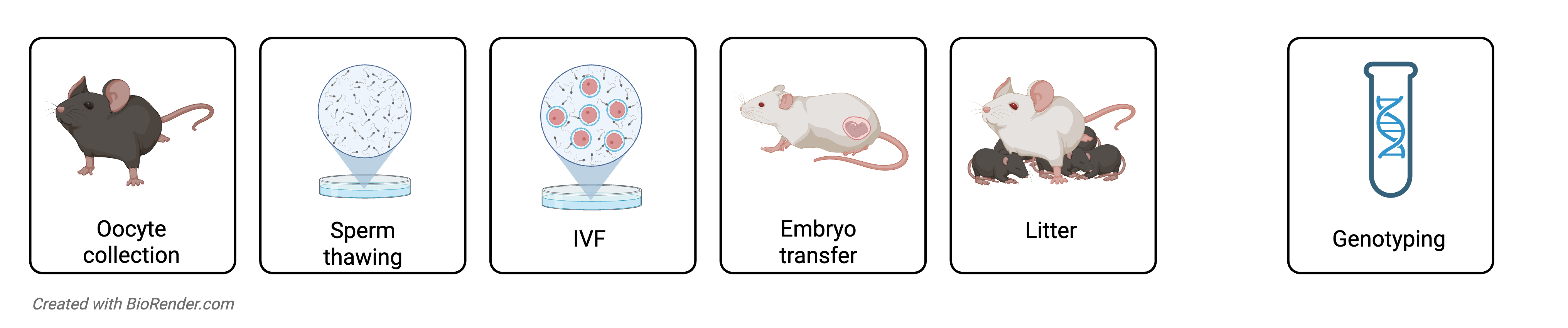
Description: Frozen sperm is cryorecovered by IVF, followed by embryo transfer. We can purchase wild-type female oocyte donors of the same genetic background, or alternatively the investigator can provide homozygous oocyte donors of the same strain.

Material needed: straw with frozen sperm and 8 to 12 females for IVF, 7-16 weeks old.

Timeline: 12-15 weeks

Diagram of Sperm Cryorecovery


Embryo Cryorecovery:

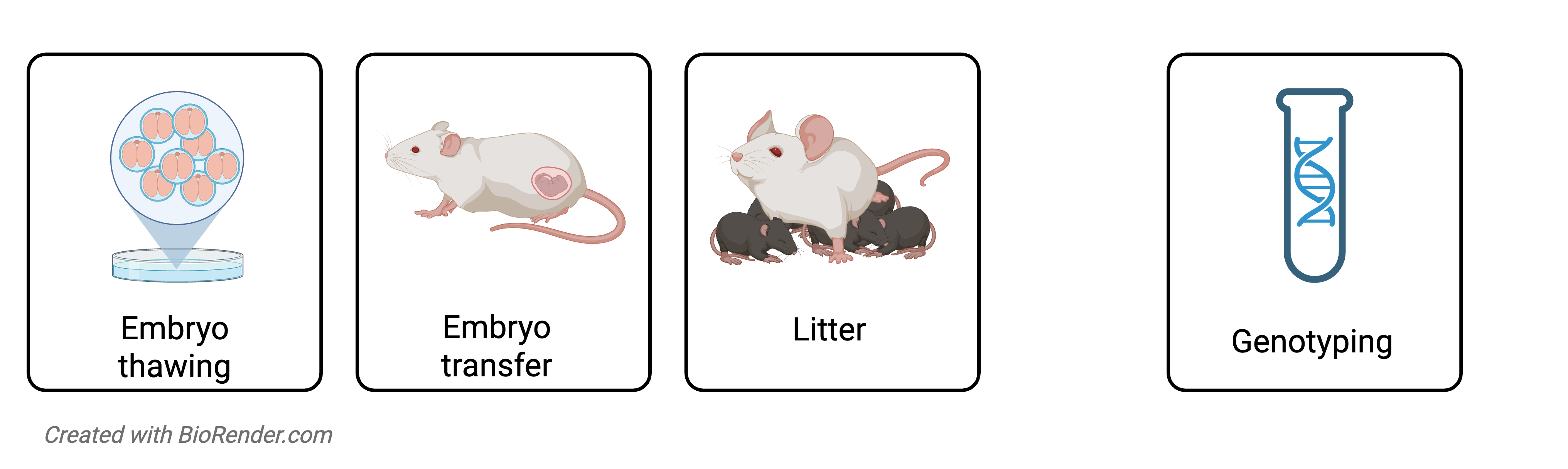
Description: Frozen 2-cell embryos are thawed and transferred into pseudopregnant females.

Material needed: straw(s) with frozen 2-cell embryos

Timeline: 8-10 week


Oocyte Cryorecovery:

Not available, yet.


Mouse rederivation

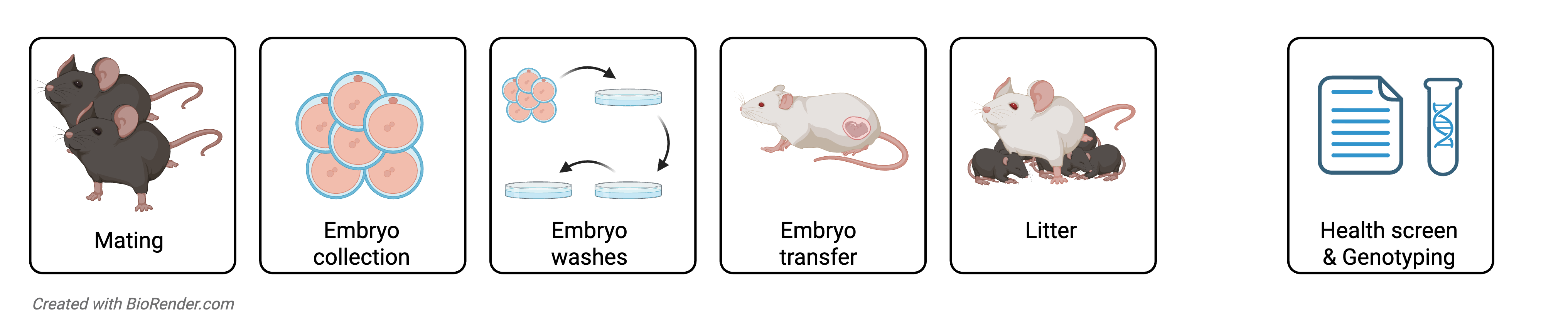
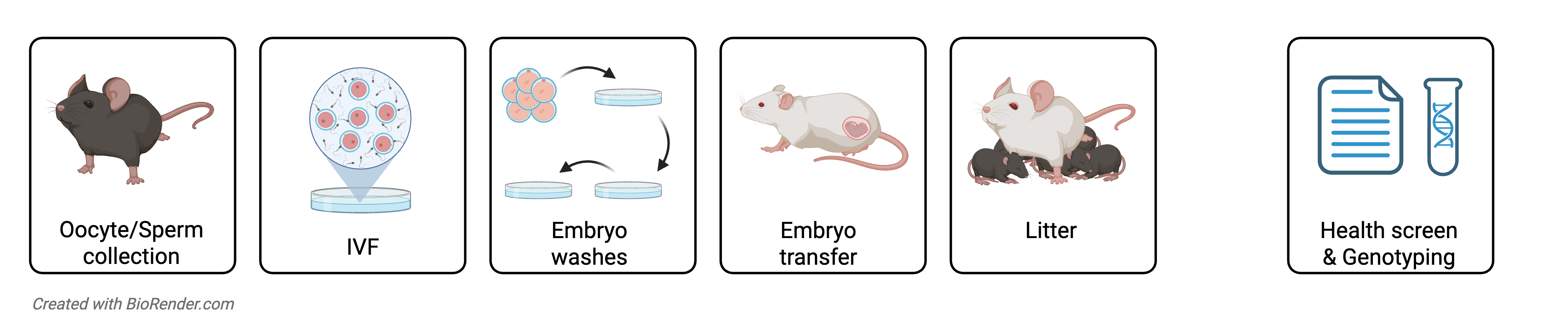
Description: Mouse rederivation is a process used to produce pathogen-free mouse colonies by removing microbial contaminants from existing lines. The procedure can be performed either through natural mating or in vitro fertilization (IVF):

  • In natural mating, embryos are obtained from donor mice and transferred into pathogen-free recipient females.
  • In IVF-based rederivation, fertilized embryos are created in vitro using gametes from donor mice and then implanted into clean recipient females.

Both methods effectively eliminate pathogens, allowing safe importation of mouse strains from lower health-status facilities into the ICR BSU. Samples from both litter and recipient mother will be sent for Health Screening and the associated costs will be charged separately to the Investigator.

Material needed: For IVF-based rederivation we require the investigator to provide 2 males, reproductively active, 12-25 weeks old, and the CIVM will purchase wild-type female egg-donors. Alternatively, if maintaining homozygosity is essential, the investigator will need to provide additional 6-10 females, 7-16 weeks old.

Timeline: 12-15 week

Mouse Rederivation Mating Diagram

Mouse Rederivation IVF diagram

We are currently setting up CRISPR/Cas9-based gene editing protocols. Soon, you’ll be able to apply for projects that involve developing new alleles based on:

  • Knockout by indel formation
  • Knockout by precise deletion
  • Conditional knockout
  • Knock-in of point mutations
  • Knock-in of small tags
  • Large knock-in
  • Exon replacement

These alleles will be developed based on Electroporation of Microinjection of CRISPR/Cas9 system reagents.

We will collaborate with you to design the best strategy and help you generate the genetically engineered mice you need for your project. 

We also provide:

  • Development of humanised mouse strains
  • Development of Patient-derived xenografts (PDX) and organoid models

Latest ICR News

12/03/26

An important study has uncovered an unexpected molecular player that helps make cancer cells stress-resilient, thereby promoting the survival, growth and progression of tumours. 

Researchers have identified the enzyme DHX8 as a crucial regulator of the stress‑response protein HSF1. This discovery deepens the scientific understanding of how cancers develop and resist treatment, and it may have potential to open new avenues for future drug development.

The findings, published in the journal NAR Cancer, reveal that DHX8 controls a critical processing step in the production of the HSF1 protein – a master regulator transcription factor. Known as the ‘guardian of the proteome’, HSF1's normal function is to control the activity of hundreds of genes that enable healthy cells to cope with cellular stresses – especially helping them deal with misfolded proteins.

This management of protein quality control in response to cell stress and aging is beneficial to healthy cells. However, HSF1 can be hijacked by cancers to protect them from the challenging collateral damage caused by activation of cancer-causing oncogenes. By disrupting DHX8 in multiple cancer cell types, the research team demonstrated a striking collapse in this protective network, leading to impaired cell growth and, in some cases, cancer‑selective cell death.

In follow-up work, the researchers, at The Institute of Cancer Research, London, also discovered that specific genetic knockdown or targeted degradation of the DHX8 protein has additional effects on wider processes that contribute to cancer.

Although the work, which was funded by Cancer Research UK, is still firmly in the realm of laboratory biology, this discovery offers a powerful insight into a fundamental stress-resilience mechanism exploited by tumours and lays the groundwork for future exploration of DHX8 as an indirect, and possibly more manageable, way to weaken HSF1 activity.

A hidden regulator emerges

HSF1 has long been recognised as a potent driver of malignancy. Cancer cells depend heavily on this protein to withstand the constant stress of activated cancer genes and the presence of mutated or misfolded proteins – conditions that would be debilitating or lethal without HSF1’s protection. However, HSF1 lacks obvious drug‑binding pockets, making it extremely challenging to target directly with drugs.

To overcome this barrier, the ICR team screened more than 7,500 ‘druggable genes’ to search for regulators of HSF1 that might represent alternative indirect targets. They looked for genes that decreased the activity of HSF1 in cancer cells by measuring expression of a gene whose activity depends on HSF1. Of all the hits emerging from the screen, DHX8 stood out as the strongest and most consistent.

DHX8 is known to function as part of a cellular machine called the spliceosome, acting as an RNA helicase that remodels RNA structures and known for its role in the late stages of messenger RNA (mRNA) splicing, prior to translation into protein.

The researchers showed that silencing DHX8 led to a large reduction in HSF1 protein levels, even though the amount of HSF1 mRNA remained largely unchanged. This pointed to a problem not with expression of the HSF1 gene itself but with processing of the corresponding HSF1 mRNA. Using a suite of advanced molecular techniques, the team demonstrated that DHX8 binds directly to HSF1 pre‑mRNA and is required for the removal of specific unwanted sequences known as ‘introns’ within the HSF1 mRNA.

Introns are non-coding sequences in genes and the corresponding mRNA molecules that must be removed from the pre-mRNA before the genetic information can be correctly translated from mRNA into protein. Without DHX8, these introns are retained, preventing mature HSF1 mRNA from forming and sharply reducing the amount of HSF1 protein available to activate stress‑response genes.

Notably, this effect appeared to be unique to DHX8. Knocking down other helicases that are also usually involved in splicing did not produce the same outcome, revealing a surprising specificity in how HSF1 is processed.

Broad consequences for cancer biology

Not surprisingly, the impact of DHX8 loss extended far beyond HSF1. When DHX8 was silenced or degraded in different cancer cell lines, the resulting cascade of faulty splicing affected thousands of transcripts, including those for many genes involved in stress adaptation, oncogenic signalling and cell‑cycle control. Particularly affected was a well‑established HSF1‑regulated cancer gene signature known to be associated with poor clinical outcomes in cancer patients.

Interestingly, cancer cells were shown to be dramatically more vulnerable than healthy cells to DHX8 disruption. In tumour cell lines, the absence of DHX8 triggered reduced proliferation, accumulation of cells at a critical checkpoint before division and, in some cases, clear signs of programmed cell death. Non‑tumorigenic cells, in contrast, showed much milder responses.

This difference is consistent with the idea that cancer cells operate under high levels of intrinsic stress and therefore rely more heavily on robust RNA processing and HSF1‑driven protective programmes, indicating a possible therapeutic selectivity.

While the new results identify and validate DHX8 as a cancer dependency and potential drug target, its role in the spliceosome means that any future therapy based on inhibiting DHX8 would need careful evaluation. Although cancer cells showed greater sensitivity in the laboratory, DHX8 is also essential to many normal cellular functions, and the long‑term cancer-selective therapeutic window remains uncertain. The potential toxicity of possible future DHX8 inhibitors would need to be investigated thoroughly before any potential clinical development.

A promising research direction

Nevertheless, the new findings identify a significant step in understanding the fundamental interplay between RNA processing, stress responses and cancer biology, providing a conceptual foundation for future research and possible therapies.

Co‑senior author Dr Paul Clarke, Group Leader in RNA Biology and Molecular Therapeutics at the ICR, said:

“We were very surprised by the specificity and strength of the link between DHX8 and HSF1. At the time we began this work, very little was known about DHX8 in human cells, and it certainly wasn’t obvious that it would play such a decisive role in regulating this key cancer‑associated pathway.

“Our research reveals an entirely new layer of control in the stress‑response machinery on which cancer cells depend. DHX8 is not just an accessory splicing factor – it appears to be indispensable for the proper processing of HSF1 and a range of other transcripts that help tumour cells survive stressful conditions.”

Co-senior author Professor Paul Workman, Harrap Professor of Pharmacology and Therapeutics and Group Leader in Signal Transduction and Molecular Pharmacology at the ICR, said:

“This study stands as a compelling example of how unbiased functional genomic screening, followed by digging into the intricacies of RNA biology, can surface unexpected vulnerabilities in cancer. By revealing a new molecular cog in the stress‑response network, the research opens up promising new scientific territory – illustrating once again that in the microscopic world of cellular machinery, hidden players can have outsized influence.

“The next step will be to develop small-molecule tools that can help dissect DHX8’s functions more precisely and act as pathfinder molecules for potential therapeutics. This search is already underway in our Centre for Cancer Drug Discovery, enabled by the 3D X-ray crystal structure of human DHX8 that we determined previously at the ICR.”

Image credit: MustangJoe from Pixabay