
Science Talk
With our Science Talk blog, we hope to lift the lid on the black box that is the ICR: to show you inside our labs, to introduce you to a few of the people here who make the discoveries, and to allow them to tell some of the stories behind the science. We try to put our discoveries in a wider scientific context, and give an idea of how our science is actually done. We also give you the view from the ICR of important developments in the wider world of cancer research.
.jpg?sfvrsn=aa1aee5e_1 "Damian with his wife and four sons (credit: Damian Knowles)")
“Without research, my four children would have lost their dad” – Damian’s bowel cancer story
Music artist Damian Knowles – also known as KNWLSY - was diagnosed with stage 3 locally advanced bowel cancer in February 2023. Following successful surgery and chemotherapy, he now has no evidence of disease. Here, the 44-year-old father of four explains why new developments in cancer research give him hope.

“Research has been absolutely crucial in keeping me alive” – Mo’s bowel cancer story
In December 2014, shortly before his 32nd birthday, Mo Haque was diagnosed with stage 4 inoperable bowel cancer. He was told there was only a small chance he could be treated successfully. However, thanks to immunotherapy, he has had no evidence of disease since 2018. Following his diagnosis, Mo also learned he had Lynch syndrome, a genetic condition which makes him more pre-disposed to certain types of cancer.
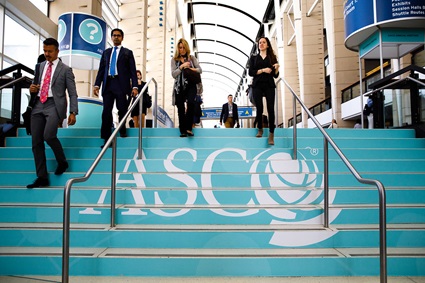
ASCO 2026: World experts come together to share the latest breakthroughs in cancer research
From 29 May to 2 June 2026, the world’s leading oncologists and researchers – including scientists from The Institute of Cancer Research, London – will gather in Chicago and online for the 2026 American Society of Clinical Oncology (ASCO) Annual Meeting, one of the most important events in the global cancer research calendar.

How are we using artificial intelligence to defeat cancer?
At The Institute of Cancer Research, we embrace innovation as a driving force behind our mission to defeat cancer. Today, one of the most transformative tools at our fingertips is artificial intelligence (AI), which is enabling us to push the boundaries of what is scientifically and medically possible.

Breaking the silence: removing the stigma around bowel disease
Early detection of bowel cancer is linked to significantly higher survival rates. Although barriers to early diagnosis exist across all cancers, one that poses a major obstacle in bowel cancer is stigma. To learn more about why this is and how we can overcome it, Isy Godfrey spoke with Dr Penelope (Pebs) Edwards and Dr Jennifer Fisher, both clinical fellows in the Genomics and Evolutionary Dynamics laboratory at The Institute of Cancer Research, London.

From legacy to lifesaving science: how gifts power the future of cancer research
Philanthropic gifts play a vital role in accelerating breakthroughs here at The Institute of Cancer Research, London – from kickstarting new research programmes and funding new laboratory equipment to supporting the next generation of scientists.

‘I prepared for my kids to grow up without me. Thanks to research, I am now cancer-free’- Sophie’s bowel cancer story
Sophie Umhofer, 44, was diagnosed with stage 4 bowel cancer in 2018 at the age of 36. She was told she would be unlikely to see her 40th birthday. However, later this year, she will be celebrating five years with no evidence of disease - thanks to an experimental immunotherapy trial, for which she was eligible because her tumour had a faulty BRAF gene.

“My mum’s passing has given me extra motivation to run the London Marathon” – Oliver’s story
Oliver, 34, lost his mum in December 2024, just a few months after she was diagnosed with an aggressive form of bile duct cancer. On 26 April, Oliver will be running the London Marathon in her memory, raising funds for our vital research.
.png?sfvrsn=5c3c49f2_1 "JoeJo (1)")
"I want to do Dad proud" - The London Marathon runners motivated by love and loss
As they take on the London Marathon this Sunday, many of our runners are driven by powerful personal stories and a shared sense of hope. Among them are Joe Dale and Jo Barratt, both running in memory of their dads, and raising funds for our vital research.

“No family should have to go through this” – Charlie’s London Marathon story
Charlie Nodwell’s wife, Courtney, was diagnosed with stage 3 bowel cancer in September 2024 at the age of 40. She has recently completed her final round of chemotherapy. Here, Charlie explains why, having never previously been a runner, he will be taking on the London Marathon on 26 April, to raise vital funds for our groundbreaking research.
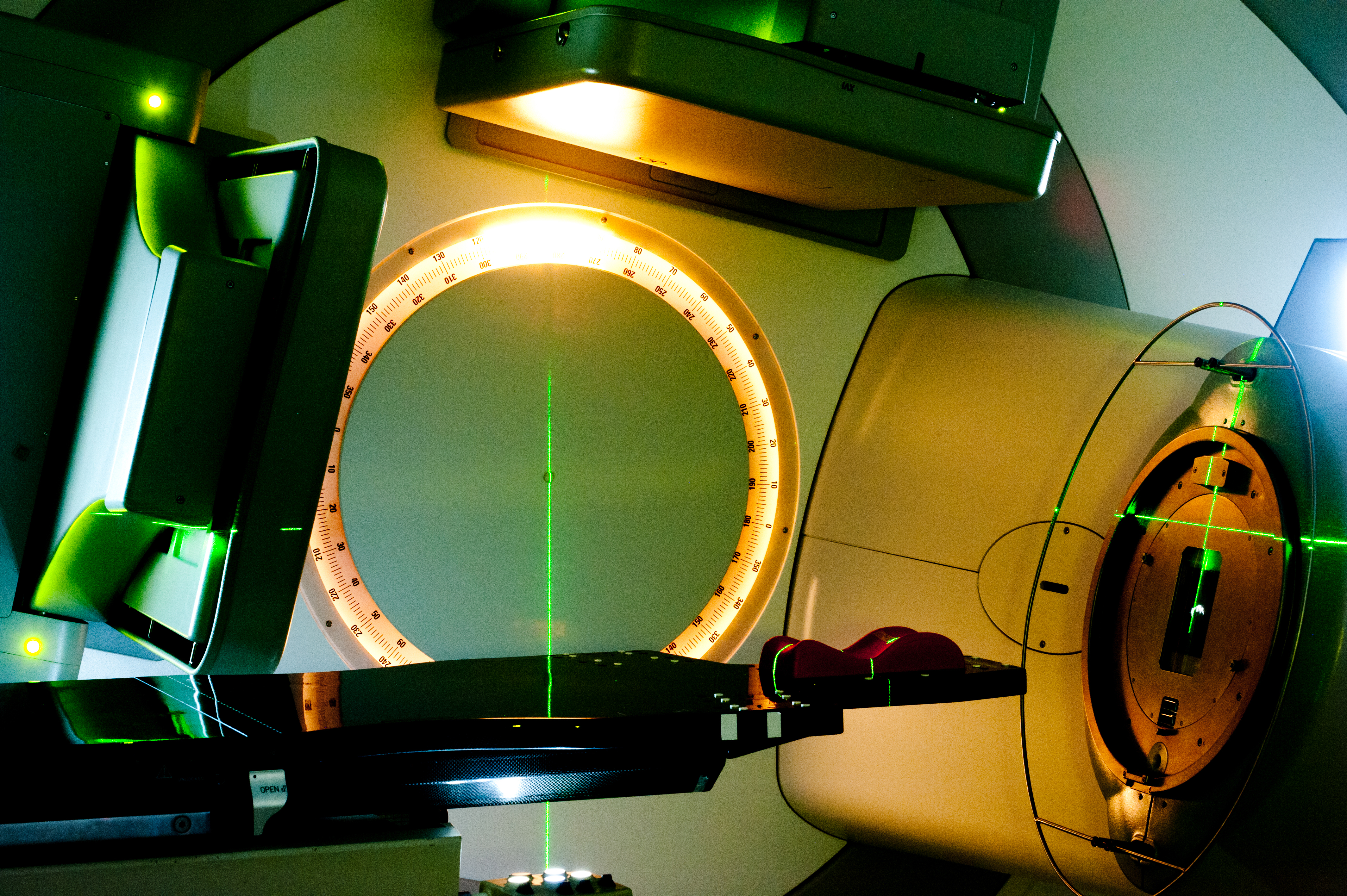
Can we make radiotherapy faster and more accurate to keep ahead of the predicted rise in cancer cases?
Since the discovery of X-rays in 1895, radiation therapy, or radiotherapy, has made substantial advancements as a cancer treatment. It’s now responsible for approximately 40 per cent of cancer cures. Yet access to radiotherapy could be threatened by the predicted increase of cancer incidence and the growing pressure healthcare systems already face.

Delivering the National Cancer Plan will depend on research – and research depends on universities
The UK Government launched their National Cancer Plan in February 2026. Our Advocacy Manager, Ollie Richards, takes a closer look at the factors that will shape its implementation – and why research will determine whether its ambitions are realised.

“Research won’t bring Bradley back, but it might help others”
Caroline’s son, Bradley, was diagnosed with advanced bowel cancer at the age of 22. Despite treatment, he died 14 months later. This year, the fifth anniversary of Bradley’s death, Caroline explains why research into early-onset bowel cancer is so important.

“We have to push forward to find better cancer treatments and ultimately, a cure” – Dylan’s London Landmarks story
Dylan Peakall, 26, completed the London Marathon in 2025, raising over £6,400 to support our vital research. This April, he will be fundraising for the ICR again, running the London Landmarks Half Marathon alongside his friend, Anton, in memory of their close friend Danny. Danny was diagnosed with an aggressive form of lung cancer at the age of 29 and died 15 months later in November 2024.

“My mum’s strength, resilience and determination inspire me every day” – Steve’s London Marathon story
Steve Phillips will be celebrating his 50th birthday by running the 2026 London Marathon to raise funds for our groundbreaking research. Motivated by the resilience of his mum, who has been diagnosed with four separate cancers over the last four years, he hopes to cross the finish line alongside his 18-year-old son, Ethan.

“Running the Marathon is my thank you to those who researched my type of cancer” - Abi’s London Marathon story
Abi Sherratt, 27, was diagnosed with papillary thyroid cancer in February 2025. With her treatment now behind her, she is preparing to run the London Marathon on 26 April. In doing so, she wants to prove to herself that she is still capable of taking on tough challenges following her diagnosis, while raising funds for our vital research.

“Cancer research is one of the most important fundraising causes out there” – Emily’s London Marathon story
Emily Webster, 32, was diagnosed with a rare cancer of the appendix in 2021. Fortunately, it was caught early and following successful surgery, she now has no evidence of disease. In April, she will be running the London Marathon in memory of her father-in-law, Bryan, a keen runner who died of cancer in 2023.
.tmb-hbmobile.jpg?Culture=en&sfvrsn=7f7711c7_1 "Simple Western™ Leo™ System team")
Cancer drug discovery scientists become first in the UK to use new protein measuring and detection technology
In this blog post, Mark Jones speaks with Romina Tocci, Senior Laboratory Manager in the ICR’s Centre for Cancer Drug Discovery, about what this technology means for our ability to discover new cancer treatments.

“Cancer is a word no one wants to hear. I wanted to leave a gift in my Will to help the fight against it” – Verity’s story
After both her parents died of cancer, Verity Mutch, 69, says we need to find kinder ways to treat the disease. That is why she has pledged to leave a gift in her Will to fund our groundbreaking research.

“Research is a chance to prevent heartbreak before it begins” – Kaiya’s story
Kaiya Patel was five years old when she was diagnosed with an aggressive form of acute lymphoblastic leukaemia (ALL) in March 2018. She passed away ten months later at the age of six. Since then, Kaiya’s mum Annu and her dad Ruchit, have set up The Kaiya Foundation in their daughter’s memory and are supporting our vital research into high-risk leukaemia. Here, Annu shares their story.