

Here, we look at some of the ways we are using AI to advance our pioneering research.
Cancer drug discovery and development
AI is rapidly transforming drug discovery and development by helping our researchers to analyse vast datasets, predict how drugs could behave and pinpoint new treatment strategies for exploration – all much more swiftly than traditional methods.
“The ICR continues to demonstrate how AI transforms the ways in which we can find the new treatment approaches that are desperately needed. AI won’t replace scientists or clinicians, and it can’t directly cure cancer, but it is becoming an indispensable part of our toolkit in drug discovery and development.”
Professor Chris Jones, Head of the Division of Cancer Biology
One example is a tool developed by Dr Matt de Vries and Professor Chris Bakal to analyse how cancer cells respond to drug treatments. The scientists used nearly 100,000 three-dimensional microscopic images of skin cancer cells to train the tool, allowing it to learn how changes in the shape of each cell reflect biological responses to different drugs.
By analysing these changes, the tool can predict a drug’s effectiveness and response across different patient groups, reducing the time required to develop and trial drugs in clinical studies by several years. The team has co-founded a spinout company, Sentinal4D, to refine the tool and explore its further uses.
AI has also been applied to help identify new combinations of existing drugs to treat difficult or incurable cancers. In a study led by Professor Chris Jones, researchers used an AI drug discovery platform to investigate treatments for diffuse midline glioma (DMG) – an aggressive childhood brain cancer that is currently always fatal.
The platform revealed that repurposing two existing drugs could extend survival for a quarter of DMG patients carrying a specific genetic mutation, for whom no targeted or effective treatment is currently available. This combination treatment has rapidly been progressed into full-scale clinical trials.
Personalised cancer treatment
AI is also being used to identify differences in individual tumours that will helps clinicians to work out which treatments are most likely to be effective, and who might be at risk of cancer coming back.
Professor Anguraj Sadanandam has led the development of an AI tool to do this, called PhenMap. By integrating biological data with clinical information, PhenMap can group patients based on patterns too complicated for humans to identify. The team has already demonstrated that PhenMap can help identify the metastatic bowel cancer patients likely to benefit from a particular drug. In doing so, it should prevent the use of ineffective therapy, which carries the risk of serious side effects.
“By learning from tumours, scans and patient experiences, AI can help us choose treatments that fit the individual, minimise harm and adapt as disease changes. Used responsibly, it can support kinder decisions, clearer patient-centred conversations and care that respects each person’s biology and priorities, through every stage of treatment and recovery.”
Professor Anguraj Sadanandam, Group Leader of the Systems and Precision Cancer Medicine Group
Professor Ros Eeles is using AI to study the genetic clues within prostate cancer tumours, identifying different subtypes of the disease and predicting which tumours are likely to be aggressive, at the point of diagnosis. This approach could give clinicians the ability to intervene before the disease spreads, transforming outcomes for those at highest risk.
A new AI test can analyse tumour biopsy images and determine which men with high-risk prostate cancer are likely to benefit from abiraterone – a drug discovered at the ICR. Research co-led by Professor Nick James found that for approximately a quarter of these men, abiraterone can almost halve the risk of death. By identifying who will benefit most from the drug, the AI tool could spare others from the associated side effects.
A collaboration led by Dr Navita Somaiah will use AI to identify biomarkers indicating whether triple-negative breast cancer responds to immunotherapy. The collaboration brings together cancer researchers from the ICR and our partner hospital, The Royal Marsden NHS Foundation Trust, with cosmology and astrophysics experts from industry and academia.
Accelerating image analysis
From whole-body MRIs and CT scans to tissue biopsy samples – researchers at the ICR, in partnership with The Royal Marsden Hospital, are harnessing AI to spot patterns within images, to improve the diagnosis and treatment of a range of cancers.
Dr Richard Lee has shown that an AI model could diagnose lung cancer from a CT scan of a patient with lung nodules – an abnormal growth that is common and mostly benign, but occasionally cancerous. The team hope the technology will speed up the detection of lung cancer by helping to fast-track high-risk patients to treatment.
Using AI, Dr Matt Blackledge has developed an approach that makes it easier for radiologists to assess the extent of bone disease in people with advanced prostate cancer or multiple myeloma. The approach minimises variability in the images achieved from scans, making them quicker and easier to compare across time and scanner sites.
In addition, his AI-powered ‘quickDWI’ for prostate cancer speeds up a specialised form of MRI scan, with the imaging process itself taking less than five minutes. Shorter scans mean less discomfort for men already coping with pain and fatigue, and halving appointment slots could double hospital throughput, reducing waiting times for thousands of patients. Faster imaging also allows doctors to monitor treatment response more closely and adapt therapy sooner, improving outcomes.
“Imaging is one of the best tools we have for managing advanced prostate cancer, but the long scan times are a real barrier. For those in pain, the procedure can be gruelling. With AI, we can make the scan faster, more comfortable and more widely available – potentially reducing waiting times for thousands of patients. If we can get scan times down to the real minimum, we can create a future where men have quick prostate checks in the community. That’s the kind of impact we’re aiming to achieve.”
Dr Matthew Blackledge, Group Leader of the Computational Imaging Group
Predicting how cancer evolves
At the Centre for Evolution and Cancer at the ICR, scientists from across multiple disciplines are using AI, combined with the principles of Darwinian evolution, to predict how cancers will evolve and spread.
A team of researchers in the Centre used these methods to predict the risk of prostate cancer returning. They used AI to capture specific measurements relating to a prostate cancer tumour’s ability to change over time, and showed that these measurements correlate with disease recurrence more than a decade after the initial diagnosis.
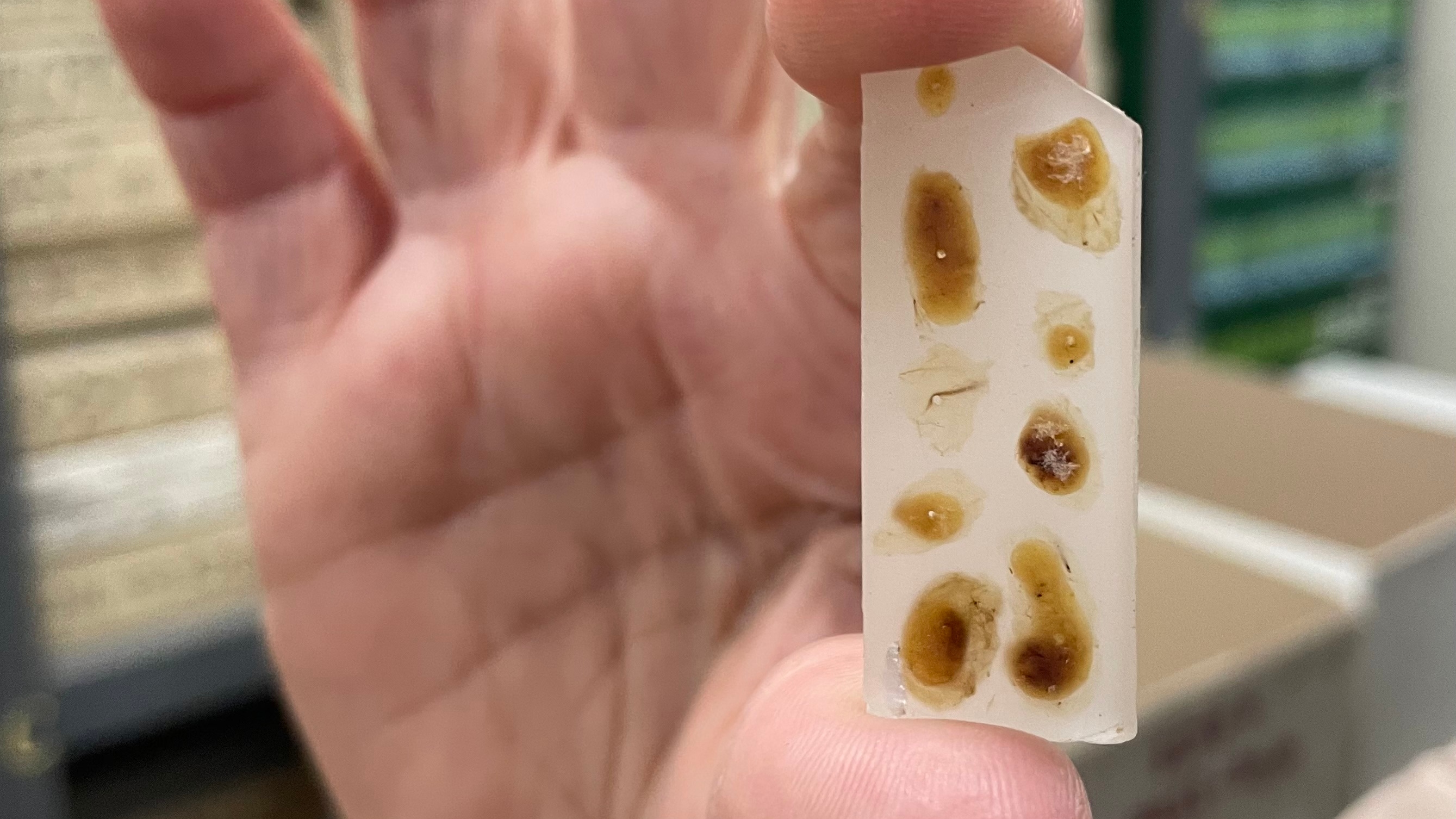
Professor Trevor Graham has developed an AI tool that can unlock long‑hidden genetic information stored in preserved tumour samples. Traditionally, DNA in formalin‑fixed tissue – kept in paraffin blocks in hospitals worldwide – was too damaged for detailed genetic analysis. However, Professor Graham’s AI method that ‘undoes’ preservation‑induced changes has made it possible to recover accurate underlying mutational patterns from these archives. This breakthrough has opened a vast treasure trove of cancer data, allowing researchers to trace cancer evolution across decades and study the earliest steps tumours take as they form.
The technique is currently being used to study bowel cancer tumour samples from more than 70 years ago, to unlock the mystery of rising bowel cancer cases in adults under the age of 50.
Big data analysis
Big Data refers to extremely large volumes of data that grow rapidly. These databases can reveal important associations and trends, but their complexity and size make them very difficult, if not impossible, to analyse using traditional data processing systems.
With the help of AI, researchers can scrutinise vast quantities of data – such as genomic sequences, health screening images and patients’ clinical records – to identify molecular details that may help accelerate progress in cancer research.
The ICR is a key partner in a £10 million UK‑wide programme designed to harness data from health records, genomics, family history and lifestyle factors. Using sophisticated statistical models and AI, Professor Montserrat Garcia-Closas and her team are aiming to predict an individual’s lifetime cancer risk with far greater accuracy than is currently possible. If successful, this could personalise screening schedules and prevention strategies, ensuring that high-risk patients are monitored most closely.
One of the best examples of Big Data’s impact is canSAR, the world’s largest public cancer drug discovery ‘knowledgebase’. First launched in 2011 by ICR scientists, canSAR integrates billions of experimental measurements spanning chemistry, biology, pharmacology, structural biology and clinical information. Using AI to analyse and interlink the data, the platform helps researchers pinpoint promising drug targets and gain insights that manual methods would not have uncovered.
Over the past decade, canSAR has evolved into a crucial global resource, allowing scientists to navigate the overwhelming and ever-increasing volume of data at their disposal.
Keeping AI use safe and transparent
Ensuring that AI tools are transparent, secure and rigorously validated is essential for shaping a future in which technology genuinely aids society.
A powerful example of responsible AI in action is the newly funded FIREDANSE project, which the ICR is leading in collaboration with The Royal Marsden Hospital and Imperial College London, supported by nearly £400,000 from the Medical Research Council. This initiative aims to improve safety, transparency and public confidence around AI tools used in healthcare. By creating secure ways for healthcare professionals to view and annotate linked sensitive biopsy images and clinical data, the project will mean researchers can train more accurate and trustworthy AI models to assist the diagnosis and treatment of cancer.
The ICR’s pioneering creation and use of AI
AI is helping our researchers to sift through enormous datasets to uncover new biological insights, identify potential drug targets, improve early detection methods, and personalise treatment approaches. By bringing speed, precision, and new analytical capabilities to the fight against cancer, AI is opening doors to breakthroughs that could significantly improve outcomes for patients and reshape our understanding of the disease.