
.tmb-hbdesktop.jpg?Culture=en&sfvrsn=7f7711c7_1)
In this blog post, Mark Jones speaks with Romina Tocci, Senior Laboratory Manager in the ICR’s Centre for Cancer Drug Discovery, about what this technology means for our ability to discover new cancer treatments.
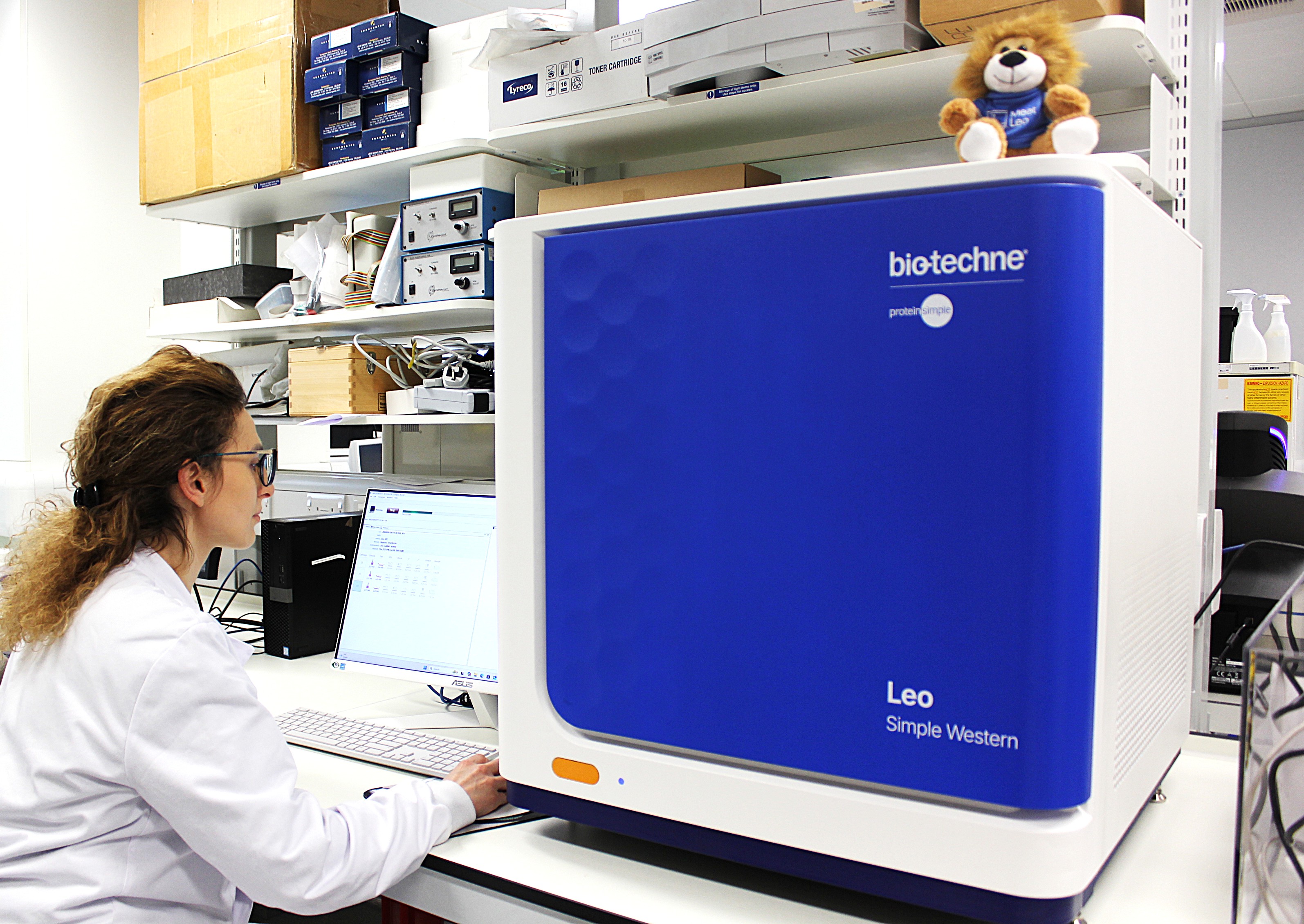
To discover new cancer drugs, our scientists first have to identify the cancer-causing target proteins they want to stop working in the cancer’s cells. The ICR recently took delivery of Bio-Techne’s latest protein quantification and detection unit, the Simple Western™ Leo™ System, which our drug discovery scientists believe will help accelerate their efforts.
What is the Leo System and what can it do?
Our scientists want to know whether a potential cancer drug is likely to be effective, so they need to be able to accurately measure how much of the protein that the drug is targeting is there, after the drug has had its effect.
The Leo System – through a process called capillary-based immunoassay – can measure increased or reduced levels of the target protein in cells, blood, tissues or tumours in response to prototype drug compounds. They can also compare new compounds using this system, and the results can then guide whether they need to modify the compound chemically, to make it more effective at stopping, or inhibiting, the target protein.
How does this help in the field of cancer research?
Measuring the effect of a compound is key to understanding its effectiveness but also how much is required to deliver the best results with least exposure to the potentially toxic compounds used to treat cancer.
We are currently using the Leo System to help find degraders, a compound designed to disrupt cancer cell proteins and make them more prone to effects of our immune system, leading to the cancer cells dying.
Able to process up to 96 samples in a single 3-hours run, the Leo System can produce four times as much data in the same time compared to the previous system, allowing high sample throughput within a single working day. The new unit also reduces the amount of sample and antibodies required, saving reagents and money.
Who will use this new system?
The new unit offers a quicker and more cost-effective service for all researchers at the ICR. We are also able to offer use of the Leo System to scientists outside of the ICR, for example at universities, other research organisations and commercial customers – including on site at the Innovation Gateway in The London Cancer Hub.
If you are interested in finding out more about the Leo System, please contact [email protected], or would like to work with the ICR’s Centre for Cancer Drug Discovery, please contact [email protected].
Banner image: The team that works with the Leo System at the ICR.