
Study and Careers
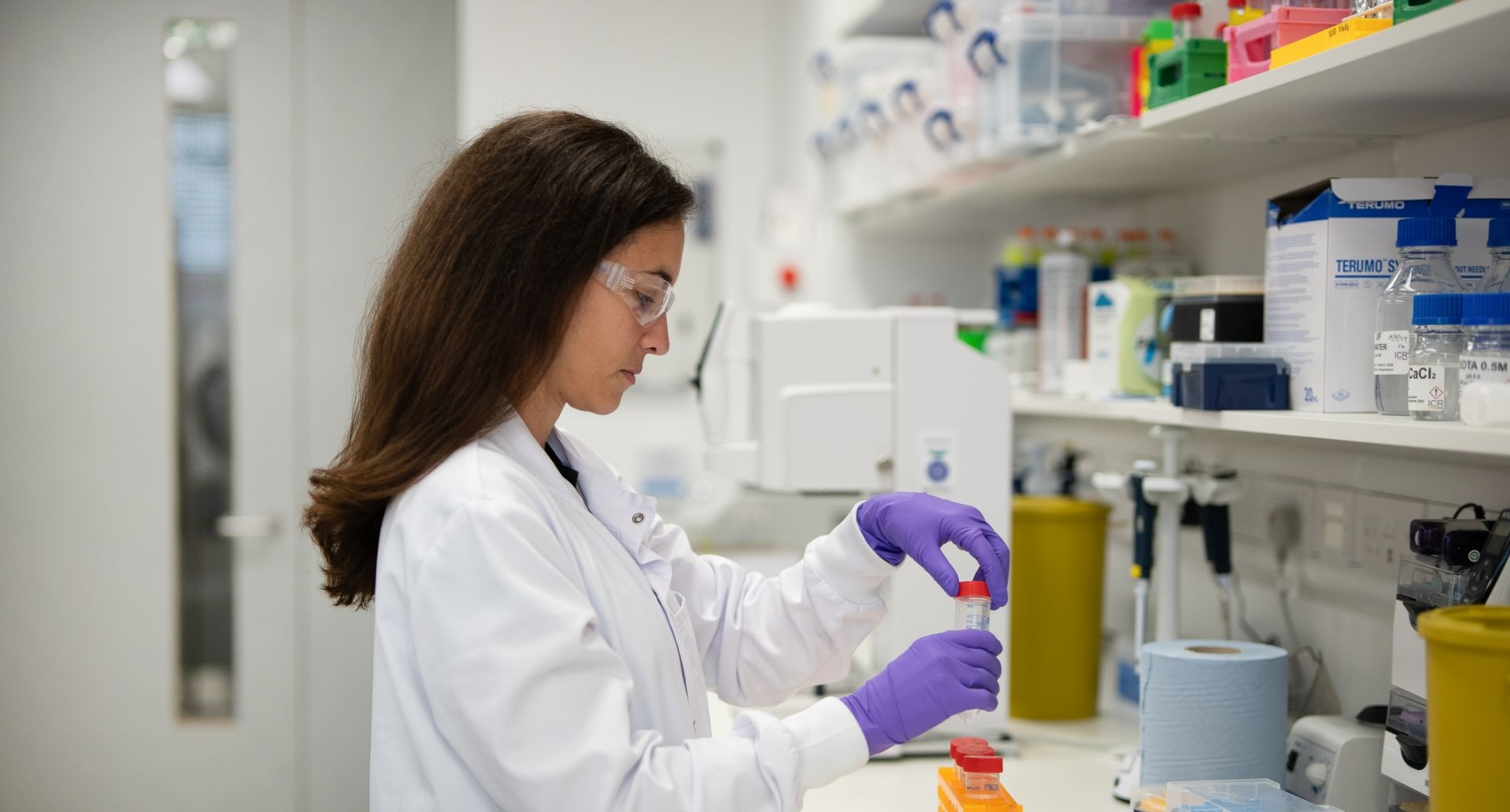
As the UK’s leading academic research centre, The Institute of Cancer Research offers a fantastic work and study environment, great opportunities for development and the chance to make a real difference for cancer patients. We aim to train, recruit and develop the best – with positions for outstanding scientists and clinicians, and the most talented professional or administrative staff.
Studying at the ICR
Our competitive programmes and specialised courses are designed for the next generation of cancer researchers and clinicians.
PhD projects and opportunities
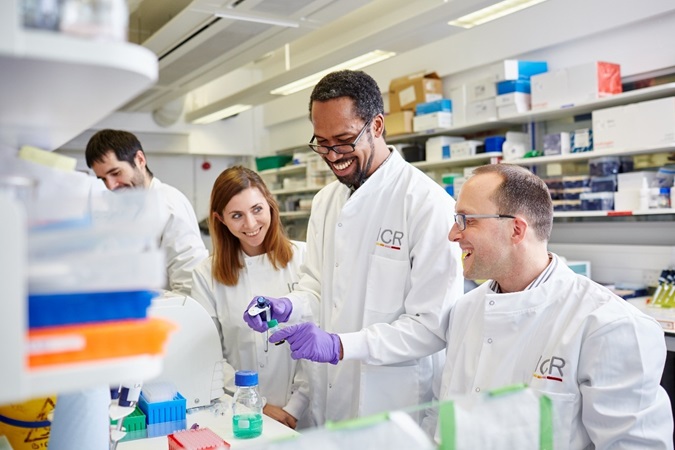
We offer 20 fully funded PhD studentships each year. Our main round opens in October, but we also advertise projects throughout the year.
Opportunities for clinicians
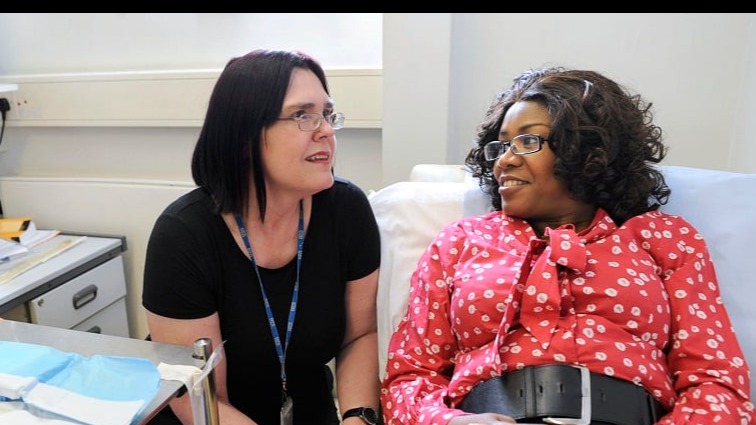
At The Institute of Cancer Research, London, we offer clinicians a variety of opportunities – from a taught master's course in Oncology, to fellowships providing protected time for research, and higher research degrees.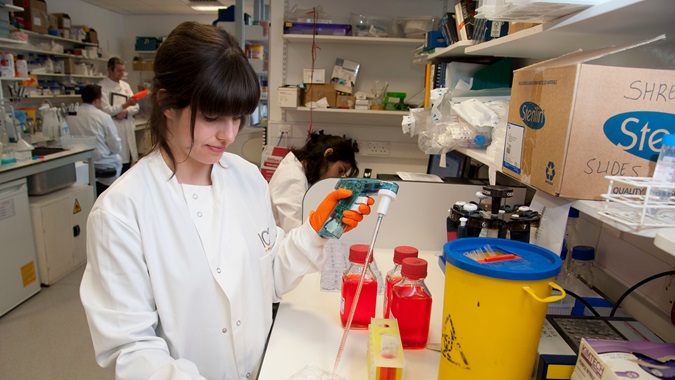
MSc in Oncology
The Taught Course in Oncology is a day-release modular programme designed for medically qualified candidates who intend to pursue a professional career in some aspect of clinical or medical oncology, either as a clinical academic or a clinician.
Why study with us?
By providing world-class expertise and support to students at The Institute of Cancer Research, we hope to advance cancer research and clinical practice not only within our organisation, but throughout the field.
Student Profile
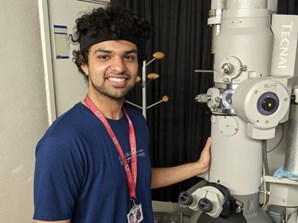
Varun Ramaswamy is a third-year PhD student at the ICR. He is working on a collaborative project between the Division of Cancer Therapeutics and the Division of Structural Biology that aims to solve the 3D structure of a protein called HSET using cryo-electron microscopy and complementary biophysical techniques.

Employee Story
Head of Research Support (corporate role) Dr Becky Cook Dr Becky Cook is Head of Research Support at The Institute of Cancer Research. She oversees our large strategic grant applications and is supporting the ICR's next submission to the Research Excellence Framework (REF), which is the definitive government evaluation of the quality and impact of research at UK universities.
Support moving to the UK
Whether you're a student or a full time employee, you'll get a variety of social, welfare and accommodation benefits and advice, to help your move to the UK.
Working life and benefits
As a world-leading cancer research organisation, we are a dynamic and exciting place to work - with various benefits and support if you’re moving to the UK.
Current openings
We offer a fantastic working environment, great opportunities for career development and the chance to make a real difference for cancer patients. We aim to recruit and develop the best – with positions for postdocs, scientists and clinicians, and professional or administrative staff - see the latest below:
Research Group Leader, ICR Clinical Trials and Statistics Unit (ICR-CTSU)
Department/Directorate Information: Division of Clinical Studies - Clinical Trials and Statistics Unit (ICR-CTSU) The ICR-CTSU is a Cancer Research UK-funded, internationally recognised methodologist led clinical trials unit, providing cancer-focused clinical trial research expertise. We lead pioneering, efficient, high-quality, and impactful trials across the phases. Our expertise ranges from experimental medicine early phase studies exploring biological efficacy to trials which may deliver widespread change to routine practice, underpinned by applied methodology to drive forward clinical trial innovation. See our clinical trials Role Summary The Group Leader will lead a component of ICR-CTSU’s portfolio of clinical trials research. The post holder will join an existing faculty and seek to further develop and grow the portfolio in line with ICR-CTSU’s overall strategy; taking responsibility for a number of ongoing trials as well as the development of new trials. There will be the opportunity to develop and grow a team including the potential for a Postdoctoral Training Fellow and/ or a Trial Manager. We seek an experienced statistician / biostatistician with a strong research interest in clinical trials methodology and a passion for direct involvement in the oversight and leadership of academic clinical trials. The successful candidate will work closely with the Director of ICR-CTSU to further enhance the Unit’s internationally recognised strength in clinical trial design, conduct and analysis. The post holder will be expected to make a substantial independent intellectual contribution to clinical trials projects and be proactive in leading and contributing to broad initiatives that enhance the overall effectiveness of ICR-CTSU. The appointee will contribute to the overall scientific life of the ICR including the newly established ICR/Royal Marsden Hospital’s Centre for Trials and Population Data Science, by providing mentorship to more junior colleagues and acting as an academic leader. We seek an individual who will work closely and collaboratively with other faculty/Group Leaders at the ICR and with international/national key opinion leaders to extend the breadth and depth of ICR-CTSU’s biologically rich clinical trials portfolio. In partnership with clinical opinion leaders, this individual will generate research funds to conduct and deliver clinical trials research at the international forefront. Presentation at national and international conferences, production of top-quality research outputs and substantial professional contribution to wider clinical trial network bodies are expected. Enthusiasm for team-based science in a collaborative interdisciplinary environment is essential. The appointment will be based on track record and the ability and willingness to engage in team science. The successful appointee will have access to ICR’s successful PhD training programme and core facilities. Key Requirements Higher degree (MSc or PhD) in medical statistics/biostatistics or an allied field (e.g. public health, epidemiology, data science) with relevant work experience Significant experience as a clinical trials, medical statistician or bio-statistician within the academic or commercial sector; a blend of both would be highly desirable A desire to apply existing and novel statistical methods to the requirements of a diverse range of statistical problems A broad understanding of cancer research Ability to lead a Clinical Trials Unit based research group As part of your online application, you will be required to upload your full CV which will pre-populate your application form, you will also be asked to attach the following documents and failure to do so will mean your application cannot be considered on this occasion: Lists of major publications, achievements, research grants and distinctions. A PDF of a maximum of five key publications, or other research outputs (e.g. patents) that best demonstrate previous productivity or a single document giving hyperlinks to these outputs. You must also complete the personal statement section of the application form in the format of a cover letter including the names and contact details of three academic referees Joining as a Group Leader, you will be given outstanding support to help you to continue to develop in your career. Along with a start-up package of funding, you will also have access to resources to establish your group, including support for recruiting key group members, such as PhD students and postdoctoral researchers. We encourage all applicants to access the job pack attached for more detailed information regarding this role. For an informal discussion regarding the role, please contact Professor Emma Hall ([email protected])
Group Leader - Cancer Health Data Sciences
The Institute of Cancer Research (ICR) and The Royal Marsden Hospital (RMH) invite applications for a Group Leader in Cancer Health Data Sciences. This is an exceptional opportunity for an outstanding researcher to establish an independent, internationally recognised research programme at the interface of cancer research, data science and artificial intelligence. The successful candidate will develop innovative approaches to analyse and integrate large-scale, multimodal health data to advance cancer prevention, early detection, diagnosis, treatment stratification and therapeutic response. They will have access to an unrivalled clinical and research environment through the ICR–RMH partnership, including electronic health records, imaging, genomics and molecular profiling data generated through routine clinical care, clinical trials and epidemiological studies, as well as local and national health datasets. The appointment is intended to strengthen and complement existing expertise across clinical research, epidemiology, computational biology, imaging and genomics. We are seeking an ambitious and collaborative researcher with strong quantitative and computational skills, extensive experience in the analysis of complex health data, and a track record of delivering innovative research with translational impact. The post will be based within the Division of Cancer Genetics and Epidemiology at the ICR and will include an honorary appointment at The Royal Marsden NHS Foundation Trust. In addition to leading an independent research programme, the successful candidate will contribute to the strategic development of cancer health data science across both institutions. This will include opportunities to engage with initiatives supported through the NIHR Biomedical Research Centre (BRC), alongside other institutional, charitable and externally funded programmes. The appointee will be expected to develop a strong externally funded research portfolio aligned with their scientific vision and to build productive collaborations across the ICR, RMH and the wider national and international cancer research community. The successful candidate must have: PhD (or equivalent) in relevant quantitative discipline (including, but not limited to, data science, epidemiology, biostatistics, health informatics, computer Strong foundation in quantitative methods and applied analytics. Strong understanding of data governance, privacy, and ethical considerations in health data science and AI. Strong programming and analytical skills (e.g., Python, R, SQL, JavaScript) and familiarity with modern data-science workflows. As part of your online application you will be required to upload your full CV which will pre-populate your application form, you will also be asked to attach the following documents and failure to do so will mean your application cannot be considered on this occasion: Lists of major publications, achievements, research grants, distinctions. Research plan (five to six pages outlining your current research interests and research programme for the next 5 years) A PDF of a maximum of five key publications, or other research outputs (e.g. patents) that best demonstrate previous productivity You must also complete the personal statement section of the application form in the format of a covering letter including the names and contact details of three academic referees Department/Directorate Information: Please find out more about our Genetics and Epidemiology division here. We encourage all applicants to access the job pack attached for more detailed information regarding this role. For an informal discussion regarding the role, please contact Professor Richard Houlston [email protected] or Professor Montse Garcia-Closas via [email protected].
Computational Chemist
The Centre for Protein Degradation (CPD), led by Professor Zoran Rankovic, is a recently established centre at the ICR dedicated to discovering and developing novel cancer treatments through targeted protein degradation. The Centre brings together expertise in medicinal chemistry, structural biology, cell biology and computational science to design PROTACs, molecular glue degraders, and novel E3 ubiquitin ligase chemical probes, with the aim of developing breakthrough treatments for the benefit of cancer patients. Under the guidance of Dr Andrea Scarpino, we are looking to appoint a Computational Chemist to join the CPD and play a key role in applying and developing innovative computational chemistry methods to accelerate the design and discovery of novel protein degraders. The successful candidate will work in close collaboration with medicinal chemists, structural biologists and biologists within the Centre, contributing computational expertise across all stages of TPD drug discovery - from target evaluation and hit finding through to lead optimisation and candidate selection. About you The successful candidate must have a PhD in computational chemistry, cheminformatics or a related field, together with post-PhD experience applying computational chemistry methods for drug discovery. Familiarity with targeted protein degradation, including ternary complex and protein-protein interaction modelling, is highly desirable. What we offer A dynamic and supportive research environment Access to state-of-the-art facilities and professional development opportunities Collaboration with leading researchers in the field Competitive salary and pension We encourage all applicants to access the job pack attached for more detailed information regarding this role. For an informal discussion on the role, please contact Dr Andrea Scarpino via email at [email protected]
Trial Coordinator
Are you passionate about advancing cancer research and improving outcomes for patients? Do you want to contribute to pioneering research that is shaping the future of personalised radiotherapy treatment? If so, we'd love to hear from you. Join one of the world’s most influential cancer research institutes with an outstanding record of achievement dating back more than 100 years. This is an exciting opportunity to become part of a multidisciplinary team running internationally practice-changing clinical trials and delivering high-impact translational research that has the potential to transform patient care. We are recruiting a Trial Co-ordinator on a 1-year fixed-term contract in the first instance. The successful candidate will be based at the Institute of Cancer Research Sutton site, with occasional travel to the Chelsea site as required. Working within Dr Somaiah's Translational Breast Radiobiology Research Team, you will coordinate and support the delivery of a portfolio of translational research projects, ensuring studies are managed efficiently and in accordance with regulatory, governance, and sponsor requirements. You will also be awarded an honorary contract to co-ordinate hosted commercial and non-commercial radiotherapy studies in breast cancer at the Royal Marsden Hospital which shares the same onsite campus, working closely with clinicians, researchers, trial sponsors and external collaborators. This is an excellent opportunity for someone looking to develop a career in clinical research. We welcome applications from candidates with experience in clinical trials, clinical/translational research, or research project management, as well as those with a relevant scientific degree who are keen to build their experience in trial co-ordination. Comprehensive training and support will be provided to help you succeed in the role. If you are highly organised, proactive, and enjoy working collaboratively in a fast-paced research environment, we encourage you to apply. Key Responsibilities Responsibility for the day-to-day coordination and oversight of a portfolio of breast cancer clinical trials and projects within the ICR (employer) and Royal Marsden Hospital (honorary contract). Assisting the Senior Research Manager with study and project management from set-up through to close out, including study amendments in accordance with protocols and regulatory, sponsor, GDPR and GCP requirements. To be an active member of the ICR and Royal Marsden departments, providing regular reports on research activities, highlighting areas of concern and developing improvement strategies. The candidate will also help to assist the Translational Breast Radiobiology laboratory team with clinical sample collection and processing. They must have exceptional interpersonal skills and the ability to work both independently and collaboratively within a team. Excellent administration and IT skills will be essential. For full details of the role, responsibilities, and person specification, please refer to the attached job pack.