

The UK began screening for breast cancer nearly 35 years ago but we’re yet to have a screening programme for prostate cancer. Julia Bakker spoke to the UK’s leading expert in prostate cancer genetics, the ICR’s Professor Ros Eeles, about the progress we’re making and when we can expect prostate cancer screening to be a reality.
Prostate cancer is the most common cancer in men in the United Kingdom. Each year, around 50,000 cases of the disease and diagnosed and sadly, 12,000 men will die from it.
Yet, unlike breast cancer – where screening has been available in the UK for nearly 35 years – we don’t yet have an effective screening programme for prostate cancer.
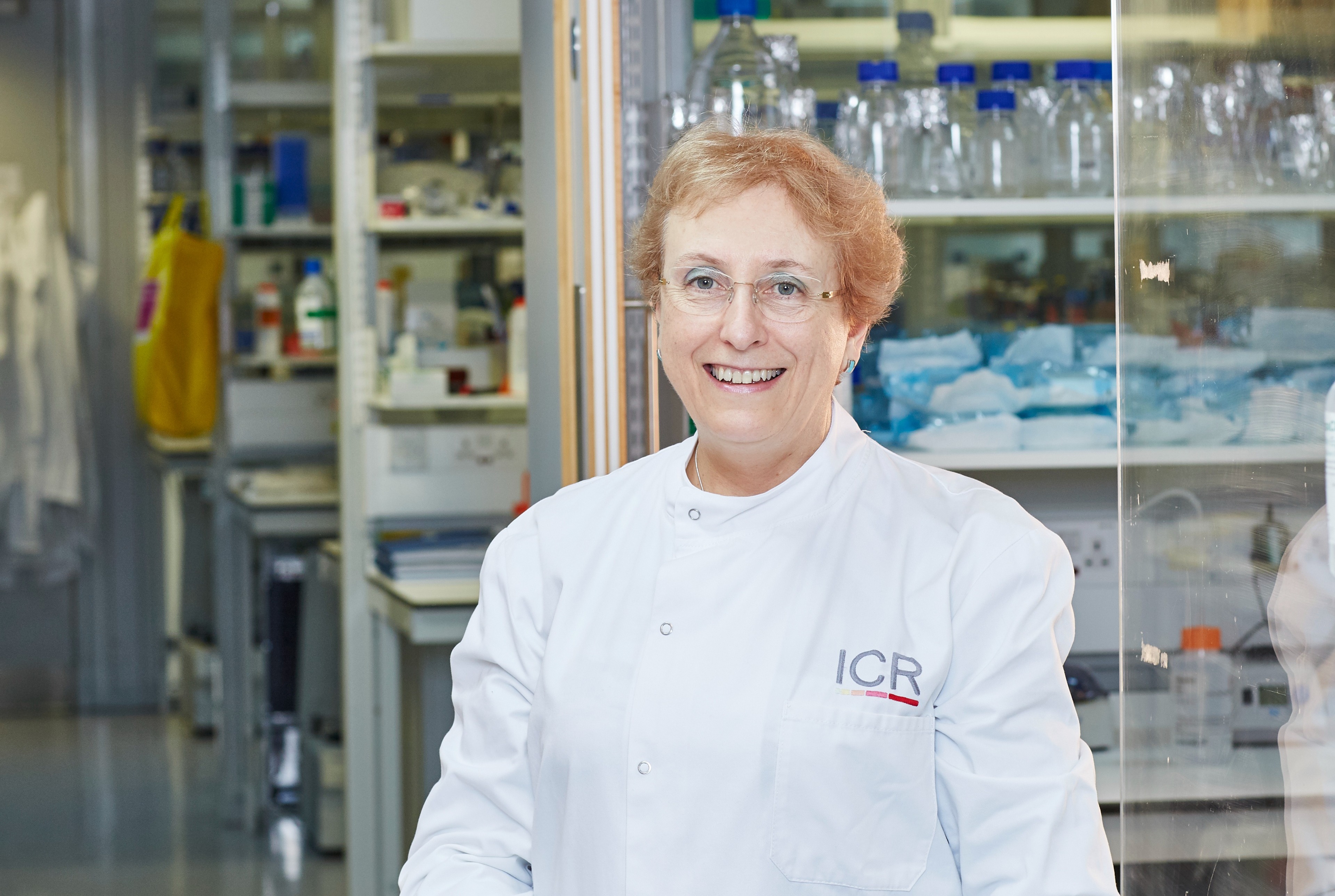
Professor Ros Eeles, a world-leading expert in cancer genetics at the ICR is working to change this.
Prostate screening ready within five years
She believes that if all goes well with her research, and that of others, we could have a targeted screening programme ready in as soon as five years.
“I think it’s likely that within five years, all men will be able to access a genetic test to indicate their risk of prostate cancer when they hit a certain age, and those at highest risk will be able to enter a targeted screening programme that involves a mixture of PSA testing and MRI scans.”
Professor Eeles says it’s likely the programme will be rolled out via GP surgeries, and that men would provide their DNA though a saliva sample.
“The exact design of a future screening programme still needs to be developed.”
So why has it taken so long, and how do we make prostate screening a reality?
Developing a screening programme for prostate cancer has been hugely challenging. It’s currently very difficult to distinguish between aggressive cases, that may grow quickly and become fatal, from those that are slow growing and likely to never cause problems.
A screening programme that detects all cancers would leave many men diagnosed and treated for cancer that would never have caused them problems.
Professor Eeles explains; “At the moment, there is no standard screening programme in the UK for men, using a PSA or prostate specific antigen blood test. And that's because, although screening the whole population for PSA will pick up some cases of prostate cancer and save some lives, a lot of the cases that you will find will never actually progress and would have never caused any harm. These men can have invasive treatments that they never needed, and for these men, that can be devastating.”
For every man whose prostate cancer is detected, twelve more will have unnecessary treatment. The breast screening programme is much more effective, but still for each dangerous case detected, three will lead to unneeded treatment.
There’s an urgent need to develop a screening programme that is targeted to those men at highest risk of prostate cancer.
We are pioneering brand new genetic approaches with the aim of developing a test to pick out men at high risk of prostate cancer and ensure they are diagnosed early. Please support our research today.
Using genetic clues to defeat prostate cancer
Professor Ros Eeles has spent the last 25 years working at the ICR with the ultimate goal to develop one.
Her team runs large-scale trials which analyse the DNA from tens of thousands of men with and without prostate cancer and monitors them over a number of years to identify who develops prostate cancer.
“Our DNA holds clues that indicate whether prostate cancer will develop and how it will behave. This could allow us to use genetic tests to identify those men who need more regular screening.”
“A targeted screening programme would mean we could find those men that really are at risk of disease – that we really need to find because it might shorten their life – and it will leave the men alone who do not need any screening.” “I’m really excited about what genetics can do to identify the causes of prostate cancer, and to identify which men to whom we need to target our early detection tools and interventions.”
Making a screening programme a reality
So, what needs to happen so that we have an effective UK screening programme for prostate cancer?
Professor Eeles says it is vital that we continue to refine our understanding of the factors that influence prostate cancer risk, in order to create a screening programme that strikes the right balance – focusing on those who would benefit, and leaving those whose cancer would never cause problems.
Professor Eeles is leading several clinical trials at the ICR, which aim to work out, with clarity, whether the benefits outweigh the risks.
She hopes that once the results are in, we’ll be able to select the men who need targeted screening with a DNA test.
Large trials paving the way forward
One such trial is called GENPROS. The trial is following men who have certain inherited genetic mutations which predispose them to prostate cancer after they are diagnosed and trying to work out the best plan of action for these patients. One of the genes involved is BRCA2, commonly known for its link to breast cancer and first discovered at the ICR. Around 20-25 per cent of men with a mutation in their BRCA2 gene will develop prostate cancer at some point, and it has a higher chance of spreading early.
In 2019, Professor Eeles' team showed that men with an inherited BRCA2 mutation would benefit from prostate screening.
“At the moment, for men without a BRCA2 mutation, who are diagnosed with early prostate cancer, we’d normally keep a close eye on their cancer with regular PSA testing and regular MRI scans, only taking more action if it starts to progress and becomes more of a threat.
“GENPROS will tell us whether men with a BRCA2 mutation with early disease would be better off having surgery earlier, before their cancer has a chance to spread.”
Potentially increasing cures
Professor Eeles, who is also a Consultant in Clinical Oncology and Oncogenetics at The Royal Marsden NHS Foundation Trust, says she hopes that within a couple of years, they’ll have enough data to change how patients are treated.
“My hope for the future is that we have a much better idea of which men are at risk of developing prostate cancer, meaning we can spot many men earlier in their disease course when their cancer is easier to treat and potentially curable.”
“As a clinician, I know the difference this would make for patients. I do see cases in the clinic where men at a younger age lose their lives to this disease, and we know that in these young, aggressive cases, genetics plays a big role. Improving screening could mean these people don’t lose their lives, and that they see their children and grandchildren grow up.”
Our prostate cancer research has delivered new targeted cancer drugs, changed radiotherapy clinical practice, and led to important genetic discoveries about this disease. Please donate today to help us continue our progress.
Catching prostate cancer early pays off. When it is diagnosed in its earliest stages (known as stage 1), more than 95 per cent of men will survive their cancer for five years or more.
This figure drops off the later the disease is caught, typically when it has had a chance to spread to other parts of the body.
Uncovering new treatments
Professor Eeles' research goes beyond just diagnosis – exploring the influence of our genes on cancer risk can pave the way for new treatments.
“Genetics can also identify the potential pathways where prostate cancer occurs and also escapes current standard treatments. Using this knowledge, we can look for new targeted drugs that might work, especially for men who have no other options available.”
Professor Eeles is grateful for the advances she’s seen during her career, and is hopeful for the future.
“25 years ago, when I returned to the ICR, if a man presented with disease that had spread outside the prostate, we maybe could keep him alive with some treatments for perhaps two, maximum five years, and we only had a few treatments in the cupboard that we could offer.
“But now, we're having conversations with these men in the clinic that are totally different. We have many effective treatments. I’d like to see that same level of progress for years to come.”
Scientific advances are leading to a new era in prostate cancer diagnosis and treatment. Find out more about some of the the most exciting areas of research at the ICR.