Integrated Pathology Group

Professor Manuel Salto-Tellez' group aims to create new clinical research and diagnostic paradigms for morpho-molecular integration.

Our group aims to create new clinical research and diagnostic paradigms for morpho-molecular integration.

The traditional histological and immune phenotypes have been the backbone of tissue in-situ scientific and diagnostic interrogation for more than a century. However, two major recent developments in modern oncology have challenged this model:

1) the development of molecular oncology applied to tissue nucleic acid (NA) extractions; and

2) the application of digital pathology and artificial intelligence in the interpretation of routine H&E images, single-biomarker images and complex, multiplexing analyses.

Specifically, the Integrated Pathology Group (IPG), within the Molecular Pathology Division at ICR, aims to create new clinical research and diagnostic paradigms for morpho-molecular integration. To do so, the IPG will use established NA-type analyses (predominantly NGS-based) and novel Tissue Hybridization and Digital Pathology approaches using clinical exemplars that offer distinct clinical endpoints.

In particular, IPG will adopt and develop new ULTIVUE and OPAL multiplex assays, including biomarkers associated to immuno-oncology, DNA damage and repair and the cell cycle. In parallel, a pipeline for the application of digital pathology and artificial intelligence interrogation will be used, which will include a mixture of open-source, established products such as QuPath (developed in Professor Salto-Tellez’s laboratory at Queens University Belfast by Dr Pete Bankhead) together with other specific open applications in the artificial intelligence space.

The development of this capacity should allow, within ICR:

1) validation of clinical utility of new biomarkers;

2) delivery of complex tissue-based testing towards ‘accredited’ applications such as clinical trial interrogation or routine diagnostics; and

3) engagement with industry in the delivery of such assays.

The IPT aims to identify those exemplars based on collaborative work with existing Groups within ICR and the Royal Marsden hospital.

Professor Manuel Salto-Tellez

Group Leader:

Integrated Pathology Manuel Salto-Tellez 1x1
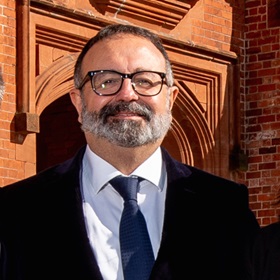
Professor Manuel Salto-Tellez is a recognised international leader in molecular and digital pathology. His research focus is on the relationship of phenotype to genotype, with a specific interest in the pathway of cancer biomarker development from discovery to clinical adoption.

Researchers in this group

.

Email: [email protected]

Location: Sutton

.

Phone: +44 20 3437 3546

Email: [email protected]

Location: Sutton

.

Phone: +44 20 3437 6833

Email: [email protected]

Location: Sutton

.

Email: [email protected]

Location: Sutton

.

Phone: +44 20 3437 6455

Email: [email protected]

Location: Sutton

.

Phone: +44 20 3437 6840

Email: [email protected]

Location: Sutton

.

Phone: +44 20 3437 3602

Email: [email protected]

Location: Sutton

Professor Manuel Salto-Tellez's group have written 322 publications

Most recent new publication 5/2025

See all their publications

Current vacancies in this group

Recent discoveries from this group

Higher Scientific Officer/Research Scientist

  • Sutton
  • Integrated Pathology
  • Fixed term

Under the guidance of Dr Tom Lund, we are seeking to recruit a Higher Scientific Officer/Research Scientist to support all aspects of histopathology related to a range of research projects in our established, advanced translational research laboratory in the field of complex (IHC/RNA-ISH/mIF) tissue hybridisation technologies. The post holder will work alongside a team of Biomedical Scientists, Research Scientists/HSOs and a Senior Scientific Officer (SSO). The right candidate is expected to perform a variety of tasks that may include, but are not restricted to: a) Staining of pathology slides using manual and automated methodology; b) Scanning of pathology slides stained using a variety of methods e.g. HE, IHC, mIF; c) Maintaining a high level of QA/QC of image quality; d) Annotation and analysis of pathology images and data using analysis software such as HALO, Visiopharm and QuPath, as well as IPU-developed tools. The role offers the opportunity to work within a multidisciplinary group, including clinical, scientific, and computational staff whose combined remit is to offer advanced pathology solutions to clinical research. The post holder will be required to prepare sections for a variety of pathology and molecular analysis, perform multiplex immunofluorescent immunohistochemistry with our automated slide staining platform (Leica Bond 3 Automated Slide Stainers and Ventana Discovery Ultra), be responsible for clinical trial sample audit tracking, use digital slide scanners (Akoya PhenoImager HT (previously known as the Vectra Polaris) and Hamamatsu NanoZoomer) competently to the high QC level required for AI research and perform data analysis as well as the general lab management duties. About you The successful candidate must have: PhD Biological Sciences/Cancer Biology/ Molecular Biology/Molecular Pathology or related subject Knowledge of cancer and molecular biology, as well as histopathology, IHC, ISH and mIF staining techniques and their analysis Experience with IHC/IF and QA/QC for these assays Experience with image and data analysis software Experience of working with microscopy, digital image capturing, immunohistochemistry and molecular pathology methods Department/Directorate Information Headed by Prof Manuel Salto-Tellez, and led by Dr Tom Lund, the IPU is a tissue-based laboratory with the mission to develop complex and highly quantitative approaches to tissue analysis (wet lab and in-silico) in the space of translational and clinical research, thus applicable in the context of clinical trials and adoption into diagnostic applications. The IPU uses state-of-the-art tissue-based profiling such as single-plex immunohistochemistry (IHC), RNA in situ hybridization (ISH), IHC/Immunofluorescence multiplexing (mIF) and spatial transcriptomics and proteomics, together with multi-scan imaging and digital pathology/artificial intelligence biomarker quantitation. This approach is applied to well-curated cancer sample cohorts (from routine diagnostics or from clinical trials) to a) explore the clinical relevance of biomarkers and pathways; and b) identify the best quantitative delivery of biomarker analysis. The IPU works in a coordinated manner with other programmes in ICR and RMH carrying out tissue-based analysis, and it is expected to serve as a go-between for academia, healthcare, and industry. The work specifically involves identification of biomarkers of clinical relevance; clinical validation of molecular pathways; key technical capacity to work with large clinical and clinical-trial cohorts, including tissue microarray construction, as well as IHC/RNA-ISH/mIF testing. This is complemented with experience in open source and off-the-shelf use of tools for computational pathology analysis. The Integrated Pathology Unit is mainly based in the Centre for Molecular Pathology (CMP) on the Sutton site of The Royal Marsden NHS Foundation Trust. Integrated Pathology Unit What we offer A dynamic and supportive research environment Access to state-of-the-art facilities and professional development opportunities Collaboration with leading researchers in the field Competitive salary and pension We encourage all applicants to access the job pack attached for more detailed information regarding this role. For an informal discussion regarding the role, please contact Dr Tom Lund or Dr Marta Vergnano via Email at [email protected] or [email protected]