
I graduated with a Bachelor of Engineering (B.E.) in Biotechnology in 2023 and interned at the Himalaya Wellness Company under the Microbiology R&D Department, working on Pharmaceutical, Nutraceutical and Cosmetic Products.
After obtaining my MSc degree in Cancer Molecular and Cellular Biology at Queen Mary University of London (Barts Cancer Institute), I am currently conducting laboratory research in Prof Kamil Kranc’s team here at The Institute of Cancer Research (ICR). The project focuses on identifying target vulnerabilities within N^6-methyladenosine (m^6A) RNA methylation reader landscapes in AML cell lines.
I am a haematology registrar and second-year PhD student. My clinical and research interests are focussed on AML and improving patient outcomes for this disease. The central aim of my work is to determine how the hypoxia-inducible factor (HIF) pathway can best be stabilised to achieve an optimum anti-leukaemic effect.
I am a MSc student from Leiden University, and I am completing my thesis at the ICR, where I investigate novel therapeutic compounds for acute myeloid leukaemia (AML) by targeting the RNA-binding YTHDF proteins.
I hold two MSc degrees from the University of Lille, one in Oncology and another one in Bioinformatics, and I am currently a research intern in the Haemato-Oncology Group at the ICR undertaking a volunteer research placement. My work focuses on the RNA metabolism in acute myeloid leukaemia.
I am a Scientific Officer working on drug discovery in acute myeloid leukaemia (AML), with a focus on the 2-oxoglutarate (2OG) oxygenase family. My research explores how these enzymes can be targeted for therapeutic benefit to develop new treatments for blood cancers.
Sakshi joined The Generations Study research team in 2026 with Professor Montse Garcia-Closas after completing her MSc in Health Data Science at the University of Manchester. She contributes to the development and structuring of study-level metadata, supporting the effective organisation, and long-term usability of large-scale cohort data.
Dr Matt Burman
Postdoctoral Training Fellow:
Insilico MedChem
I completed my PhD at the university of York, within the physics of life team, using atomistic molecular dynamics to study structure formation in supercoiled DNA, with a focus on sequence-dependence in bubble and plectoneme formation. Following my PhD, I two and a half years working as a research software engineer developing software for protein-ligand binding free energy calculations using molecular dynamics, focusing on relative binding free energy calculations and enhanced sampling methods. In my role at the ICR I'll be working on the implementation of workflows for binding free energy calculations, as well as applying computational methods to the various drug discovery projects currently underway at the ICR.
Marco Ballarotto
Postdoctoral Training Fellow:
Insilico MedChemMarco joined the ICR in 2023 as a Postdoctoral Training Fellow after having completed his PhD in Organic Chemistry at the University of Perugia, where he worked on developing Diels-Alder-based protocols for the de novo synthesis of functionalised aromatic compounds. He is currently providing computational support for active drug discovery projects, ranging from Hit ID to Lead Optimisation stages, and implementing pipelines for AI-assisted de novo molecular design.
Ewa Wieczorek
Postdoctoral Training Fellow:
Insilico MedChem
Ewa joined the ICR in October 2024 as a Postdoctoral Training Fellow in the In Silico Medicinal Chemistry team. She previously completed a PhD at the University of Oxford, working on machine learning-based methods for synthesis prediction and synthesisable molecule generation. At the ICR she splits her time between providing computational support for active drug discovery projects and providing ligability assesment for targets in the Centre for Target Validation (CTV).
Skandan Girish
Honorary Appointment:
Haemato-Oncology Group
I graduated with a Bachelor of Engineering (B.E.) in Biotechnology in 2023 and interned at the Himalaya Wellness Company under the Microbiology R&D Department, working on Pharmaceutical, Nutraceutical and Cosmetic Products. After obtaining my MSc degree in Cancer Molecular and Cellular Biology at Queen Mary University of London (Barts Cancer Institute), I am currently conducting laboratory research in Prof Kamil Kranc’s team here at The Institute of Cancer Research (ICR). The project focuses on identifying target vulnerabilities within N^6-methyladenosine (m^6A) RNA methylation reader landscapes in AML cell lines.
Patrick Elder
Clinical Research Fellow:
Haemato-Oncology Group
I am a haematology registrar and second-year PhD student. My clinical and research interests are focussed on AML and improving patient outcomes for this disease. The central aim of my work is to determine how the hypoxia-inducible factor (HIF) pathway can best be stabilised to achieve an optimum anti-leukaemic effect.
Mila Bölger
Honorary Appointment:
Haemato-Oncology Group
I am a MSc student from Leiden University, and I am completing my thesis at the ICR, where I investigate novel therapeutic compounds for acute myeloid leukaemia (AML) by targeting the RNA-binding YTHDF proteins.
Léa Mabille
Honorary Appointment:
Haemato-Oncology Group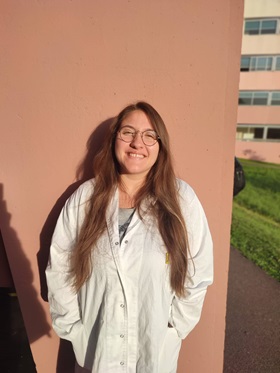
I hold two MSc degrees from the University of Lille, one in Oncology and another one in Bioinformatics, and I am currently a research intern in the Haemato-Oncology Group at the ICR undertaking a volunteer research placement. My work focuses on the RNA metabolism in acute myeloid leukaemia.
Christiana Flouris
Scientific Officer:
Haemato-Oncology Group.tmb-propic-md.jpg?Culture=en&sfvrsn=a578e646_1 "Christiana_Flouris (1)")
I am a Scientific Officer working on drug discovery in acute myeloid leukaemia (AML), with a focus on the 2-oxoglutarate (2OG) oxygenase family. My research explores how these enzymes can be targeted for therapeutic benefit to develop new treatments for blood cancers.
Dr Patrycja Domeracka
Dr Yumiko Teigen
Hannah Knight
Genetic Counsellor:
Translational Genetics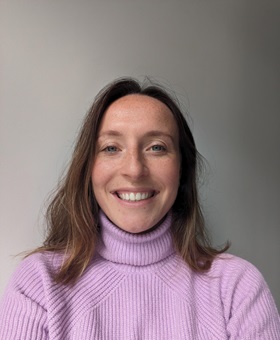
Hannah Knight is a research Genetic Counsellor, working across the NHS Jewish BRCA Testing Programme and the NHS England Retrospective Genetic Testing Programme. She previously worked as an ophthalmic Genetic Counsellor in a mainstream genetics service, as well as in a research role at the University of Cambridge. She holds registration with the Health and Care Professions Council, having gone through the full STP equivalence process.
Sakshi Dhavale
Data Engineer:
Genetics and Epidemiology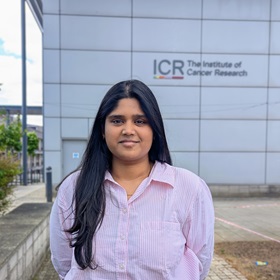
Sakshi joined The Generations Study research team in 2026 with Professor Montse Garcia-Closas after completing her MSc in Health Data Science at the University of Manchester. She contributes to the development and structuring of study-level metadata, supporting the effective organisation, and long-term usability of large-scale cohort data.
Carla Fuentes-Guerra Bustos
Claudia Besali
Brian Taku
Annabel Kunzemann
Uzma Khalid
PhD Student:
Evolution and Translational Genomics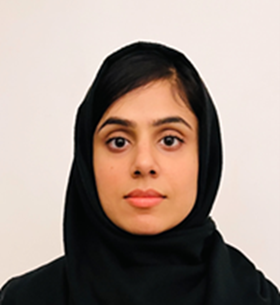
Uzma is a PhD student investigating how HPV copy number and viral genome integration contribute to radiotherapy resistance in HPV-positive head and neck cancer. Using preclinical models, she studies genomic instability and the evolution of HPV to better understand the mechanisms driving treatment resistance.
Jay Patel
Scientific Officer:
Evolution and Translational Genomics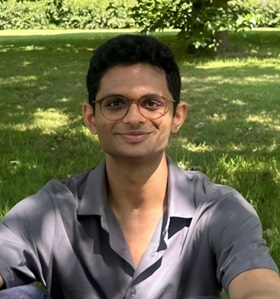
Jay is a Scientific Officer in the team using bioinformatics and machine learning to understand the evolution of human papillomavirus-positive (HPV+) head and neck cancer through the lens of HPV mutations. His current research focusses on finding potential biomarkers associated with HPV for radiotherapy de-escalation in clinical trials.
Dr Hugh Selway-Clarke
Postdoctoral Training Fellow:
Evolution and Translational Genomics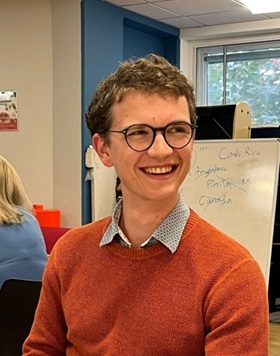
Hugh is a computational post-doc with a background in maths, studying changes to the structure of the genome seen in most cancers through the lens of evolution. He uses mathematical modelling combined with novel data analysis of sequencing data to understand how cancers evolve before and in response to treatment.
Dr France Truong
Clinical Fellow:
Evolution and Translational Genomics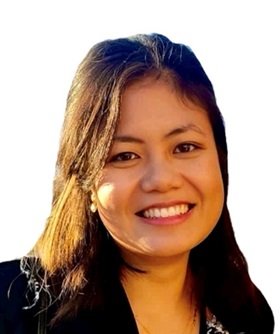
France is a clinical research fellow specialising in Head and Neck Oncology, Laryngology and Phoniatry, working on a joint project between the O’Leary laboratory at the ICR and the University Hospital of Reims in France. Her PhD studies focus on developing novel organoid models from surgically treated head and neck cancers and identifying methods to predict their radiosensitivity or recurrence risk factors, using extensive functional and genomic characterisation.