
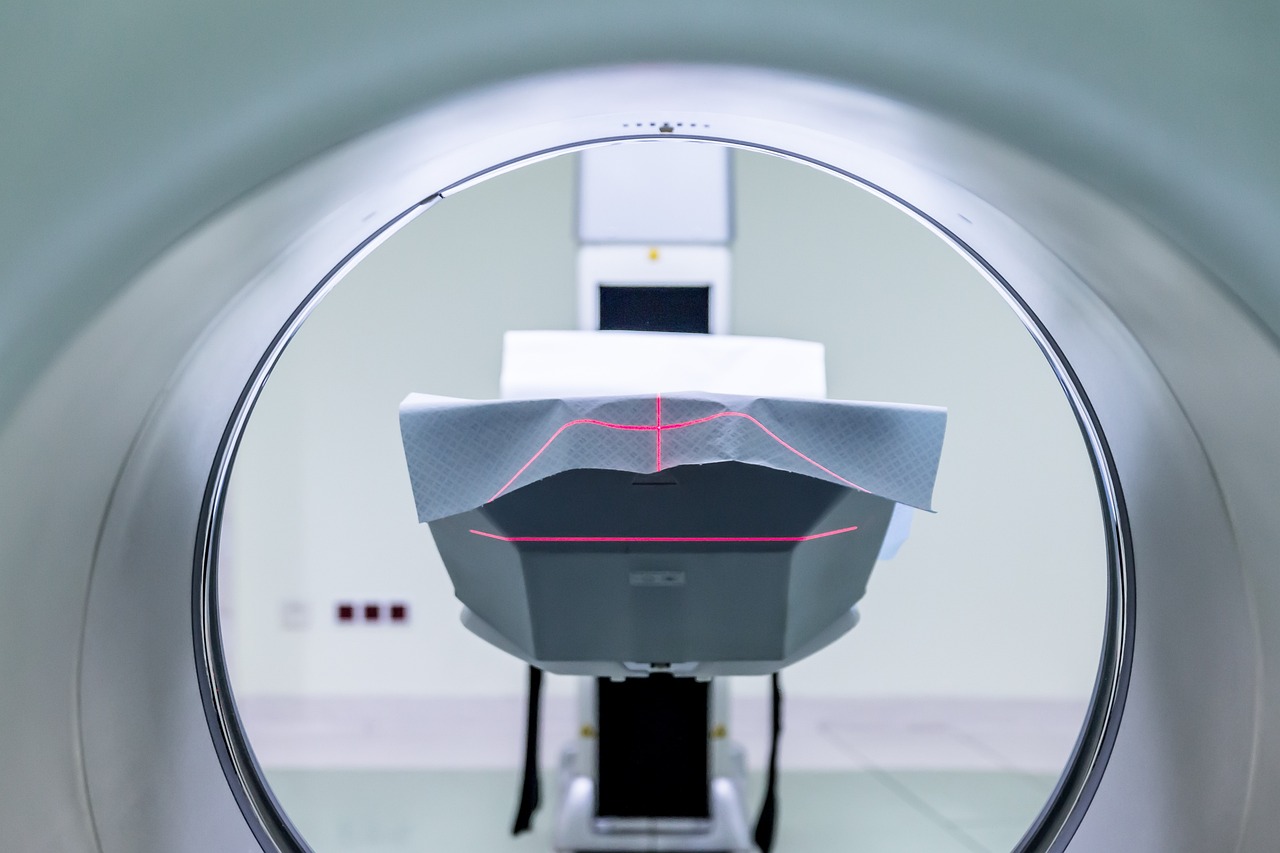
Two ground-breaking studies have demonstrated that combining artificial intelligence (AI) with state-of-the-art MRI imaging could revolutionise how clinicians detect, monitor and treat advanced prostate cancer.
Researchers have developed new software incorporating multiple AI models that can automate the complex tasks involved in whole-body diffusion-weighted MRI (WB-DWI), a powerful imaging technique increasingly used to assess cancer that has spread from its initial site.
This innovative approach may give clinicians a more objective and efficient way to monitor treatment and make informed decisions about continuing or adjusting therapy. Ultimately, it has potential to support personalised care and help keep patients with secondary tumours in better health for longer.
The research was led by scientists based at The Institute of Cancer Research, London, and The Royal Marsden NHS Foundation Trust. The National Institute for Health and Care Research (NIHR) Invention for Innovation award provided most of the funding.
The challenge of whole-body MRI in cancer care
WB-DWI is a non-invasive, radiation-free technique that offers unparalleled insights into cancer spread. It provides information on the cell density of cancer – with low to intermediate values typically indicating more cancer cells – and the total amount of disease in the skeleton. For patients with advanced prostate cancer, this imaging modality is crucial for detecting secondary cancer in the bone and evaluating treatment response.
Quantifying the extent of the metastatic disease is challenging using conventional imaging techniques, as they are less sensitive than WB-DWI when it comes to distinguishing between healthy and cancerous tissues. This makes them an unreliable tool for detecting and tracking bone metastases and for determining whether treatment is working.
However, quantifying cancer response from WB-DWI scans requires expert radiologists to manually delineate anatomical structures and sites of disease. As this labour-intensive and tedious process can take an hour or more, it is simply not feasible in routine practice. The slow processing of data also creates a bottleneck for image reporting, potentially leading to longer wait times for patients and delaying diagnosis and treatment.
The researchers behind the two recent studies wanted to address these obstacles by introducing AI-driven solutions that promise speed, accuracy and consistency.
Combining AI models
The researchers developed software that brings multiple AI models together to handle different tasks, streamlining the imaging process. One model identifies and outlines the patient’s skeleton in less than 25 seconds from WB-DWI scans, while another standardises the WB-DWI images so that they can be compared between patients and across scans. Meanwhile, a third model detects areas that look like secondary cancers in the bone.
Improving anatomical mapping
In the first part of the research, which was published in the journal Computer Methods and Programs in Biomedicine, the team introduced a novel approach to automate anatomical segmentation. Using a machine learning approach, researchers were able to employ a large dataset of more than 500 WB-DWI scans for training, without the need for manual delineations from experts.
The system was able to rapidly identify and outline key anatomical regions. These included high-risk areas for cancer spread, such as the skeleton, the internal organs and the spinal canal.
The authors note that this approach achieved near-human performance in delineating structures across diverse patient scans, significantly cutting processing time to just a few minutes without affecting accuracy.
Dr Antonio Candito, a Postdoctoral Training Fellow in the Computational Imaging Group at the Institute of Cancer Research (ICR) and first author of both studies, said:
“Our software offers a practical solution by generating accurate results in seconds, enabling clinicians to focus on decision-making rather than manual delineation.
“The reduced need for labour-intensive annotating is a major advantage given the complexity of WB-DWI scans. By localising key anatomical structures quickly and reproducibly, we can unlock the full potential of WB-DWI for cancer staging and treatment monitoring.”
Improving lesion detection
The second part of the research, published in the journal Physics in Medicine & Biology, focused on disease burden assessment – a critical metric for guiding therapy.
Traditionally, radiologists estimate metastatic load by visually inspecting WB-DWI images, but this subjective process is prone to variability. The new AI software automates this task by detecting potential metastatic lesions throughout the skeleton, calculating total volume and providing a lesion count. It also tracks changes over time, helping clinicians assess treatment response.
This quantitative approach enables clinicians to make data-driven decisions, such as adjusting therapies based on objective evidence of progression.
In the study, when the researchers tested the software on scans from different hospitals and MRI protocols, it correctly identified treatment response in about 80 per cent of cases.
Dr Candito said: “Our tool combines anatomical mapping with suspected lesion detection to provide reproducible estimates of tumour burden. This is crucial for evaluating whether a treatment is working and for adapting strategies quickly.
“Response assessment in metastatic prostate cancer has always been challenging. By automating this process, we can standardise evaluations across centres and accelerate clinical trials, ultimately benefiting patients.”
Integration and validation
These findings are very promising, but regulatory approval and integration into clinical workflows will require rigorous testing in multi-centre settings to ensure reliability across diverse scanners, protocols and patient populations. In addition, as with all AI models, there are ethical considerations. The system must be shown to be transparent, interpretable and free from bias.
However, if this technology continues to perform well, it could one day be rolled out across hospitals in the UK and beyond as part of everyday cancer care.
Dr Matthew Blackledge, Group Leader of the Computational Imaging Group at the ICR and senior author of the first paper, said:
“These advances represent a significant step toward precision oncology, where imaging, genomics and AI converge to tailor treatments for individual patients. Beyond prostate cancer, similar approaches could be applied to other malignancies, such as breast cancer and myeloma, where WB-DWI is gaining traction.
“The combination of WB-DWI and AI promises faster, more accurate and more objective assessments of metastatic disease. For patients with advanced prostate cancer, this could mean earlier interventions, better monitoring and, ultimately, improved outcomes.”
Image credit: Michal Jarmoluk from Pixabay