

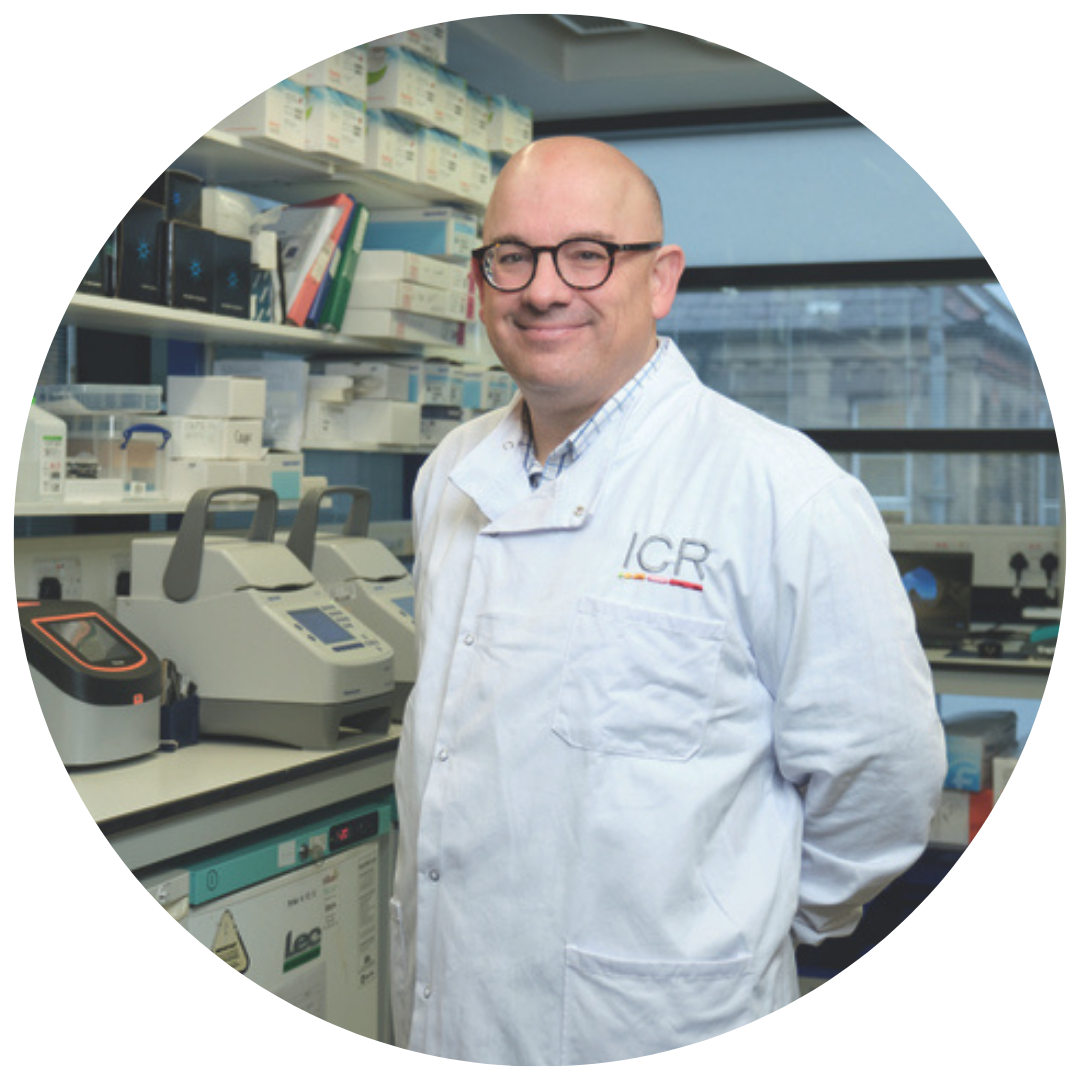
Giles Turner, 65, was diagnosed with aggressive prostate cancer in March 2023. Following treatment – including private treatment with the drug abiraterone – he is now in remission. He has since been campaigning to have abiraterone, which was discovered and developed by the ICR, made available on the NHS in England and Northern Ireland, in line with existing policy in Scotland and Wales.
In early 2023, I thought I noticed some blood in my urine. I assumed I probably had a urine infection, so I contacted my GP. While investigating this possibility, my GP also suggested I have a blood test to check my levels of a protein called prostate-specific antigen (PSA), as well as a physical exam. On examination, he became concerned. He could feel that there was something wrong and referred me to a urologist. He had explained to me what he had been feeling for, so I knew this meant there was a possibility I might have prostate cancer.
My PSA result was not alarmingly high (it was 6.8), but an MRI scan a few weeks later confirmed my diagnosis. The urologist described my cancer as ‘significant’ and I was very glad that it had been picked up at this point. A biopsy revealed I had aggressive high-risk locally advanced prostate cancer. It had already reached my seminal vesicle and would spread further if not treated. There was some concern about whether it had already spread to my lymph nodes, so I was immediately referred to an oncologist.
“The hardest part was thinking about the people closest to me”
I remember after my biopsy result, I asked the consultant about my chances of survival. He told me it was 60/40, which I did not consider to be amazing odds. I knew this was not good news. Emotionally, I fluctuated between being practical about how best to tackle it and being fearful that it would be my end.
I was anxious. It was surreal to think about how deadly this could be, and I did wonder whether it would kill me. But the hardest part was thinking about the people closest to me.
My wife, Sarah, was very upset and concerned – and we worried about how we would break the news to our two children. I wanted to be truthful with them but did not want to overly scare them or panic them either. I am a relatively positive person, but as a parent, you cannot help but worry about your children and how they feel, even when they are adults themselves.
Having worked all my life in the finance sector, I am also a pragmatist. I wanted to know what the next steps would be and what the best way was to overcome the disease. I was used to dealing with data and statistics and thinking in terms of probabilities, so I addressed my diagnosis by utilizing my problem-solving skills. I applied my system of risk calculation to my health. This helped me gain a little bit of control. I started furiously researching the disease and the treatments that could help me. I felt the need to ask lots of questions.
I immediately started hormone therapy which I was told would halt any growth of the tumour. Knowing that something was being done to treat the cancer, made me feel instantly more relaxed about everything. And when the results of my PET scan showed that there had been no spread of the disease, it was a huge relief. My treatment consisted of Androgen Deprivation Therapy (ADT), followed by injections of goserelin (Zoladex), high-dose brachytherapy and 20 sessions of radiotherapy.
Our pioneering research is transforming the lives of men with prostate cancer. But too many lives are still lost. By supporting us today, you can help our scientists make more discoveries, develop more effective treatments – and give hope to every dad, brother, uncle, partner or friend with prostate cancer.
“I channelled my anger into campaigning”
I was put in touch with a local support group, and while doing further research, came across a video presentation by Professor Chris Parker in which he talked about the STAMPEDE trial and the benefits of abiraterone for high-risk prostate cancer patients. I read The Lancet article about it and decided that I would ask my oncologist about it.
I was shocked to discover that while abiraterone was already available in Scotland and Wales for high-risk patients whose cancer has not yet spread, it was not approved for men like me on the NHS in England or Northern Ireland. Knowing that it can help stop prostate cancer spreading to other parts of the body, yet being unable to access it simply because I lived in Brighton, was enormously frustrating.
I was extremely fortunate that I was able to afford to have it privately, at a cost of around £250 per month. I started taking abiraterone in July 2023 and finished my course in June 2025. I feel very lucky that I have been able to pay for my treatment – with the abiraterone monitoring costs it came to just short of £20,000 in total over the two years I took it – but it is a scandal that this drug is not available to every man who needs it.
I decided to channel my anger about this into campaigning, and this helped me during my treatment. It gave me a focus. I was motivated by the thought of the men who were going to die without access to the same drug that I had taken. I approached TV news channels, have been in touch with my MP and wrote to NICE in a bid to highlight and hopefully change this situation.
“Being told you are in remission is as good as it gets”
Overall, my treatments have not been a breeze. Physically, I have been up and down as a result of it all and have suffered several side effects, such as weight gain, lack of sleep, hot flushes and exhaustion. I have tried not to let this bring me down and have kept my eyes on the horizon.
My PSA levels fell significantly following my hormone treatment and have been undetectable since completing my radiotherapy. Having finished my course of abiraterone in June, my latest MRI scan showed a complete response, and I am deemed in remission. This was fantastic to hear. I am certain that the abiraterone has made a difference and am so pleased that I was able to have it. I am no longer on any medication but have regular monitoring every six months.
The support I have had from family and friends has been lovely, but it is wonderful to be able to tell them that I am in remission. It is a relief to no longer be the centre of conversation or have people treat you with such extreme care. Of course, you will never know for certain if the cancer will return. But being told you are in remission is as good as it gets. Now I need to move on from this.
I feel pretty positive most of the time. I am aware that I have had the best treatment I could have had, and I am relieved to be in remission. The prospect of the cancer returning is becoming less likely as time goes by, so I have been able to put this to the back of my mind, by and large. I do think about it occasionally, but I know there are lots of treatment options out there for me.
A cancer diagnosis makes you face your own mortality. You have to come to terms with it in some way. Suddenly, life becomes very real, and you become more cancer-conscious and aware of your health. The one positive is that it forces you to appreciate life, nature and other people, in a deeper way than before.
“Continued cancer research is so important”
I know that without the STAMPEDE trial and the drug discoveries made by researchers, I would not be here. Abiraterone is definitely one of the ingredients that has saved my life. I have spoken with men who were diagnosed with prostate cancer five or six years before me, and they wish it had been around for them. Abiraterone is definitely one of the marvellous success stories of cancer research. The frustration for me is knowing that a wonderful drug has been developed that can save lives - yet many men still cannot access it.
Continued cancer research is so important in terms of giving people hope. Even if the worst happens to them, they can be sure that there are scientists out there trying hard to cure this disease in the long run. If you are unlucky enough to be diagnosed with cancer, at least you know that we are getting better and better at managing it and there are new treatment options available for patients and their families.
We urgently need better ways to detect prostate cancer earlier, predict drug resistance, and develop smarter, more personalised treatments. Donate today to fund more groundbreaking discoveries and help ensure that every man with prostate cancer can live longer, healthier lives: