
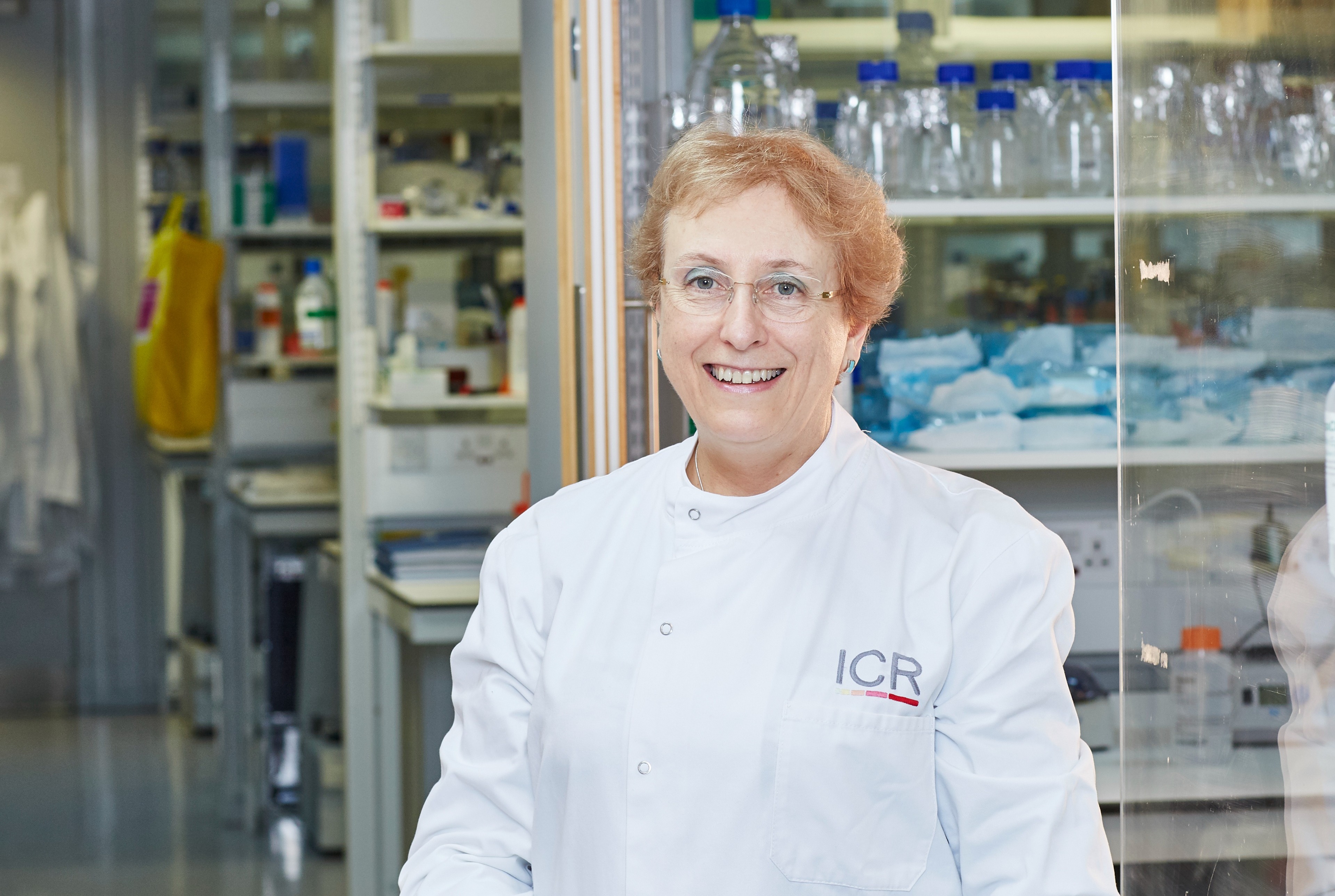
Tony McHale standing in his garden, smiling.

Help every man with prostate cancer

Give the gift of research to help every man with prostate cancer live longer, healthier lives.

Donate now

Tony McHale (pictured above) discovered he had an alteration in the BRCA2 gene at the age of 61, putting him at a much higher risk of developing prostate cancer. Shortly after, Tony joined the IMPACT study at the ICR, which investigated whether regular screening would lead to earlier diagnosis of aggressive forms of the disease. Around 18 months later, the screening revealed Tony had prostate cancer. 

"Being involved in the IMPACT study saved my life. If I hadn't taken part, I'd never have known I had prostate cancer. As far as I was aware, I didn't have any symptoms – and the sooner the disease is detected and treated, the better the chances are of survival." – Tony

Godfrey's prostate cancer story


DJ and music promoter, Godfrey Fletcher, found out he had prostate cancer in 2015 at the age of 47, shortly after his father had also been diagnosed.

"I was so lucky that my cancer was picked up at a very early stage. I was young and fit, with no symptoms. A year after my treatment finished, I was told it had been successful. My dad wasn't so fortunate. He was diagnosed with advanced prostate cancer and passed away at 80. His experience, and mine, showed me the importance of early diagnosis."

Why we need more research into prostate cancer

We're proud of the research advances we've made over the last 20 years. Our scientists discovered the drug abiraterone; identified genetic variants that influence risk of developing the disease; and pioneered new, more precise forms of radiotherapy. But despite our research advances, some prostate cancers remain difficult to treat. This includes those diagnosed at a later stage and those more aggressive tumours, which can spread quickly and evolve to resist treatment.

That's why we urgently need better ways to detect prostate cancer earlier, predict drug resistance, and develop smarter, more personalised treatments. Your gift will help our world-leading researchers unravel the complexity of prostate cancer, to give men precise and personalised care with the right treatments at the right time, to live longer and healthier lives.

Professor Eeles's goal is to develop new tests that could be used in prostate cancer screening, helping to identify men at a higher risk. Her team showed that a simple saliva test, carried out at home, was more accurate at identifying future risk of prostate cancer for some men than the current standard blood test. 

Building on this success, they recently launched a major new study to find out whether an improved version of this test – now suitable for more diverse groups, including Black men and younger men – can help detect more cancers earlier in men at higher risk. 

Tackling drug resistance

Our research underpinned the development of olaparib, a drug that revolutionised treatment for people with BRCA-related cancers. In a recent study, Professor Johann de Bono's team showed that changes which can be spotted with a simple blood test can reveal how long a prostate cancer patient will respond to olaparib. 

The ability to predict when – and how – patients will stop responding to olaparib could help doctors personalise treatment, and in the future, guide the development of new drugs to outsmart resistance – keeping us one step ahead of prostate cancer.

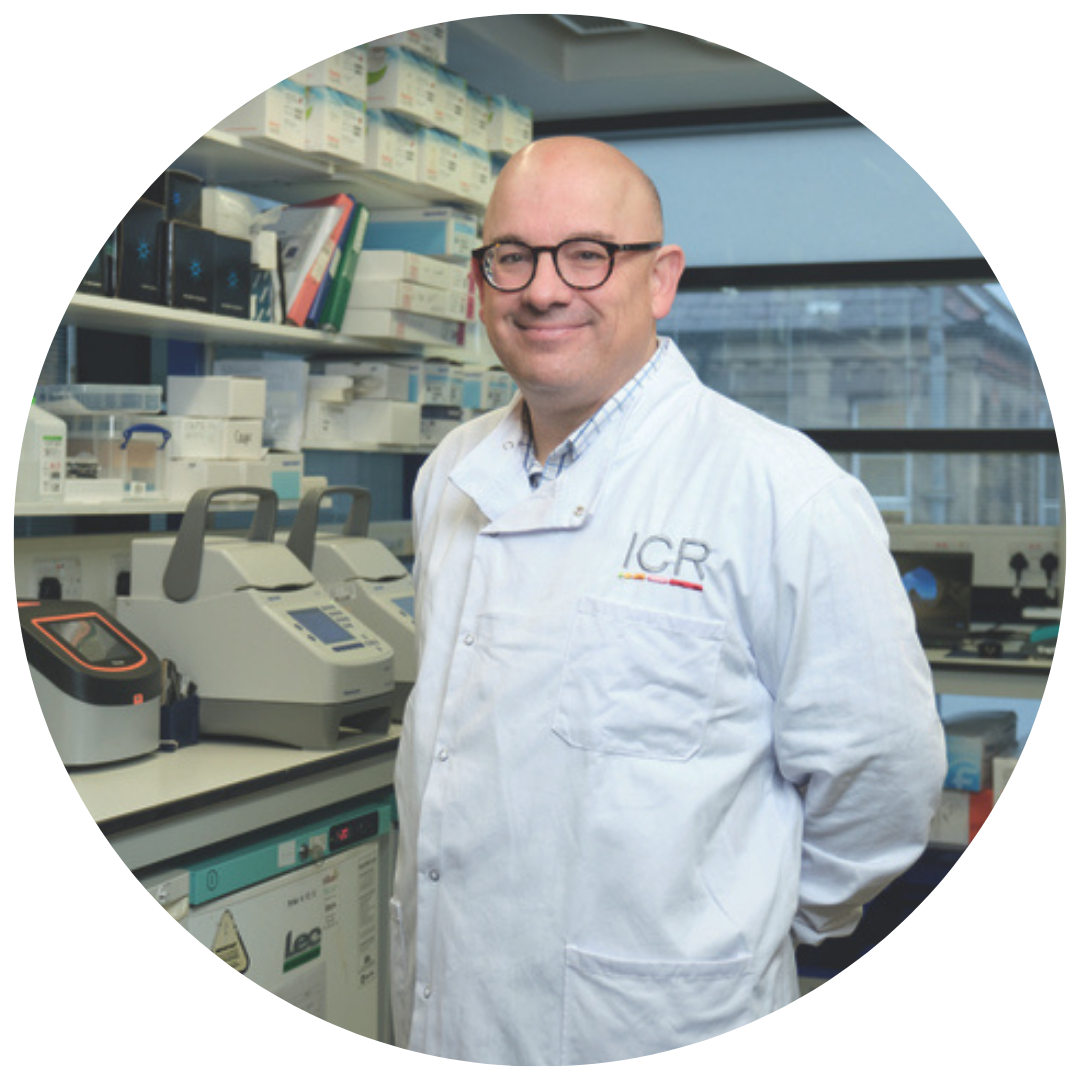
Professor Johann de Bono in the laboratory, smiling.

Creating smarter, kinder treatments for every man

Our scientists are at the forefront of precision cancer medicine – developing more effective treatments with fewer side effects.

Laboratory studies co-led by Dr Adam Sharp and Professor Johann de Bono showed that NXP800 – a new drug which targets a ‘master switch’ that cancer cells hijack to support their growth – slowed prostate cancer cell growth. This innovative drug could potentially also benefit men with advanced prostate cancer that has stopped responding to standard hormone therapy.

A study co-led by Professor Emma Hall has found that men with intermediate-risk, localised prostate cancer can be treated just as effectively with five sessions of higher-dose radiation therapy as with several weeks of standard treatment. Using stereotactic body radiotherapy (SBRT), which targets tumours with pinpoint accuracy, patients can receive a highly effective treatment with far fewer hospital visits. 

A study co-led by Professor Nick James has shown that a new artificial intelligence (AI) test can select which men with high-risk prostate cancer that has not spread will require the life-extending drug abiraterone. In the STAMPEDE trial, the team found that three out of four men could be spared unnecessary treatment, making the drug – discovered by our scientists – more affordable for the NHS.

Your gift can help every man with prostate cancer live longer, healthier lives

Help someone's dad, grandad, brother, uncle, partner, or friend survive prostate cancer. Your support will help fund life-saving research – so that every man can spend more precious time with their loved ones.

Make a donation

Your gift of research can help transform the lives of every man with prostate cancer.
With GiftAid you'll also be able to add 25% at no extra cost to you

Please choose a donation amount.

Your gift of research can help transform the lives of every man with prostate cancer.
With GiftAid you'll also be able to add 25% at no extra cost to you

Please choose a donation amount.

 Related news and blogs

08/02/22 - by

Composite image showing concepts relating to radiation - more info in image caption

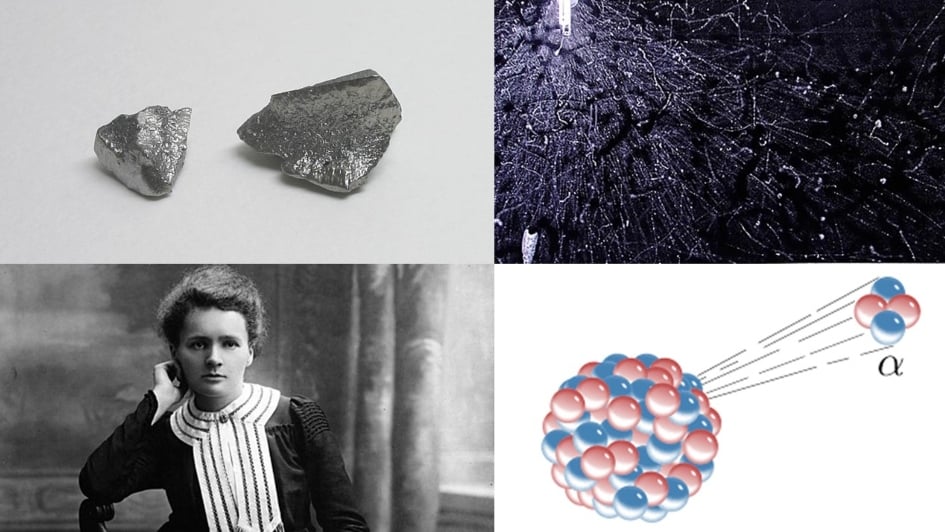
Image: Composite image (clockwise from top left): two chunks of elemental lutetium; beta radiation emitted by a sample of strontium, visualised via a cloud chamber; atomic nucleus emitting alpha radiation; Marie Curie, discoverer of radium. Credit: W. Oelen, CC BY-SA 3.0; Nuledo, CC BY-SA 4.0; Shrriramsughir, CC BY-SA 4.0; Unknown author, Public domain; all via Wikimedia Commons.

Atomic energy

Radiotherapy is one of the staple cancer treatments we all know, alongside chemotherapy and surgery. It’s best known as a treatment delivered by an external beam of cell-zapping X-ray radiation.

But did you know that for decades we’ve also been using atomic energy to kill tumours from the inside out – produced by drugs that deliver radiation from patients’ own bloodstreams?

Known clinically as ‘radioisotope’ therapy, these treatments are based on injecting or swallowing radioactive versions of elements, sometimes called radionuclides or radioligands.

Lutetium

A new drug called Lu-177-PSMA is the latest atomic kid on the block, with a major recent paper – co-authored by the ICR’s Professor Johann de Bono – demonstrating promising results in men with advanced prostate cancer.

Lu-177 is a radioisotope, or radioactive form, of lutetium. Like all radioisotopes, each atom of Lu-177 wants to release one or more of its subatomic particles to become more stable. A sample of Lu-177 will divest itself of a stream of electrons – a high-energy form of radiation called beta radiation.

Lu-177 looks a good choice as a potential cancer treatment partly because it delivers a hefty dose of beta radiation but within a relatively small area, of around 2mm – minimising radiation damage to tissues around a tumour.

Ingeniously, scientists localise it to the cancer site by combining it – ‘conjugating’, in drug discovery parlance – with a molecule that attaches to a protein called prostate specific membrane antigen (PSMA), which is found on the surface of prostate cancer cells.

Radium

Radium-223 is one of several radioisotopes currently approved for, and routinely used in, cancer therapy. The ICR was instrumental in its development too: a trial led by Professor Chris Parker, Clinical Consultant at The Royal Marsden and Professor of Prostate Oncology at the ICR, proved its effectiveness in late-stage prostate cancer that has spread (or metastasised) to the bones.

Fascinatingly, radium-223’s chemical properties give it an in-built homing ability – from the same chemical group as calcium, which is taken up by growing bones, it’s taken up by metastatic cancer cells in bone. Radium-223 emits alpha radiation, or chunks of two protons bound to two neutrons, which has a relatively short reach.

Radioisotopes of strontium and samarium are also used in the treatment of bone metastases. Strontium sits in the same chemical group as radium and calcium, whereas samarium is one of the so-called actinides – a series of radioactive elements including lutetium and its better-known, more dangerous, cousins uranium and plutonium.

Yttrium

Yttrium-90 is used in a type of treatment called selective internal radiation therapy (SIRT), which isn’t widely available on the NHS. This involves injecting radioactive beads directly into blood vessels near a tumour and is used particularly in liver cancer treatment.

Iodine

Along with radioisotopes of phosphorus, which is now not used generally as a cancer therapy, iodine is one of the oldest radioisotopic cancer treatments. It’s been used in thyroid cancer treatment for more than 80 years, after a famous series of experiments and trials led by researchers at Massachusetts Institute of Technology (MIT).

Iodine-131 is still used as a treatment for thyroid cancers today. As with bone and calcium, the thyroid gobbles iodine at a much greater rate than the rest of the body, so the treatment naturally localises there. Iodine is interesting to medicinal chemists as one of the few non-metallic elements to be used for internal radiation treatment.

A recent paper from researchers in the Joint Department of Physics at the ICR and The Royal Marsden explores a particular issue for treatment with radioactive iodine, which is measuring how much of the radiation is actually absorbed by patients’ bodies.

The same team has led other studies exploring this idea of measuring radiation doses more effectively – known as ‘dosimetry’ – including developing innovative tools like the famous 3D-printed ‘Abdoman’.

… and that’s not all

Several other chemical elements have been used in the past as cancer treatments, or are being explored as experimental therapies.

Our researchers are working on discovering and developing a range of innovative new drugs, from radiopharmaceuticals to immunotherapies, small-molecule drugs to antibody-drug conjugates and newer drug types like PROTACs.

There’s an exciting future ahead in cancer drug discovery and development – whether you’re a chemistry geek or not!