

.jpg "big-data-cloud-content-(image-dr-bissan-al-lazikani-et-al)")
Image courtesy of Costas Mitsopoulos, Amanda C. Schierz , Paul Workman, Bissan Al-Lazikani (figure from 2015 PLOS paper, Distinctive Behaviors of Druggable Proteins in Cellular Networks)
One of the biggest challenges for men after their prostate cancer diagnosis is coming to terms with an uncertain future.
Although 85 per cent will live for 10 years or more – with a great many of these men cured – current tests do not reliably tell them whether their disease is likely to become aggressive and how quickly it might spread.
After radiotherapy and sometimes surgery, men return to their doctor for routine appointments to measure their levels of prostate specific antigen (PSA).
PSA test
Rising PSA levels can indicate that the cancer is starting to progress again, but the test is controversial – because sometimes PSA levels go up when there is nothing wrong, and sometimes they stay low even as a cancer is beginning to spread.
Some men will never need further treatment, but in others their disease will become aggressive and advanced. In addition, men are affected differently by treatment – with some suffering serious consequences such as secondary cancers and bowel and bladder problems, which can emerge shortly after treatment or sometimes months or years down the line.
So how can we give men a better idea of their long-term chances of survival, or the long-term effects of treatment?
The answer, our researchers here at The Institute of Cancer Research believe, lies in better understanding how various factors relating to the tumour and the patient interact with each other. They are using a number of approaches, including dynamic statistical modelling and Big Data approaches to address this.
Data crunching
Big Data science at the ICR involves generating or collating enormous datasets of many different types and using complex mathematical tools – even artificial intelligence – to find patterns within them to point to new clues about the disease.
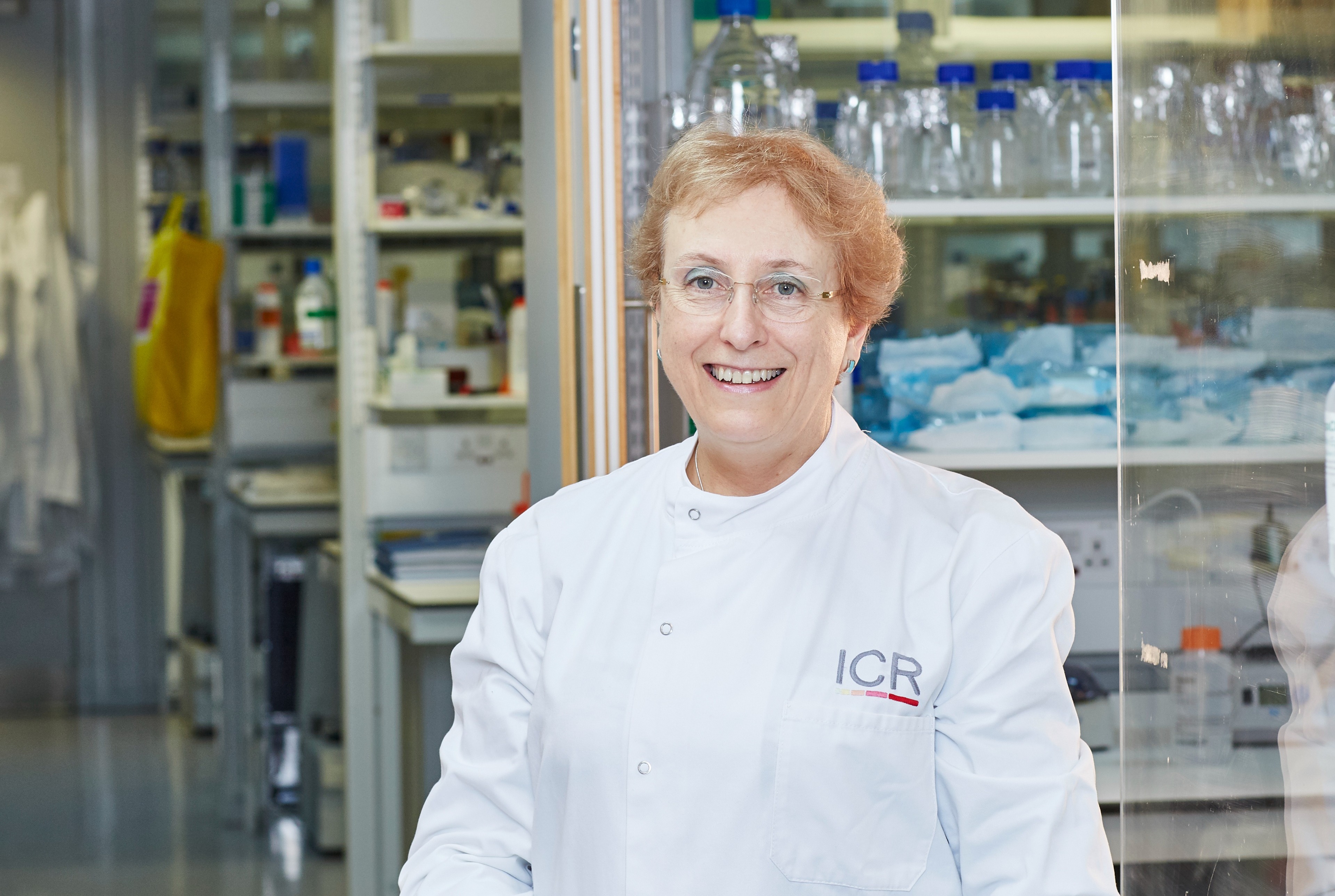
Professor Emma Hall is an expert statistician working in our Clinical Trials and Statistics Unit (ICR-CTSU) and our Division of Clinical Studies. Her team devises, sets up, monitors and runs a wide range of clinical trials in partnership with hospitals and universities up and down the UK.
They crunch the data generated by these trials to work out whether new treatments, from modern forms of precision radiotherapy to new targeted cancer drugs, are better than standard options.
Now, Professor Hall and her colleagues aim to use data from two major, long-running trials to find new tools to improve the chances that men with prostate cancer get the right treatments, at the right times.
Research at the ICR is underpinned by generous contributions from our supporters. Find out more about how you can contribute to our mission to make the discoveries to defeat cancer.
Student
Professor Hall’s team is aiming to recruit a PhD student to analyse the data from these trials, developing and applying new statistical models to find clues and patterns about how men respond to treatment.
These models could find out whether doctors could spot meaningful changes in cancers sooner than is currently possible.
This studentship – which is the focus of an ICR fundraising appeal – will increase our understanding of how patients move through the different, progressive stages of their disease, and ultimately help us to make more accurate predictions.
The ultimate goal is to develop a dynamic online risk calculator for clinicians. Predictions of individual patients’ prognosis could be updated as data obtained from treating and monitoring their cancer became available, helping to guide their treatment.
This project is just one example of how our scientists are using statistical modelling and Big Data approaches to revolutionise cancer research.
Big Data
Another such project, using data from one of the same clinical trials, has used Big Data analysis to identify predictors of late toxicity – side effects which only become apparent long after initial treatment – which may inform the development of personalised radiotherapy treatment for prostate cancer patients.
This Big Data project has demonstrated successful integration of clinical, dose, and genetic data using a multidisciplinary team science approach, with experts in different areas working together.
We are currently investing in a digital infrastructure programme that will underpin our Big Data research, as well as in people with skills in Big Data analysis, from data mining to artificial intelligence.
Our system for storing research data is one of the best available to scientists anywhere in the world. After a review of our computing and the launch of an expanded scientific computing service, our researchers are now storing more than 1 petabyte of data – the same amount as would fit on around 223,000 DVDs – on our new system.
Researchers are using experience in disciplines from outside cancer research – including in astroparticle physics – to understand the vast complexity of cancer, and search for new clues into how it grows and spreads.
Learning from data
We need your help to apply our expertise to understand how men respond to prostate cancer treatment.
Professor Hall says:
“Clinical trials generate lots of data, about medical history, genetics, biomarker changes over time, and treatment response.
“We want to apply statistical models to these different types of data, to analyse and combine them and to update predictions of prognosis as patients are followed-up. Patients and doctors want to know what the prognosis is today – not what it was when the cancer was diagnosed perhaps several years ago.
“With your help, we can bring in a new researcher to learn more lessons from the data we have accumulated – while at the same time helping to train a future leader in cancer research. Together we will help ensure that men with prostate cancer get the best possible treatment for their disease – treatment that will cure some and allow others to spend precious extra time with their loved ones.”