

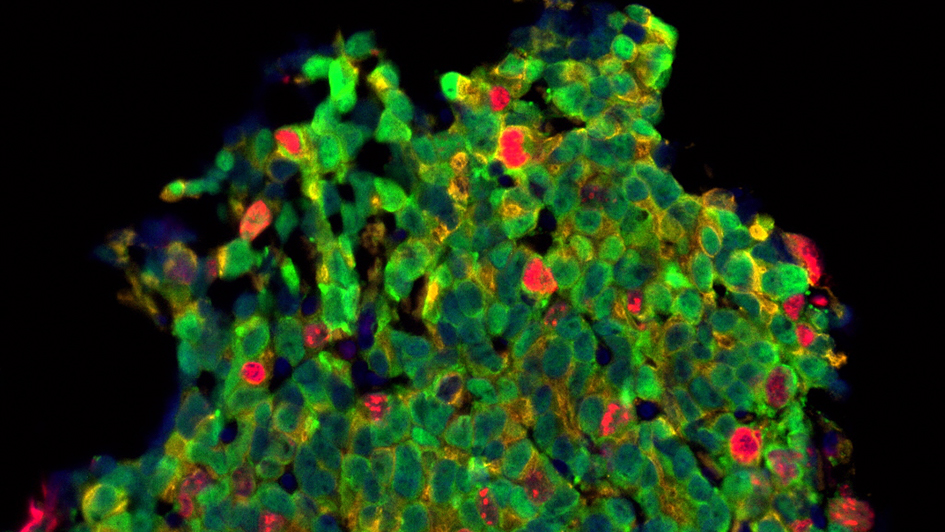
Image: Treated prostate cancer cells. Credit: Mateus Crespo/Prof Johann de Bono, the ICR
“I love what I do. I always want to get to work and open my laptop.”
Not everyone can say that about their job. And I’d imagine a lot of people dread opening their laptop to discover an inbox full of new unread emails and an overwhelming to do list.
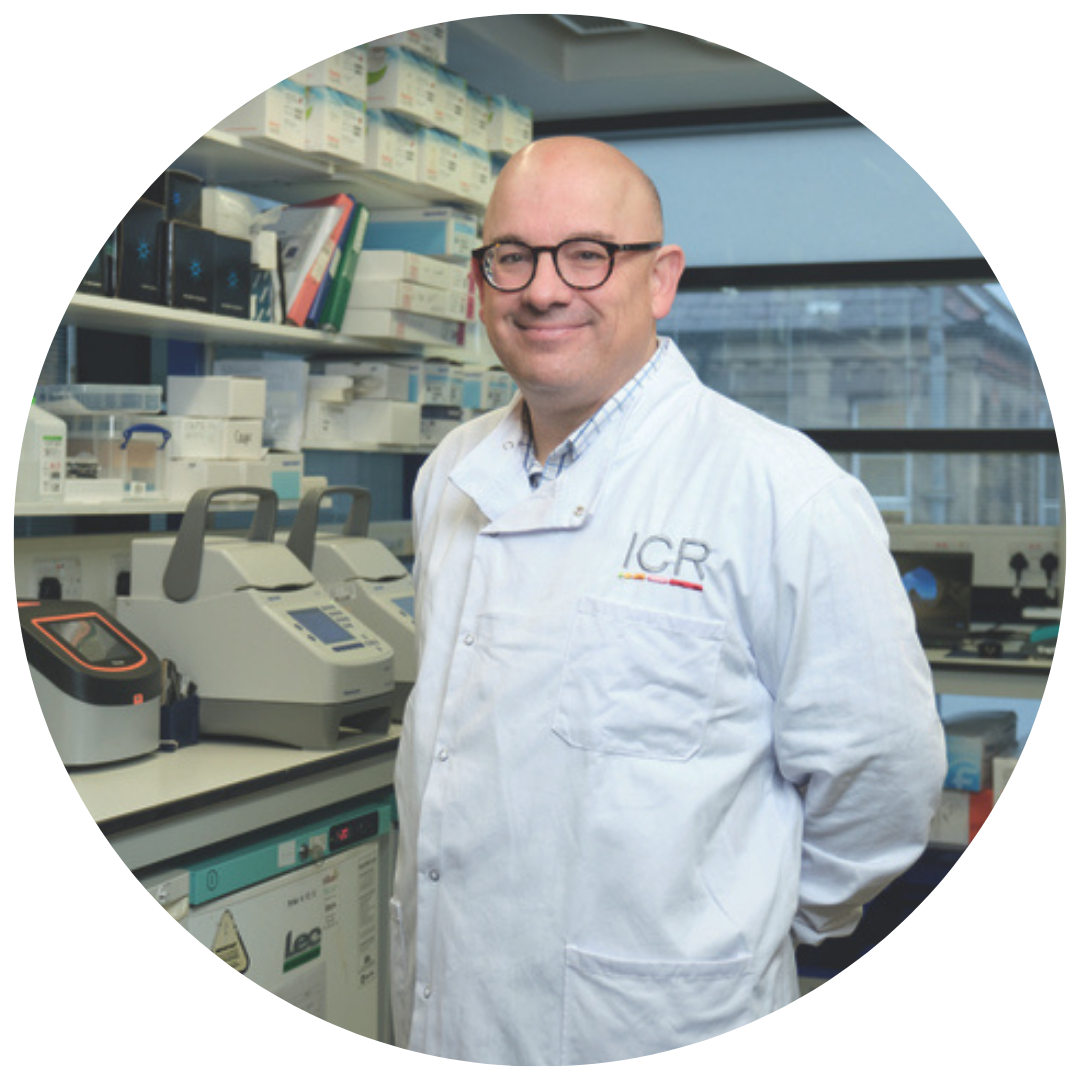
But that’s definitely not the case for Adam Sharp. He’s a Medical Research Council (MRC) Clinical Research Training Fellow at The Institute of Cancer Research, London, and a Specialist Registrar in medical oncology at The Royal Marsden NHS Foundation Trust.
I met up with him to find out about his exciting new funding from the Prostate Cancer Foundation and understand how it will help his career develop.
A longstanding interest in cancer drug discovery
Adam completed an undergraduate degree in biochemistry and pharmacology at Southampton in 2001. And it was during that time that he recognised his desire for research to have an outcome and not purely motivated by wanting to solve unanswered questions.
“I was inspired by lecturers who came in and explained the clinical relevance of a scientific concept – it was powerful to see the application of what we were being taught.”
Drug discovery has therefore been a natural career choice. “I was most fascinated by cell signalling and how small molecules can be used to interrupt that signalling and affect how cancer cells grow,” explained Adam.
That fascination led to a PhD at Southampton where he started to come into contact with junior cancer doctors who were doing their research training in the same lab.
In that company, with good independent advice from his supervisors, and frustrated by working on potential targets for cancer drugs and not having the medical perspective to understand why they couldn’t be developed for patients, Adam decided he wanted to make a big change.
Leaving the lab behind…temporarily
Adam knew he wanted to become a clinician scientist by doing a medicine degree. So after finishing his PhD in 2005, Adam signed up for a graduate entry medicine course at Southampton.
“After the four years of the course, I then did four years of house jobs as a junior doctor in Portsmouth and London. Throughout that time, after my PhD, I didn’t do any research or research training,” he said.
That’s a lot of studying and training but Adam remained focused on his goal of getting back into the lab and having the opportunity to combine his new clinical experience with his passion for research.
And that clinical experience has given him a whole new mind-set.
“I think differently now – understanding the biology in the context of its clinical application, rather than just because it’s interesting.”
The ICR offers a number of opportunities for clinicians who want to undertake research training.
Coming to the ICR
“When I decided I wanted to become a clinician scientist in cancer research, I knew the best place to be,” said Adam.
“I wanted to work here at the ICR because, not only is it one of the best places in the world for drug discovery, but if you want to do drug discovery really well, you also need a good centre for developing the drug candidates. And here, with The Royal Marsden, we have the incredibly productive Drug Development Unit.”
And Adam, initially as an Academic Clinical Lecturer then a MRC Clinical Research Training Fellow, works for, and is mentored by, the Head of the Drug Development Unit, Professor Johann de Bono, while he does research alongside working towards becoming a consultant medical oncologist.
During this period he’s benefited from the Academy of Medical Sciences Starter Grant which, as well as providing important funding, offered mentoring support.
“The mentoring scheme has been really useful. I’ve been able to get independent advice from an Academy of Medical Sciences Fellow, whose experience is really relevant to my own.”
Lab time versus clinic time
One of the key issues for clinician scientists is protecting enough of their time for research while ensuring they can complete their clinical training. Adam secured a Fellowship from the MRC, which made that possible.
“The MRC funding was critical in protecting my time to do post-doctoral research.”
But of course he didn’t want to become a clinician scientist without taking on the responsibilities of his clinical role.
“Curiosity is a big motivator but always with a thought towards what might have greatest impact for patient care. I enjoy my research. It’s all interesting. But I always ask myself, will it help patients?”
“Seeing and treating patients is one of the biggest privileges you can have,” said Adam. “You see the end game as a clinician scientist. You want to make a difference for the patient and you know when you’ve achieved that.”
What’s next?
“Short-term, I’d like to finish my clinical training and ensure I still get research outcomes alongside it. And eventually I’d like to have my own lab – we’d work on further understanding the biology of prostate cancer and finding new drug targets,” explained Adam.
And that’s where this exciting new funding from the Prostate Cancer Foundation (PCF) comes in.
The US-based charity’s Young Investigator Awards are given out each year to the most promising young scientists in prostate cancer research. The programme provides both financial support and a comprehensive career development programme.
Adam will receive three years of funding, which amounts to $225,000 in total. And the Award is designed to help him transition to independence and set up his own team.
Several PCF Young Investigator Awards have gone to researchers at the ICR, past and present, in recent years so Adam is in good company.
Research to make a difference
“Hearing the statistic at university that one in three of us will get cancer had a profound effect on me. It really meant that I came into this career with both a love of biology and a drive to make a difference.”
With his PCF funding, Adam will be exploring a potential new strategy to treat advanced prostate cancer.
The mainstay of prostate cancer treatment is androgen deprivation therapy, where the cancer is starved of the male hormones, or androgens, which it needs to grow and spread.
Androgens trigger the growth of cells by binding to a protein called the androgen receptor. Androgen deprivation therapy means these receptors have much less hormone to bind with. But in almost all cases men with advanced prostate become resistant to this treatment.
This resistance could be because some men have altered versions of the androgen receptor, which are unaffected by the therapy and therefore continue to work and fuel the cancer.
“At the moment, we don’t have a treatment that targets these altered versions of the androgen receptor, known as splice variants. But hopefully we can discover a protein critical for their generation and develop further to identify drugs that target these proteins and stop the cancer from growing.
“This could become a whole new treatment strategy for men who become resistant to the standard hormone therapy,” explained Adam.
And Adam sees broader potential for this work: “My research is centred on prostate cancer but the overarching cellular process of alternative splicing I’m working on can go wrong in other cancers and non-cancerous diseases.”
But he’s realistic about the likelihood of discovering a new drug.
“There are a lot of blind alleys in drug discovery and research – you can work on a potential drug target for a long time but discover it is not as important as you first hoped.
“But that’s why we explore multiple strategies at once, all based on sound scientific rationale, with the hope that one or two of them will succeed and help our patients.”
Inspiring the next generation
Adam is very keen to acknowledge the mentorship and advice he’s benefited from throughout his career so far. And he is paying it forward by regularly giving talks to school students and sharing his experience of life in the lab and in the clinic.
“Hopefully I can inspire some of the young people I meet to take up a career in science or medicine,” said Adam. He wants young people to fall in love with medical research just like he did.
Fingers crossed there will be a few extra cancer researchers loving their jobs and eagerly opening their laptops every morning, thanks to hearing Adam’s experience.