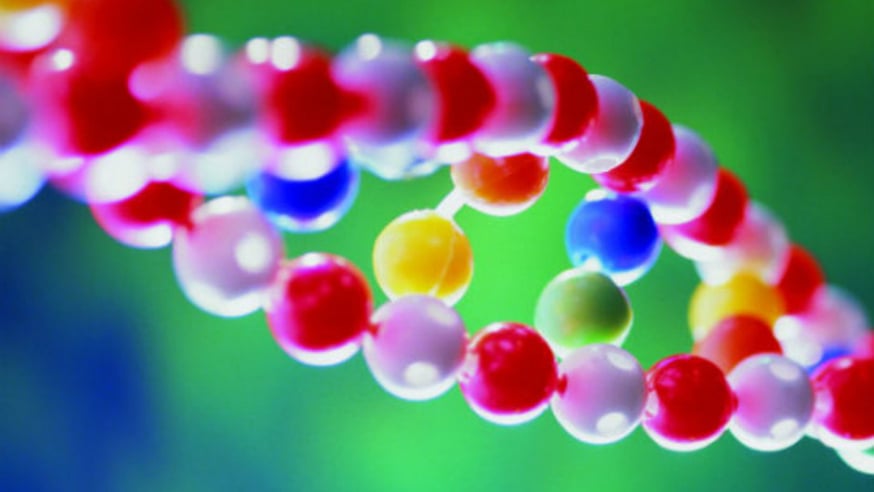
Genome Replication Group
Dr Gideon Coster’s group investigates how cells produce accurate copies of their genome during cell division. Importantly, errors during genome replication can be both a cause, and a consequence, of cancer.
Research, projects and publications in this group
We hope to identify novel therapeutic approaches and potential drug targets by understanding the events that occur when the DNA replication machinery encounters challenging sequences in the genome.
Dr Gideon Coster
Group Leader:
Genome Replication
Dr Gideon Coster studies how errors during genome DNA replication are avoided or dealt with using a combination of in vitro biochemistry, genetics, proteomics and cell biology. He joined the ICR in October 2018 as a Sir Henry Dale Fellow.
Researchers in this group
 .
.
 .
.
 .
.
 .
.
 .
.
 .
.
 .
.
Dr Gideon Coster's group have written 11 publications
Most recent new publication 12/2025
See all their publicationsCancer is a disease of uncontrolled proliferation. As cells are pushed into shorter cell cycles, they experience replication stress, which drives genomic instability and disease progression.
Replication dynamics and accuracy is not equal across the human genome. Certain regions, especially repetitive and structure-prone sequences, present a challenge to the replication machinery.
We know remarkably little about the events that occur as the replication machinery encounters challenging templates. The Coster lab is working on closing this knowledge gap, with the hope of identifying novel therapeutic approaches and potential drug targets.
Using reconstituted budding yeast replisomes, we discovered that certain repetitive sequences are sufficient to directly stall replication. The highly defined nature of the in vitro system allowed us to define the exact mechanism of replication stalling – DNA secondary structures form behind the replicative helicase, impeding DNA synthesis. Our results show that the replicative helicase keeps unwinding DNA, generating stretches of exposed single-stranded DNA. This phenomenon, termed helicase-polymerase uncoupling, also occurs due to DNA damage. This means that undamaged DNA sequences can elicit damage-like outcomes. We therefore propose that structure-forming sequences are an important source of endogenous replication stress.
In recent years we started to translate some of our mechanistic work into cellular systems. Questions we are interested in include: Why do human cells express so many different accessory helicases? Are their roles specific, redundant and/or cooperative?
We are also developing live cell imaging approaches to explore the effects of DNA sequence and structure on replication dynamics.
In addition, we are developing technologies to explore the genome-wide presence of DNA secondary structures in the context of replication. For example, we are collaborating with Oxford Nanopore Technologies to establish structure-detection using nanopore sequencing.
Our long-term vision is to better understand how DNA affects its own replication, in terms of replication dynamics and fidelity, and how this ultimately impacts genome stability. By combining highly defined in vitro assays with state-of-the-art cellular approaches, we strive to bridge the gap between highly defined (but partial) biochemistry with complete (yet complex) cells.
Read more about our work in these recent publications:
- Replication-induced DNA secondary structures drive fork uncoupling and breakage.
Williams, S.L., Casas-Delucchi, C.S., Raguseo, F., Guneri, D., Li, Y., Minamino, M., Fletcher, E.E., Yeeles, J.T., Keyser, U.F., Waller, Z.A., Di Antonio, M., Coster, G.
EMBO Journal, Vol.42(22), p. e114334. (2023)
- The mechanism of replication stalling and recovery within repetitive DNA.
Casas-Delucchi, C.S., Daza-Martin, M., Williams, S.L., Coster, G.
Nature Communications, Vol.13(1), p. 3953. (2022)
To learn more broadly about this subject, read our comprehensive review:
- How DNA secondary structures drive replication fork instability.
Sethi, A., Fernández-Casañas, M., Delpino, B., Coster, G.
DNA Repair, Vol.156, p. 103913. (2025)
Recent discoveries from this group
Scientists uncover key mechanism linking DNA replication to cancer