
At The Institute of Cancer Research, London, our research teams are utilising highly innovative techniques to better understand, diagnose and treat bowel cancer. In this feature, Professor Anguraj Sadanandam explains how his interdisciplinary approach is accelerating our management of bowel cancer, giving everyone hope of a cure.
Bowel cancer, also known as colorectal cancer, is the fourth most common cancer in the UK, accounting for 12 per cent of all cases.
Although some bowel cancers respond well to standard therapies – such as surgery, chemotherapy and radiotherapy – others can become resistant, making them much harder to treat. This is especially true for patients whose cancer reaches an advanced stage, where treatment options are currently limited and can be highly toxic.
Given that more than half of diagnoses are made in the later stages of the disease, this positions bowel cancer as a major health challenge, which is exacerbated by the rise in cases among people under the age of 50.
Researchers have met this challenge head-on, achieving significant advances in screening for and treating bowel cancer, which have greatly improved survival rates. However, there remains a vital need to accelerate research further to combat this complex disease.
We urgently need to find new ways to prevent, diagnose and treat bowel cancer more effectively – so more families can look forward to the future together. Please make a regular gift today to help us make more discoveries and save more lives. SUPPORT US
Leading the charge
The Institute of Cancer Research (ICR) is committed to understanding how bowel cancer evolves, what is driving the increased rate of diagnoses in younger people and what tactics bowel cancer cells use to evade detection and resist treatment.
Scientists at the ICR are already at the forefront of bowel cancer research. Our work on identifying distinct molecular subtypes of bowel cancer and developing innovative diagnostic tools has enabled more precise treatment strategies, and we have achieved promising results in understanding radiotherapy-induced treatment resistance.
Our work combines artificial intelligence (AI), molecular diagnostics and advanced preclinical models to transform the way bowel cancer is detected and treated. We use pre-clinical modelling tools such as organoids, cell lines (populations of growing cells) and mouse models that faithfully replicate different subtypes of bowel cancer, alongside RNA-based diagnostic tests and biomarker discovery approaches that reveal the molecular characteristics of individual tumours. Together, these tools are helping identify which patients are most likely to benefit from specific therapies, understand why some cancers become resistant to treatment, and accelerate the development of more personalised and effective treatment strategies.
Professor Anguraj Sadanandam, Group Leader of the Systems and Precision Cancer Medicine Group at the ICR, is among those pushing the boundaries of modern technology to diagnose bowel cancer more quickly and develop personalised therapies to help ensure a future in which the disease is consistently preventable, predictable and treatable.
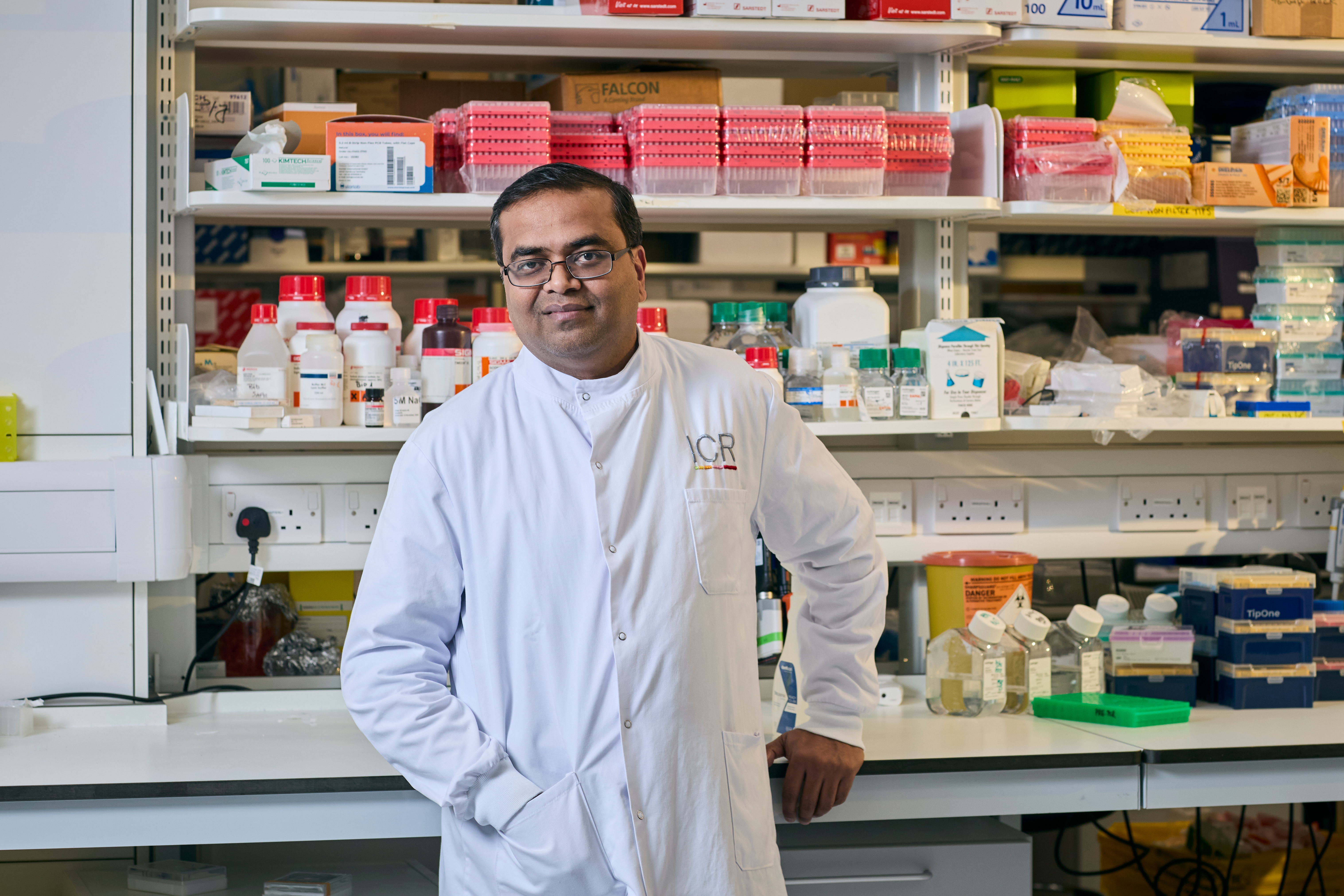 Image: Professor Anguraj Sadanandam
Integrating biology and computational science
With a research approach across diagnostics, preclinical modelling and AI, Professor Sadanandam’s research is highly interdisciplinary.
During his PhD in Pathology and Bioinformatics at the University of Nebraska Medical Center, he was one of the few scientists selected each year to be trained in both computational and wet lab biology, and he has maintained this dual approach.
He said: “The fields of biology and computational science were completely separate – nobody taught both. It’s not typical to introduce someone as interdisciplinary, and people often ask whether I’m primarily a computational scientist, a preclinical modeller or a diagnostics researcher. My speciality integrates these areas of expertise by validating machine-generated hypotheses with wet-lab biology.
“This approach is more common now, and the field is moving towards hybrid skill sets, especially for early-career researchers, but when I started, it was very rare, and I had to figure out how to consolidate the two fields. Many labs now hire bioinformaticians because data is an essential tool and is becoming more powerful in what it can reveal.”
Following his PhD, Professor Sadanandam did his postdoc at the Lawrence Berkeley National Laboratory, Berkeley, focusing on systems and computational biology under Professor Joe Gray, a known expert in multidisciplinary science. Later, he continued his postdoc and expanded his multidisciplinary research to pre-clinical modelling under the mentorship of Professor Douglas Hanahan – the author of Hallmarks of Cancer. Professor Hanahan offered Professor Sadanandam the opportunity to join his team and continue his research at the Swiss Institute of Experimental Cancer Research.
Here, Professor Sadanandam combined preclinical modelling tools with AI techniques, including machine learning, allowing him to identify and test new therapies for gastrointestinal cancer subtypes – primarily from pancreatic and bowel.
Identifying bowel cancer subtypes
One of the major pillars of Professor Sadanandam’s research, rooted in AI and data science, is the discovery and translation of biomarkers into diagnostic tests. Biomarkers are observable and measurable indicators produced by tumours or the body in response to cancer. Due to their ability to reveal hidden patterns in large datasets, they are critical for diagnosing cancer, predicting treatment response and enabling personalised therapies.
In publications from 2013 and 2015, Professor Sadanandam found that bowel cancer can be divided into four to six molecular subtypes, each behaving and responding differently to treatment. The four subtypes are commonly referred to as consensus molecular subtypes, developed in collaboration with the Colorectal Cancer Subtyping Consortium. This breakthrough pushed clinicians to move beyond a one-size-fits-all treatment approach and start matching the right treatment to the right patient.
He said: “We showed that bowel cancer isn’t just one disease. It’s actually different diseases at the molecular level, each with a definite set of genetic and biological characteristics, with some more aggressive than others. If we can identify which subtype a patient has earlier, clinicians can make better decisions on which treatment is likely to be most effective.”
His team developed an RNA-based diagnostic test to identify which subtypes respond best to which therapies. The test was later validated using samples from past clinical trials involving different drugs, and it has already shown that one subtype responds well to a drug already available in clinical practice.
He said: “Our earlier papers demonstrating the test’s validation have been cited on more than 7,000 occasions, and it is now embedded into the molecular subtype classification consensus for bowel cancer, which is widely used by researchers globally for bowel cancer.
“Despite these advances, the test isn’t yet regulated or clinically available. We’re currently working with the ICR’s Business Innovation Office to receive the needed research funding and investment to progress the test beyond academia and into clinical settings. If successful, the test could benefit the roughly two million bowel cancer patients worldwide.”
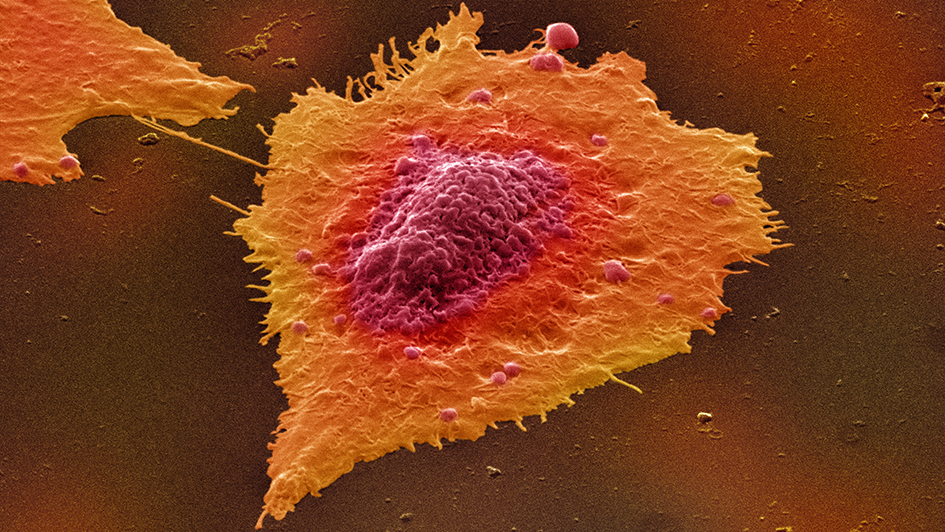
Image: Colour-enhanced image of human colon cancer cells in culture. Credit: Annie Cavanagh. License: CC BY-NC 4.0
Using big data to predict treatment response
Professor Sadanandam is a principal investigator in the COLOSSUS (Advancing a Precision Medicine Paradigm in Metastatic Colorectal Cancer: Systems-Based Patient Stratification Solutions) consortium, coordinated by Professor Annette Byrne at the Royal College of Surgeons in Ireland (RCSI), with scientific leadership from Professor Jochen Prehn at the RCSI and Professor Rodrigo Dienstmann at the Vall d-Hebron Institute of Oncology in Spain.
Although the formal Horizon 2020 funding has concluded, the scientific programme and collaborative research continue through ongoing joint studies and translational initiatives.
Within COLOSSUS, Professor Sadanandam leads efforts in systems biology, AI and multi-omics integration to understand colorectal cancer progression, therapeutic resistance and tumour heterogeneity. His laboratory develops computational frameworks and integrates numerous types of genetic data (genomic, transcriptomic, proteomic, metabolomic, spatial, and single-cell data) with functional preclinical models to identify biomarkers, therapeutic targets and precision medicine strategies.
He said: “These continuing collaborations support the translation of systems-level discoveries into clinically relevant approaches for improving outcomes in bowel cancer.”
Overcoming drug resistance
Professor Sadanandam and his team, alongside national, international and ICR collaborators, including Professor Alan Melcher, Professor Kevin Harrington and Dr Anna Wilkins from the ICR, are also tackling drug resistance in locally advanced bowel cancer, specifically in those treated with radiotherapy, by manipulating the cancer’s immune environment to boost treatment response. Previously, they found that profiling the immune landscape of cancers before therapy could distinguish patients likely to respond to radiotherapy immediately.
Radiotherapy has revolutionised bowel cancer treatment, and the study demonstrates that the immune landscape and inflammation levels within tumours influence their response to radiotherapy. While further tuning is required, this work provides the groundwork for future studies and potential clinical trials to evaluate radiotherapy-immunotherapy combinations.
He said: “We, in collaboration, are now building upon our understanding of how best to combine and sequence radiotherapy and immunotherapy to maximise treatment response based on the biology of each patient.”
Professor Sadanandam is a part of an international consortium working to deliver ROBIN (Radiation Oncology-Biology Integration Network), a multi-million programme funded by the National Institutes of Health and National Cancer Institute, USA, led by collaborators – Professor Silvia Chiara Formenti, Professor Ralph Weichselbaum and Professor Joseph Deasy – in the US. He serves as a co-lead of the Data Science and Integrative Analysis Core Group, alongside Professor Deasy.
He said: “I hope this project will helps to better understand how immune changes can help determine the most effective use of radiotherapy and immunotherapy in bowel cancer.”
Immunotherapy is helping to give more cancer patients the hope of a cure. Help us discover more by supporting our research today.
Making a difference for patients
Bowel cancer remains the second biggest cancer killer in the UK and changing that requires bold new ideas. But our scientists are proving, through research like Professor Sadanandam’s, that they are consistently pushing the boundaries of research to make an impact for patients.
He said: “Our ultimate goal is to detect and diagnose cancer much earlier and to understand each patient’s disease, including late-stage patients, in as much detail as possible, so we can give them the most suitable treatment at the start. We have the capabilities at the ICR to improve outcomes and the quality of life for people with bowel cancer, so we must continue leveraging new technologies to reach our mission of defeating cancer.
“With every discovery, we move closer to saving more lives and helping everyone prolong their lives with or without bowel cancer.”
Our world-class scientists are pushing the boundaries of research to defeat bowel cancer. Support us today to shape a future in which bowel cancer is more preventable, predictable and treatable – to give everyone the hope of a cure. DONATE MONTHLY
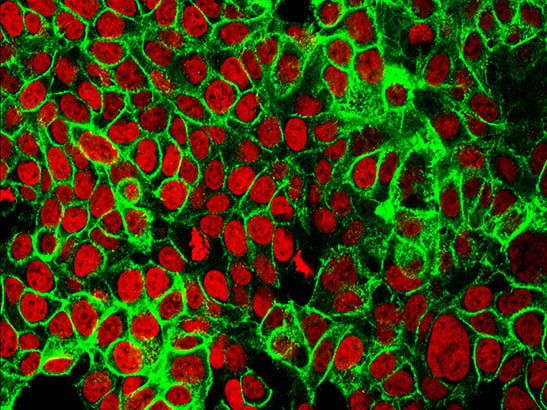
Banner image: Human colon cancer cells with the cell nuclei stained red and the protein E-cadherin stained green