
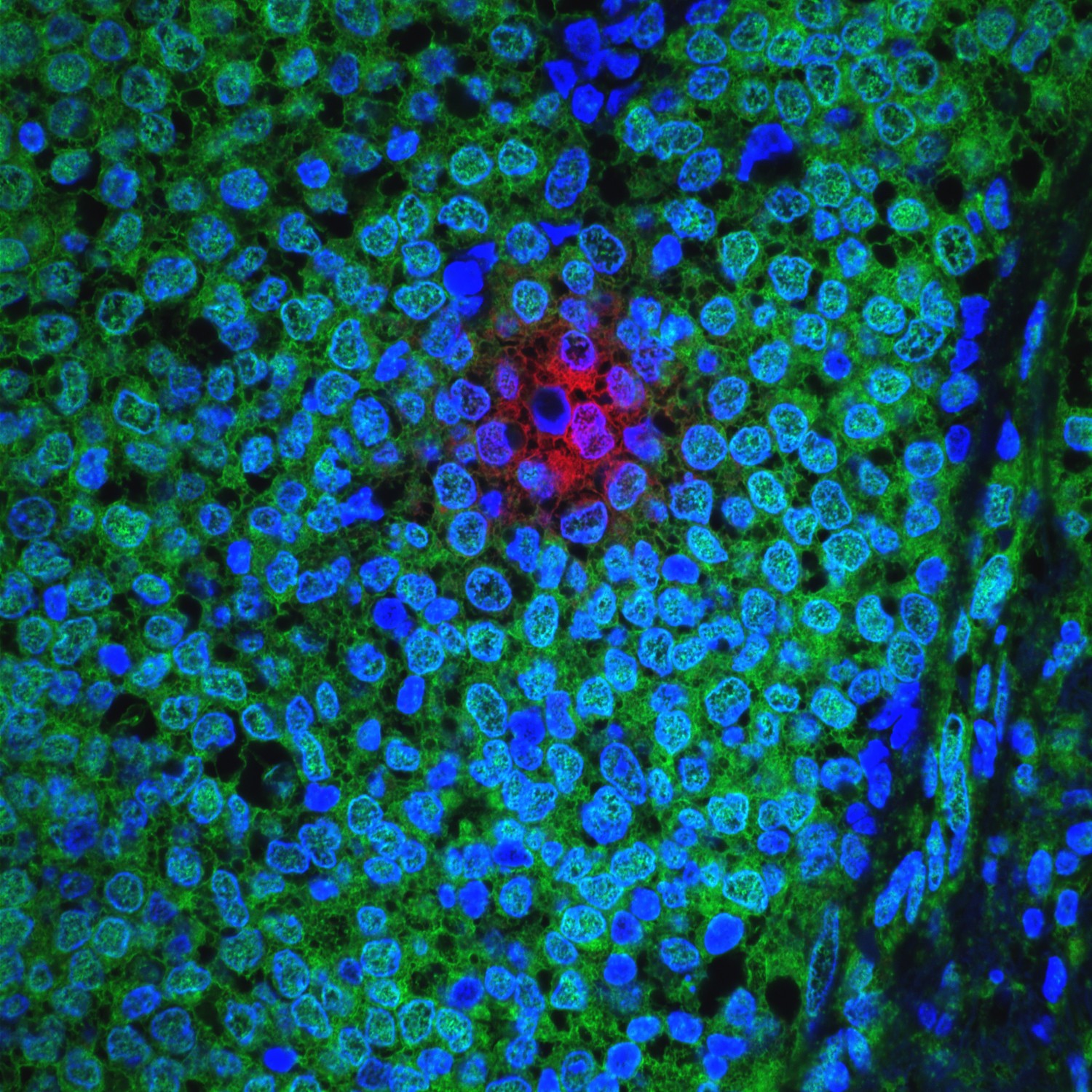
Researchers have uncovered a previously unknown mechanism that allows breast cancer to exploit day-to-day gene activity to fuel its growth. This finding reveals how hormone-driven breast cancers develop and adapt to treatment.
The study, led by scientists at The Institute of Cancer Research, London, and predominantly funded by Cancer Research UK, but also in collaboration with colleagues in China, uncovers how an enzyme known for generating mutations in cancer, APOBEC3B (A3B), plays a direct role in promoting the growth and survival of a common type of breast cancer by regulating certain gene activities in oestrogen receptor-positive (ER-positive) breast cancer.
The findings, published in Nature Communications, have reshaped the research community’s understanding of how the instability and regulation of the genetic environment and cancer evolution are linked to cancers driven by hormones.
A new role for APOBEC3B
Oestrogen is the key hormone that regulates normal breast development by activating oestrogen receptors to switch specific genes on and off to control cell growth and survival.
Un-regulated oestrogen activity promotes the proliferation of new breast cells, which can lead to the accumulation of abnormal mutations that increase the likelihood of breast cancer developing. When breast cancer cells express oestrogen receptors, the disease is classified as oestrogen receptor-positive (ER-positive). ER-positive breast cancer accounts for 80 per cent of breast cancer cases, and is commonly treated with hormone therapies, yet many eventually become resistant to treatment.
The activation of oestrogen receptors in cancer cells is known to be accompanied by extensive DNA damage – referred to as DNA breaks – but how this damage arises and why it is closely tied to gene activation has remained unclear.
A3B – a DNA editing enzyme in the body's natural defence system – is widely recognised as a source of mutation in cancer. Yet its precise role in hormone-driven DNA damage was difficult to pinpoint in experimental models because most A3B-induced damage is rapidly repaired by the cell, leaving only a small fraction visible.
To overcome this hurdle, the research team developed a breast cancer cell model where DNA repair was temporarily blocked, allowing them for the first time to capture A3B’s activity in unprecedented detail
Targeting gene control regions
Using a combination of advanced gene sequencing techniques, the team found that A3B does not primarily target protein-coding genes in DNA, as originally thought. Instead, it targets specific regions in DNA – known as promoters and enhancers – that control when genes are switched on and how strongly they are expressed.
These promoter and enhancer regions of DNA become exposed during transcription, the first step in gene expression. When DNA coding for protein is copied into messenger RNA, which is then used to synthesise new proteins essential for cell structure, function, and repair. To start this process short stretches of DNA become exposed around the promoter and enhancers that regulate oestrogen-responsive gene expression. These regions of DNA become substrates for A3B that modifies the DNA in a way that influences how the damage is subsequently repaired.
Rather than being accidental or purely harmful, the DNA breaks that result from A3B editing DNA can enable the activation of oestrogen-responsive genes and remodel chromatin – the DNA, RNA and proteins that carry genetic information. In effect, the A3B-initiated DNA damage is integrated and coordinated into normal gene-regulation pathways, which cancer cells exploit to their advantage.
By reframing A3B as an active regulator of gene expression, rather than simply a mutational driver of cancer, this research marks a major shift in the understanding of how cancer-linked enzymes influence genetic regulation in hormone-driven cancers.
New findings, new context
The findings also provide new context for why ER-positive breast cancers often show high levels of genomic instability. Cancers that stop responding to hormone therapies frequently exhibit elevated A3B activity, suggesting that tumours may rely on this enzyme to adapt and survive under therapeutic pressure from treatment.
By better understanding A3B’s mutational activity and its relationship with hormone-driven gene activation, The Institute of Cancer Research (ICR) provides new context for the high genomic instability observed in ER-positive breast cancers. Further research could open up new strategies to interfere with this dysregulation, potentially by targeting the DNA-repair pathways that process A3B-induced damage, without directly disrupting essential oestrogen signalling.
Mapping future roles
Senior author Dr Paul Clarke, Leader of the RNA Biology and Molecular Therapeutics Group in the Centre for Cancer Drug Discovery at The Institute of Cancer Research, said: “A3B has long been viewed as a source of harmful mutations in cancer. What we were able to show here is that it also plays a far more active and organised role in controlling gene expression in oestrogen-driven breast cancer than we previously realised.”
Future research from the team will explore whether A3B plays similar regulatory roles in other hormone-driven cancers and whether interfering with the DNA repair pathways that process A3B-induced damage could unearth new therapeutic opportunities, especially for people whose cancer has become resistant to treatment.
Dr Clarke added: “While our findings do not immediately translate into the clinic, our new understanding will influence how the ICR identifies new ways to disrupt these complicated pathways to, hopefully, develop more efficient treatment for patients.”