
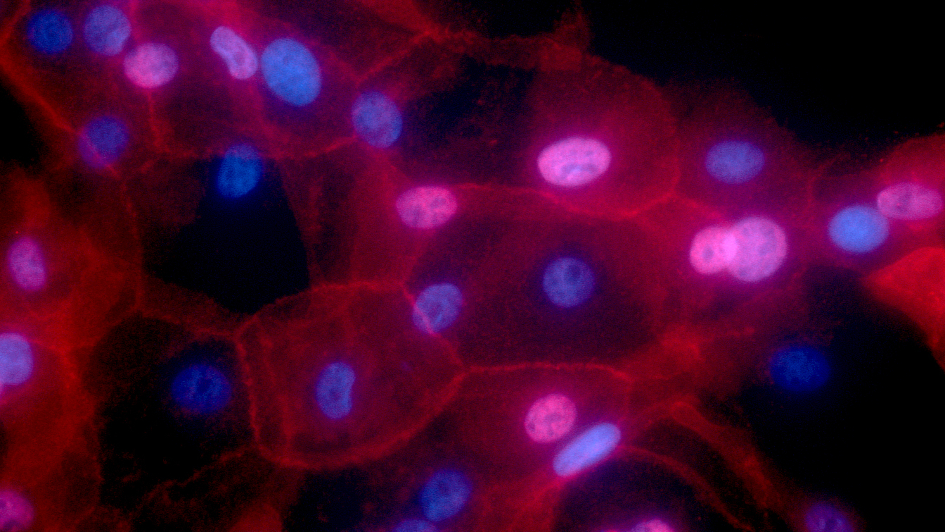
A gene that is typically active only in reproductive cells may hold the key to new treatments for triple negative breast cancer, according to new research.
Scientists from the Breast Cancer Now Toby Robins Research Centre at The Institute of Cancer Research, London (ICR) and the Breast Cancer Now Research Unit at King’s College London, have uncovered a new weakness in triple negative breast cancer linked to a gene called HORMAD1 and a way to target it.
An aggressive and harder to treat cancer
Around 15 per cent of breast cancers are classed as triple negative.
This form of breast cancer can be more aggressive and harder to treat than other forms of the disease. It is also more common in women with an inherited altered BRCA gene, women under 40 years of age, and Black women.
The HORMAD1 gene is normally only switched on in cells involved in reproduction in the ovaries and testes and remains inactive elsewhere in the body. It’s responsible for ensuring the genetic information is distributed properly in sperm and eggs.
However, in some cancers, including 60 per cent of triple negative breast cancers, the HORMAD1 gene becomes active out of context. The results of the study, funded by Breast Cancer Now and published today in the journal Nature Communications, found that when the HORMAD1 gene is active in triple negative breast cancer cells, it disrupts a key safety mechanism.
Identifying potential drug candidates
The researchers uncovered a series of events and key proteins involved in this process, which leads to errors in DNA being passed onto new cancer cells. While these changes can help cancer grow and resist treatments, the researchers also showed it’s a weakness that can be targeted with new treatments. The study identified several drugs currently being investigated as cancer treatments that could be effective against triple negative breast cancer cells with the active HORMAD1 gene.
Targeted inhibitor testing
The researchers tested whether blocking Aurora B, MPS1 and BUB1 proteins stopped the growth of cells with the active HORMAD1 gene in the lab. They also looked at whether two Aurora B inhibitors, currently in early-stage clinical trials, worked to treat mice carrying human triple negative breast cancer tumours with the active HORMAD1 gene. The treatment successfully reduced tumour growth, further validating their findings. They will now investigate the possibility of developing drugs that target Aurora B, MPS1 and BUB1 for patients with this type of breast and possibly other cancers.
‘An important step forward’
Professor Andrew Tutt, Director of the Breast Cancer Now Toby Robins Research Centre at The Institute of Cancer Research, London and The Breast Cancer Now Research Unit at King’s College London, corresponding author of the study, said:
“Although this research is still in its early stages, it offers an important step forward in understanding triple negative breast cancer and opens the door for the development of new treatments. It also highlights that testing for the activity of the HORMAD1 gene in triple negative breast cancer could guide treatment decisions in the future. Together, these insights bring us closer to developing more precise therapies for people with triple negative breast cancer.”
New research priorities
Dr Simon Vincent, chief scientific officer at Breast Cancer Now, which funded the research, said:
“Each year, around 8,000 UK women are diagnosed with triple negative breast cancer and it’s more likely than most other breast cancers to return or spread during the first years following treatment. There are also fewer targeted treatments available, so it’s vital we find new and effective ways to tackle this devastating disease. The findings open the door to the next crucial phase of research, where the research team can identify and test the most effective drugs or drug combinations against triple negative breast cancer with an active HORMAD1 gene, and move the safest and most promising options towards clinical trials.”
'It can feel like you’ve been given a life sentence — but with continued research comes hope'
Liz Boughton, 50, NHS Finance Manager from Northamptonshire, was diagnosed with triple negative breast cancer in August 2024. “In July 2024, I accidentally brushed my arm against my breast and felt a very small lump. I dismissed it until I was persuaded by my husband to make an appointment with my doctor. I was quickly referred to the breast clinic, where a whirlwind of tests led to a diagnosis of triple negative breast cancer. I was 49, healthy, with no family history — cancer wasn’t something I expected to hear.
“I began 6 months of neo-adjuvant chemotherapy immediately, to shrink the tumour before surgery. I was also given immunotherapy (weekly) alongside the chemotherapy, a new treatment option for some people with triple negative breast cancer, which can improve outcomes. Once treatment began, it pulled me, and those around me, into a world we never knew existed. I then underwent surgery, followed by radiotherapy and a further 9 infusions of immunotherapy over 27 weeks.
“When you’re diagnosed with a type of breast cancer that has fewer treatment options and a higher risk of returning soon after diagnosis, it’s hard not to live with constant uncertainty about the future. It can feel like you’ve been given a life sentence — but with continued research comes hope.”