
Preclinical Modelling of Paediatric Cancer Evolution Group
Dr Alejandra Bruna's group is studying the phenotypic changes occurring through treatment to explore modulation of transcription dynamics as a therapeutic strategy in aggressive solid paediatric cancers.
Our group's goal is to improve our understanding of the biology of aggressive paediatric cancers. We use refined preclinical models that capture the features from which cancer originates.
Dr Alejandra Bruna
Group Leader:
Preclinical Modelling of Paediatric Cancer Evolution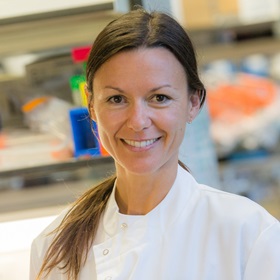
Dr Alejandra Bruna leads the Preclinical Modelling of Paediatric Cancer Evolution Group. She has experience leading and contributing to preclinical programmes using improved patient-derived tumour models.
Researchers in this group
 .
.
Dr Alejandra Bruna's group have written 46 publications
Most recent new publication 1/2026
See all their publicationsDr Alejandra Bruna established her laboratory at The Institute of Cancer Research in April 2020. She leads the Preclinical Modelling of Paediatric Cancer Evolution (PCE) Lab, which investigates how phenotypic plasticity shapes cancer evolution, therapy resistance and relapse.
Her research focuses particularly on paediatric solid tumours, including neuroblastoma, hepatoblastoma and rhabdomyosarcoma. These cancers, characterised by relatively low mutational burden, provide a powerful system to dissect non-genetic mechanisms of tumour adaptation.
A central question of the lab is: how do cancer cells adapt to stress and treatment in the absence of extensive genetic diversity? Rather than viewing tumour heterogeneity as a static feature, Dr Bruna’s work conceptualises plasticity as a dynamic, selectable trait that can bias future evolutionary trajectories.
By integrating single-cell genomics, lineage tracing, molecular recording, experimental evolution and quantitative modelling, the PCE Lab aims to move beyond descriptive catalogues of cell states towards predictive frameworks of tumour adaptation. Using temporally controlled perturbation systems and evolutionary selection experiments, the group directly measures how cancer cell populations respond, diversify and stabilise under defined therapeutic pressures. The long-term goal is to anticipate evolutionary escape routes and inform therapeutic strategies that prevent relapse.
The lab studies how reversible cell-state transitions enable tumour survival under therapeutic pressure, and when plasticity itself becomes an adaptive advantage. This includes defining how plasticity interplays with fitness, selection and clonal dynamics in an evolving population.
A major focus is understanding how stochastic gene expression and chromatin organisation generate phenotypic diversity, even in genetically homogeneous tumours. The group combines statistical modelling with experimental perturbation to dissect the regulatory origins of noise-driven plasticity-led adaptive evolution.
The lab has pioneered and applied expressed and evolving barcode systems to reconstruct cell histories and directly quantify phenotypic transitions over time in solid paediatric cancer models. These approaches enable measurement of how cell states are exploited, stabilised or selected during treatment.
Paediatric tumours provide a uniquely tractable model to study non-genetic adaptation due to their low mutational burden. The lab leverages this to uncover general principles of cancer evolution that may be obscured in adult cancers.
- Melanie Beckett
- Soulafa Mamlouk
- Tony Monteza
- Sian Harmer