
Our research into bowel cancer
Our research delivers real benefits for people living with bowel cancer, which is also known as colorectal cancer. Our scientists are working to understand why bowel cancer rates in people under the age of 50 are rising sharply, find new ways to predict when high risk groups will develop cancer and advance treatment options.
Thanks to screening programmes, earlier diagnosis and advances in treatment, bowel cancer (which includes colon cancer and rectal cancer) survival has improved dramatically in recent decades. In the 1970s, just one in four people lived for longer than 10 years after diagnosis – today, more than one in two survive.
Our progress against bowel cancer
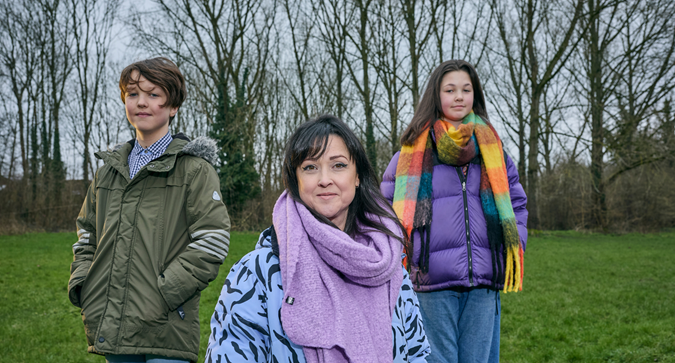
“I prepared for my kids to grow up without me. Thanks to research, I am now cancer-free."
Sophie was diagnosed with stage 4 bowel cancer in 2018, aged 36. She was told she would be unlikely to see her 40th birthday. However, thanks to experimental immunotherapy, she now has no evidence of disease.
Rising rate of bowel cancer in young people
Professor Amy Berrington, Professor of Clinical Epidemiology, recently led a major international study that showed that bowel cancer rates are rising faster in younger adults than in older people across many countries. Between 2003 and 2017, rates increased faster in younger adults in around 30 per cent of the countries studied.
Transforming diagnosis for high-risk groups
Our researchers are investigating how inherited risks can be managed. Professor Claire Turnbull, Professor of Translational Cancer Genetics, has helped to establish a national database to track people with Lynch syndrome – a hereditary condition that raises the lifetime risk of bowel cancer to up to 80 per cent. By ensuring that everyone with Lynch syndrome is invited for regular screening, the registry aims to detect cancers earlier, when treatment is most likely to be successful.
Bowel cancer discoveries
Targeted therapy shows promise for patients with advanced colorectal cancer in a first-in-human study

Excess weight is the strongest clue to the rise in cancer rates in under 50s
One in 100 people in the UK has IBD, and the disease more than doubles a person’s risk of developing bowel cancer.
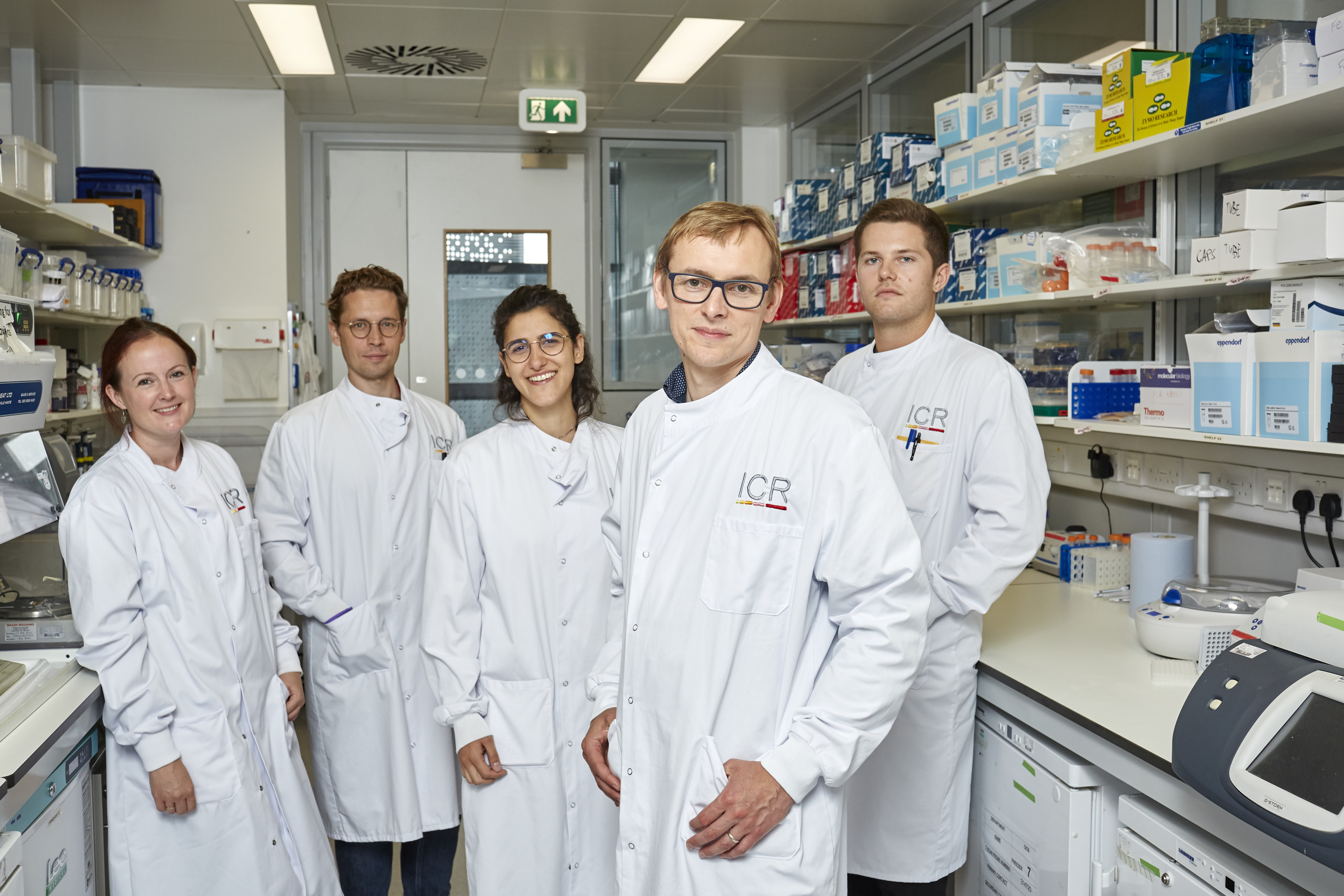
Professor Trevor Graham’s team has developed a new way to predict bowel cancer risk in people with inflammatory bowel diseases (IBD). The test promises to identify those people who are at highest risk of bowel cancer so that they can get the treatments they need, whereas people at low risk can be spared unnecessary and unpleasant procedures.
Developing the best bowel cancer treatment options
Dr Anguraj Sadanandam has shown that the immune system plays a critical role in the success of radiotherapy treatment for bowel cancer. By studying tumour samples from 53 patients, his team discovered that inflammation levels before and after treatment influence outcomes. These insights have helped shape new strategies, such as adding immunotherapy to radiotherapy.
Professor Graham has developed a new computational tool that can measure and predict how bowel cancer evolves when exposed to a new treatment. These insights could help researchers to design more personalised therapies to delay or prevent resistance and even adjust doses of existing drugs to extend their effectiveness.
The team have also developed blood tests, or 'liquid biopsies', to pick out people whose tumours are unlikely to respond to certain drugs. Liquid biopsies, which are less invasive and uncomfortable than a surgical tissue biopsy, can help predict bowel cancer's next move, and lead to more personalised, adaptive treatment plans.

Clinical trials
If you or someone you know is a bowel cancer patient, then you may be able to support research by taking part in a trial. Here are the latest trials that include patients with bowel cancer from the NIHR clinical trials database. Find a trial.

Need information on symptoms and support?
At the The Institute of Cancer Research, London, we are dedicated to defeating cancer through research. We are world leaders in identifying cancer genes, discovering cancer drugs and developing precision radiotherapy.
If you are concerned that you may be experiencing the symptoms of bowel cancer, please contact your GP. They will also be able to direct you to support services if you have recently been diagnosed and need support. For more information, please visit the NHS website.
Donate monthly to support our bowel cancer research today
Together, we can keep pushing the boundaries of research – giving everyone with bowel cancer the hope of a cure and, potentially, preventing the disease from developing in the first place.
As a UK charity, our life-saving research relies on the generosity of individuals and organisations. Our supporters help us make a difference to the lives of cancer patients and their families everywhere.