News and features
Read the latest news and features about our world-leading research, discoveries, fundraising and philanthropy. If you want to keep updated on our news, you can follow us on social media or sign up for our Search newsletter.
If you’re a journalist and want to find out more, you can contact our media relations team.
ICR welcomes approval for new ovarian cancer drug combination
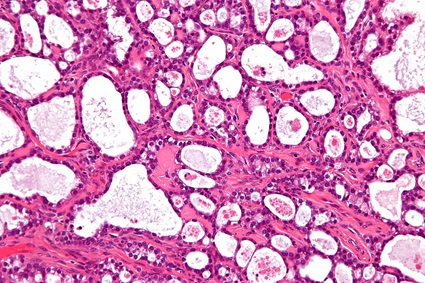
The Institute of Cancer Research, London, has welcomed the approval of a new combination of two drugs for ovarian cancer by the US regulatory body the Food and Drug Administration (FDA).
-mucinous-ovarian-tumour---945x532.jpg?sfvrsn=5e9bb32b_2 "Intermediate magnification micrograph of a low malignant potential (LMP) mucinous ovarian tumour - 945x532")
Smarter chemotherapy approach could delay drug resistance in ovarian cancer
Adaptive chemotherapy – a personalised approach to giving chemotherapy – can prolong survival in lab models of ovarian cancer, according to new results published in the journal Cancer Research.
-carousel-945x581.jpg?sfvrsn=d29fb9e9_2 "A high magnification image of ovarian clear cell carcinoma (photo: Nephron) carousel 945x581")
Newly identified biomarker could improve treatment for people with rare type of ovarian cancer
Scientists at The Institute of Cancer Research, London, have identified a gene that affects how ovarian clear cell carcinoma (OCCC) could respond to a new class of drug called ATR inhibitors.
The future of ovarian cancer: innovation, treatment and hope
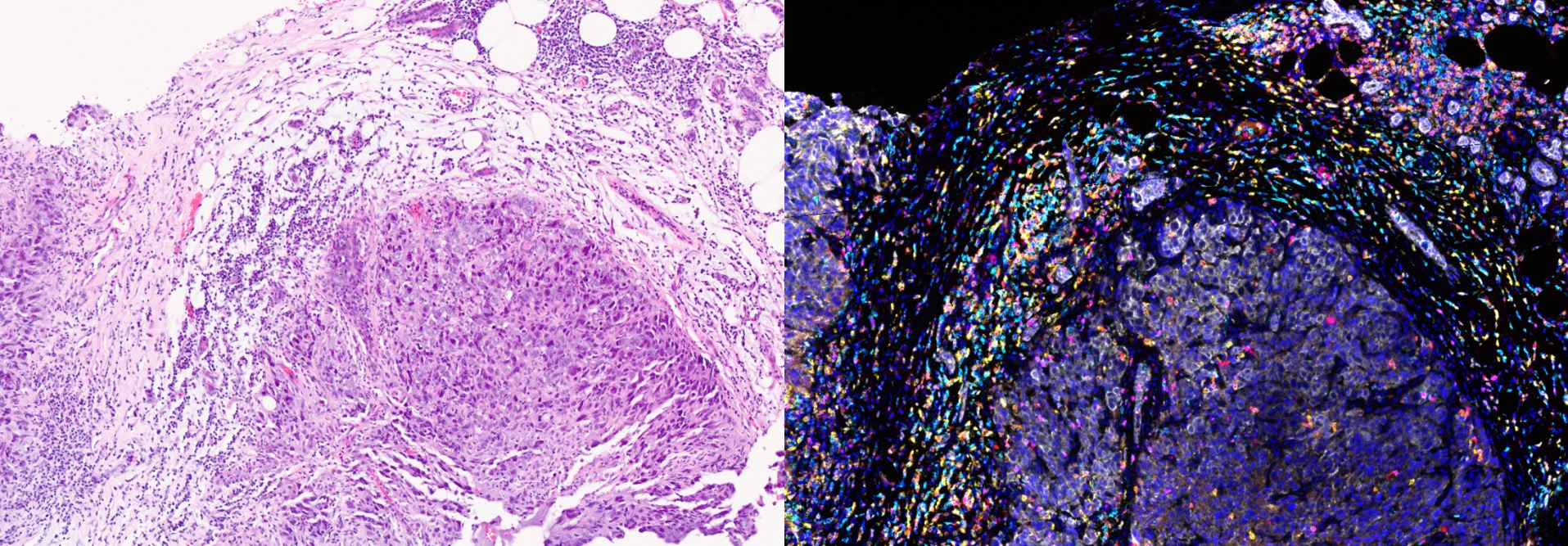
Ovarian cancer is often diagnosed late, making it difficult to treat. But innovative research at The Institute of Cancer Research, London, is changing how we think about managing this complex and hard-to-treat disease. Robbie Lockyer speaks to molecular pharmacology expert and medical oncologist Professor Udai Banerji to find out more about therapeutic research strategies.
Genetic testing for Lynch Syndrome prevents cancers being missed
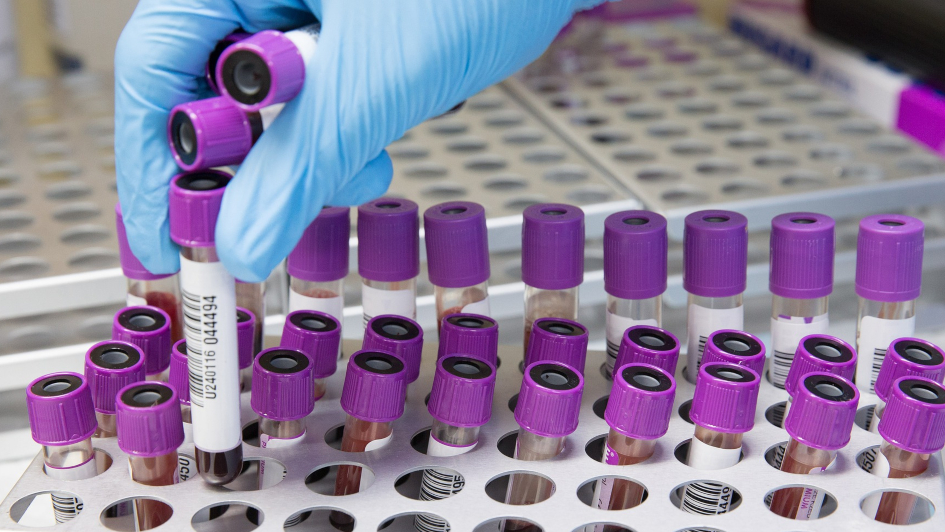
Genetic testing to identify women with Lynch Syndrome is likely to need to increase dramatically to ensure that carriers are not missed, a new analysis by ICR researchers has found.

New potential cancer-driving genes unveiled, opening new paths for precision treatments
Researchers have carried out an in-depth analysis of 10,478 cancer genomes across 35 different cancer types, identifying 330 potential cancer-driving genes, 74 of which are newly associated with cancer. The findings highlight the potential to develop new, more targeted treatment options for cancer patients.
New drug combination offers hope to women with rare treatment-resistant ovarian cancer
A combination of two drugs which can block the growth of cancer cells has shown promising results in women with a form of ovarian cancer that rarely responds to chemotherapy or hormone therapy.
New genetic testing pathways could ensure patients get personalised treatments and help to catch more BRCA-linked cancer cases
Scientists have developed a new clinical pathway for testing for the cancer-causing faults in the BRCA gene that could ensure patients get the right treatment and boost the number of people who get tested.
Large-scale study confirms well-established cancer risk factors and identifies new ones
Researchers have examined thousands of genetically defined traits to identify possible causal relationships for eight common cancers.

Breast and ovarian cancer linked to thousands of new gene variants
New research identifies specific genetic changes that can increase someone's risk of breast and ovarian cancers, to help guide clinical decision-making

ICR-discovered drug to enter phase II clinical trial in ovarian cancer thanks to new research collaboration
An innovative cancer drug discovered by scientists at The Institute of Cancer Research, London, is set to enter a new clinical trial.
-547x410.jpg?sfvrsn=5e98f2c_2 "Clinical trials pharmacy (Jan Chlebik for the ICR, 2014) 547x410")
Innovative first in class HSF1 pathway cancer drug shows strong results in new study
A new, oral ‘first in class’ experimental cancer drug has shown potent activity against cancer cells and caused shrinkage of hard-to-treat human ovarian tumours grown in mice, a new study shows.